Applying an Ethernet LAN in a Substation

Ethernet backbone

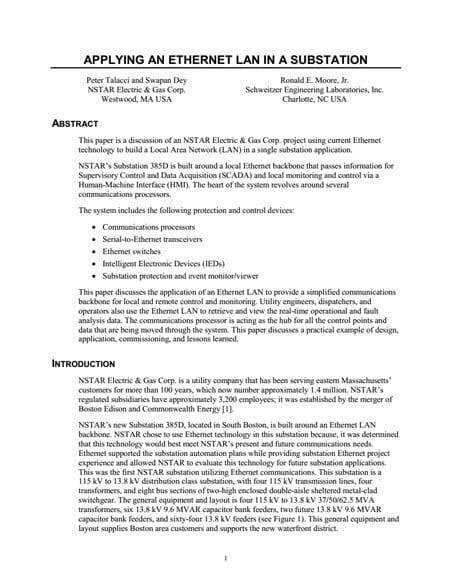
This paper is a discussion of an NSTAR Electric & Gas Corp. project using current Ethernet technology to build a Local Area Network (LAN) in a single substation application.
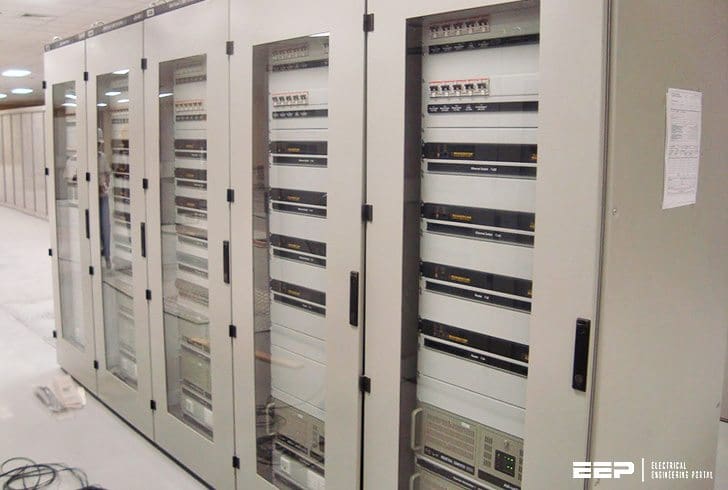
NSTAR’s Substation 385D is built around a local Ethernet backbone that passes information for Supervisory Control and Data Acquisition (SCADA) and local monitoring and control via a Human-Machine Interface (HMI).

The heart of the system revolves around several communications processors. The system includes the following protection and control devices:

  • Communications processors
  • Serial-to-Ethernet transceivers
  • Ethernet switches
  • Intelligent Electronic Devices (IEDs)
  • Substation protection and event monitor/viewer

This paper discusses the application of an Ethernet LAN to provide a simplified communications backbone for local and remote control and monitoring. Utility engineers, dispatchers, and operators also use the Ethernet LAN to retrieve and view the real-time operational and fault analysis data. The communications processor is acting as the hub for all the control points and data that are being moved through the system.

This paper discusses a practical example of design, application, commissioning, and lessons learned.

Ethernet History

Ethernet is the most popular and widely deployed network technology in the world. In 1973, while working on a way to link the Xerox “Alto” computer to a printer, Bob Metcalfe designed and tested the first Ethernet network. This first Ethernet network defined the physical cabling required of a connected device and defined the standard communications required on the cable.

As electronics and networking have grown, the Ethernet standard has developed to include the new technologies, but the basic mechanics of operation of every Ethernet network stems from Mr. Metcalfe’s original design at the Xerox Corporation’s Palo Alto Research Center. The original Ethernet design described communication over a single cable shared by all devices on the network. Once a device is attached to this cable, it has the ability to communicate with any other attached device.

This allows the network to expand to accommodate new devices without requiring any modification to those devices already on the network [2].

Title:Applying an Ethernet LAN in a Substation
Format:PDF
Size:0.85MB
Pages:14
Download:Please login first

Applying an Ethernet LAN in a Substation


Subscribe to Monthly Download Updates

Don't miss anything!

Get EEP's updates without having to keep checking up on the portal to see if there is anything new. New FREE technical articles, electrical books, guides, software and other exclusive content you will receive via email. Pretty simple!

Powered by MailChimp

Write for EEP, become contributor | Introduce yourself to huge number of our readers


One Comment

  1. [...] available 10-15 years ago when many of these protocols were initially developed.Later, as Ethernet and modern networking protocols like TCP/IP became widespread, these legacy protocols were adapted to run over TCP/IP-Ethernet.This approach [...]

Leave a reply!

You must be logged in to post a comment.

Tell us what you're thinking... we care about your opinion!
and oh, not to forget - if you want a picture to show with your comment, go get a free Gravatar!

Subscribe to free EEP’s updates

Subscribe to Monthly Download Updates:

(free electrical software, engineering guides and books)

Subscribe also to EE Technical Articles

Engineering Trainings

Top EEP’s Technical Writers

Technical Categories

Recommended to read and FREE download:
AIS – Air insulated substations

Function of Substations Transmission and Distribution Systems In large, modern ac power systems, the transmission and distribution systems function to...

Star to Delta Transforms

We can now solve simple series, parallel or bridge type resistive networks using Kirchoff´s Circuit Laws, mesh current analysis or...

Battery Monitoring And Maintenance

Battery monitoring has become a very popular topic, and many companies have either purchased equipment or are in the process...

Close