


Estimated Study Time: 5 minutes
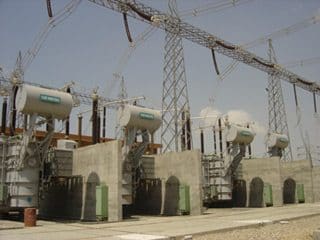
Most transformers installed in parallel have the same kVA, turn ratios, and impedances, which can make it difficult for power engineers in industrial and commercial facilities to understand circulating currents and load sharing.
As systems change over time, and transformers are replaced or added, users need to know the impact of paralleling transformers using different parameters.
.
The need for operation of two or more transformers in parallel often arises due to:
– Load growth, which exceeds the capactiy of an existing transformer
– Lack of space (height) for one large transformer
– A measure of security (the probability of two transformers failing at the same time is very small)
– The adoption of a standard size of transformer throughout an installation
Total power (kVA)
Transformers of unequal kVA ratings will share a load practically (but not exactly) in proportion to their ratings, providing that the voltage ratios are identical and the percentage impedances (at their own kVA rating) are identical, or very nearly so.
In these cases, a total of more than 90% of the sum of the two ratings is normally available. It is recommended that transformers, the kVA ratings of which differ by more than 2:1, should not be operated permanently in parallel.
Conditions necessary for parallel operation
All paralleled units must be supplied from the same network. The inevitable circulating currents exchanged between the secondary circuits of paralleled transformers will be negligibly small providing that:
- Secondary cabling from the transformers to the point of paralleling have approximately equal lengths and characteristics
- The transformer manufacturer is fully informed of the duty intended for the transformers, so that:
– The winding configurations (star, delta, zigzag star) of the several transformers have the same phase change between primary and secondary voltages
– The short-circuit impedances are equal, or differ by less than 10%
– Voltage differences between corresponding phases must not exceed 0.4%
– All possible information on the conditions of use, expected load cycles, etc. should be given to the manufacturer with a view to optimizing load and no-load losses
Common winding arrangements

As described in 4.4 “Electrical characteristics-winding configurations” the relationships between primary, secondary, and tertiary windings depend on:
- Type of windings (delta, star, zigzag)
- Connection of the phase windings
Depending on which ends of the windings form the star point (for example), a star winding will produce voltages which are 180° displaced with respect to those produced if the opposite ends had been joined to form the star point.
Similar 180° changes occur in the two possible ways of connecting phase-to-phase coils to form delta windings, while four different combinations of zigzag connections are possible.
- The phase displacement of the secondary phase voltages with respect to the corresponding primary phase voltages.
As previously noted, this displacement (if not zero) will always be a multiple of 30° and will depend on the two factors mentioned above, viz type of windings and connection (i.e. polarity) of the phase windings.
By far the most common type of distribution transformer winding configuration is the Dyn 11 connection (see Fig. B21).
Related electrical guides & articles








Edvard Csanyi
Hi, I'm an electrical engineer, programmer and founder of EEP - Electrical Engineering Portal. I worked twelve years at Schneider Electric in the position of technical support for low- and medium-voltage projects and the design of busbar trunking systems.I'm highly specialized in the design of LV/MV switchgear and low-voltage, high-power busbar trunking (<6300A) in substations, commercial buildings and industry facilities. I'm also a professional in AutoCAD programming.
Profile: Edvard Csanyi


I want to know that on which factors the parallel operation of 4transformer can be done n which pair of transformer will be connect parallel to other pair like star-star!!delta-delta connections like that?. I hope u replay me soon.
Thank you.
hi, i’ve ever seen in oil and gas company that all transformers aren’t allowed to work in parallel. it’ll give impact its impadance value, they said. is that right?
Dear edvard in parralele operation of tranasformer both operate on differant load how can it possible
Wan
I am hungry about technology
Pls feed me
Hello, I was wondering if there was any danger in the transformers blowing up when put in paralleled…. my boss asked us the question the other day on the job site, he him self said something about if they are additive or subtractive they may explode…..
I want to know what the advantages or disadvantages are of operating instrument voltage transformers in parallel, the voltage ratings are as follow: 33 kV / 110 VAC, 200 VA per phase, class 1.0 voltage factor = 1.2 We are currently paralleling three phase VTs in our distribution system, is it better to use 3 x single phase VTs. I’m unsure what the phase shifts are for single phase vs. three phase VTs as we are using the VTs for metering purposes, which serves as reference to our compensating equipment. Any help would be appreciated! Regards
Dear Eduard ,as I know , parallel operation of power transformers are clearly showed in IEC 60076.
Are you going to open a new discussion in this field ?
Yes, paralel operation of power transformers are well described in IEC 60076. This technical article is an excerpt from mentioned IEC standard and if anybody wants to comment or discuss on it, go ahead!
Kindly recheck IEC 60076 is not clear.Pleasesend link.