

Energy and Power
What would be the best conductor material for electrical wires and cables
The conductivity of copper is 65% higher than that of aluminium which means that the conductor size of similarly rated cables is proportionately smaller. Correspondingly less expense is then incurred in providing for insulation, shielding and armouring the cables themselves…. Read more
Apr 09, 2016 | By Edvard Csanyi

Cables
Differences in size and weight of equipment using copper and aluminium conductors
It is a common misconception that electrical equipment built using aluminum conductors will always be larger than the same equipment using copper conductors. While the actual conductor within the equipment will be larger with aluminum, many times the enclosure for… Read more
Jul 13, 2015 | By Edvard Csanyi

Cables
Few Aspects of Copper versus Aluminium
The constructions of aluminum wire and terminals have both been revised from past years. At one time the conductor was nearly pure aluminum, now they are all much stronger 8000 series alloys, with physical characteristics similar to copper. The wire… Read more
May 27, 2015 | By Edvard Csanyi
High Voltage
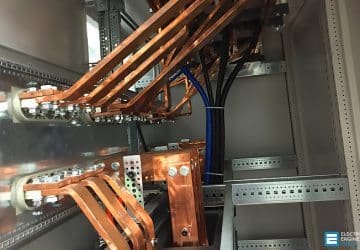
Conductor Types Used For Overhead Lines
The international standards covering most conductor types for overhead lines are IEC 61089 (which supersedes IEC 207, 208, 209 and 210) and EN 50182 and 50183 (see Table 1). For 36 kV transmission and above both aluminium conductor steel reinforced… Read more
Apr 20, 2013 | By Edvard Csanyi

Energy and Power
Aluminium and its Alloys used in Electrical Engineering
Aluminium has been used for many years as a conductor material in almost all branches of electrical engineering. In addition to the pure aluminium, several its alloys are also excellent conductors, combining structural strength with an quite acceptable conductivity. Aluminum… Read more
Nov 05, 2012 | By Edvard Csanyi

Cables
Copper or aluminium? Which one to use and when?
Apart from their electrical conductivity, the other technologically important properties of copper and aluminium differ so significantly (density is an obvious example) that their areas of application are and have always been clearly distinct. And not a lot has changed… Read more
Mar 16, 2012 | By Edvard Csanyi
Cables
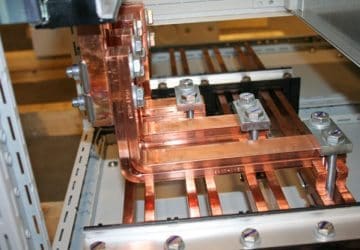
Discussing About LV And HV Electrical Cables
Space is really a critical criterion when discussing electrical cables and wires. In a low-voltage (LV) plastic-sheathed cable with conductor cross-sections of up to 10 mm2 per conductor or in high-voltage (HV) cables (Figure 2), the lion’s share of the… Read more
Feb 08, 2012 | By Edvard Csanyi
Electric Motor
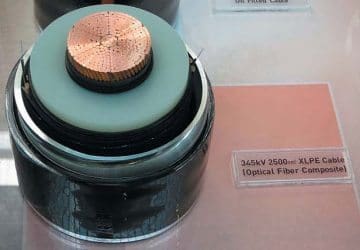
Internal losses that reduce efficiency of a DC generator
There are four internal losses that contribute to lower efficiency of a DC generator. Copper losses Eddy-current losses Hysteresis losses Mechanical losses Copper loss is the power lost as heat in the windings; it is caused by the flow of… Read more
Feb 03, 2012 | By Edvard Csanyi

Energy and Power
Effective Resistance Of Busbars
The construction of busbar is usually carried out by putting together several flat bars in parallel for each phase. The spacing between the bars is made equal to their thickness for practical reasons, and this leads to skin and proximity effects. If one refers to… Read more
Jan 12, 2012 | By Edvard Csanyi
Energy and Power
Aluminium or copper busbar trunking? Myth busted!
Following years of copper being the material of choice for high power busbar trunking in the UK, yet aluminium reigning supreme in the rest of the world, Schneider Electric takes a look at the case for aluminium over copper busbar… Read more
Oct 19, 2011 | By Edvard Csanyi

Medium Voltage
Standards and applications of medium voltage Bus Duct
Bus duct is used for the effective and efficient supply of electricity in mostly industrial locations. Copper or aluminum is used for the conductor of bus duct that be insulated and enclosed completely for protection against mechanical damage and dust… Read more
Aug 01, 2011 | By Edvard Csanyi

Solar Power
Photovoltaic Module Interconnections
Copper conductors are recommended for almost all photovoltaic system wiring. Copper conductors have lower voltage drops and better resistance to corrosion than other types of comparably sized conductor materials. Aluminum or copper-clad aluminum wires can be used in certain applications,… Read more
Feb 10, 2011 | By Edvard Csanyi

Transformers
Price Of A Transformer
Today the production of transformers is characterised by a large variety of designs, manufactured in relatively short batches to meet the demands of a variety of customers with ever-changing expectations. Of course, fluctuations in commodity prices have a significant effect…. Read more
Jan 26, 2011 | By Edvard Csanyi
Cables
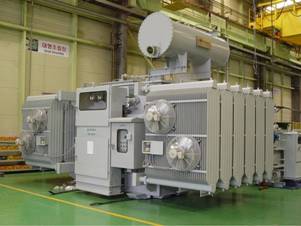
Oxidation Of Conductors
High-resistance oxides form very quickly on aluminum and copper conductors expose to air. Once the oxides are stabilized, they prevent further oxidation of the parent metal; however, due to this high electrical resistance, these oxides must be broken or removed… Read more
Jan 16, 2011 | By Edvard Csanyi
Medium Voltage
Aluminum vs. Copper: Conductors in Low Voltage Dry Type Transformers
In North America, aluminum is the predominant choice of winding material for low-voltage, dry-type transformers larger than 15 kilovolt-amperes(kVA). In most other areas of the world, copper is the predominant winding material. The primary reason for choosing aluminum windings is… Read more
Oct 27, 2010 | By Edvard Csanyi

