

Energy Efficiency
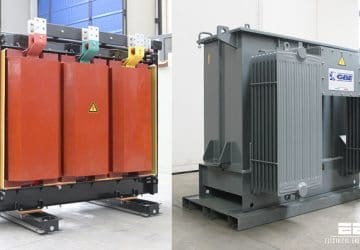
How To Reduce Transformer Losses At Design Stage
Design changes to reduce transformer losses, just as in a motor, always involve trade offs. For example, consider varying the cross-sectional area of the transformer core. An increase tends to lower no-load loss while raising the winding loss. An increase… Read more
Apr 29, 2016 | By Edvard Csanyi
Electric Motor
NEMA Definition Of Motor Full Load Nominal Efficency (Standard MG1-12.54.2)
Efficiency is defined as the ratio of the power output divided by the power input. Machine losses are in the form of heat, and include: Stator winding loss, Rotor loss, Core loss (hysteresis and eddy current), Friction and windage, and… Read more
Aug 02, 2013 | By Edvard Csanyi

Electric Motor
Three Phenomenons In The Iron Of AC Machines
Most of our practical AC machines (motors, generators ad transformers) depend heavily on the magnetic field for operation. The core iron of the machine provides a path for the magnet field. There are a number of phenomena in the iron… Read more
May 29, 2013 | By Edvard Csanyi

Electric Motor
Internal losses that reduce efficiency of a DC generator
There are four internal losses that contribute to lower efficiency of a DC generator. Copper losses Eddy-current losses Hysteresis losses Mechanical losses Copper loss is the power lost as heat in the windings; it is caused by the flow of… Read more
Feb 03, 2012 | By Edvard Csanyi

