Energy and Power
With EEP's premium membership, you get additional essence that enhances your knowledge and experience in low- medium- and high-voltage engineering fields.
Spring Gift! - 20% Off on Pro Membership Plan with coupon 110KVAC
Upgrade
Why we find temperature so important everywhere in electrical engineering?
The purpose of this article is to underline and illustrate the importance of temperature for various aspects of electrical engineering. This is one of the crucial engineering issues from the very beginning in design and procurement stage, later during exploitation,…...
Membership Upgrade Required
This content is not available in your premium membership plan. Please upgrade your plan in order to access this content. You can choose an annually based Basic, Pro, or Enterprise membership plan. Subscribe and enjoy studying specialized technical articles, online video courses, electrical engineering guides, and papers.With EEP's premium membership, you get additional essence that enhances your knowledge and experience in low- medium- and high-voltage engineering fields.
Spring Gift! - 20% Off on Pro Membership Plan with coupon 110KVAC
Upgrade
Already a member? Log in here
Sep 20, 2019 | By Miodrag Kokotovic
Testing and Commissioning
Testing of transformer oil and winding temperature indicators
All large transformers have an oil or a winding temperature indicating device of some type, and most have temperature recorders as well. Indication may be for top-oil temperature or hotspot temperature. Additional temperature-sensing equipment may be installed to provide alarm… Read more
Aug 10, 2016 | By Edvard Csanyi

Energy and Power
4 Things Soil Resistivity Depends On
Though the ground itself being a very large body can act as an infinite sink for currents flowing into it and can be considered to be having very low resistance to current flow, the resistance of soil layers immediately adjacent to the… Read more
Oct 17, 2015 | By Edvard Csanyi

Industrial Automation
Installing Sensors Incorrectly As a Mistake #2 In Instrumentation
Generally speaking, there are four ‘Poors’ that can lead to incorrectly installing instrumentation sensors: Poor placement Poor control Poor protection Poor grounding Each of above sensor ‘poors’ are described below, and by the way… have you read what is the mistake No.1… Read more
Aug 21, 2015 | By Edvard Csanyi
Energy and Power
How the Weather Affects Conductors
Notice how a conductor is strung between poles. It is not pulled tight; it sags. In hot weather it sags even more than in cold weather. Consider the analogy of the clothesline. A tightly strung clothesline as shown in Figure… Read more
Jul 04, 2014 | By Edvard Csanyi

Energy and Power
Natural Ventilation Of Power Substation
The operation of a system of natural ventilation is as a result of a decrease in air density as its temperature is raised due to the heat gain from various sources. This decrease in air density causes a pressure differential… Read more
Oct 18, 2013 | By Edvard Csanyi

Electric Motor
Keeping Motor At Correct Temperature When Connected To a Frequency Converter
When a motor is connected to a frequency converter it must be kept at the correct temperature, and this is subject to two types of influence: If the speed decreases, the cooling air volume goes down. If a non-sinusoidal motor… Read more
Jul 05, 2013 | By Edvard Csanyi

Energy and Power
Transformer temperature, oil level and pressure gauges
Temperature controls are required in order to turn on and off the cooling equipment. These controls are usually combined with a visible dial-type gauge that measures ‘winding temperature’. This is really a misnomer because the gauge does not actually contact… Read more
Jun 03, 2013 | By Edvard Csanyi

Energy and Power
Working principle of thermal motor protection relay
Thermal motor protection relays contain three bimetal strips together with a trip mechanism in a housing made of insulating material. The bimetal strips are heated by the motor current, causing them to bend and activating the trip mechanism after a… Read more
Mar 09, 2013 | By Edvard Csanyi
Transformers
What is transformer rating based on?
In the U.S., transformers are rated based on the power output they are capable of delivering continuously at a specified rated voltage and frequency under “usual” operating conditions without exceeding prescribed internal temperature limitations. Insulation is known to deteriorate with… Read more
Jan 30, 2013 | By Edvard Csanyi

Transformers
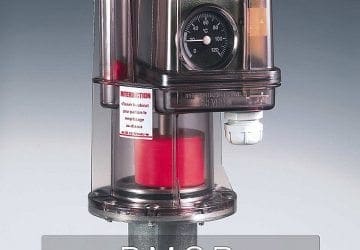
D.M.C.R. Protection Relay for Oil Transformer
Introduction to D.M.C.R. Faults detected on live transformer unit: Dielectric fluid level is detected as low Overheating is detected Excess pressure is detected Standards Possibilities of D.M.C.R.: Oil level control and gas detection Pressure control Temperature control The DMCR is… Read more
Jan 16, 2013 | By Edvard Csanyi
HVAC
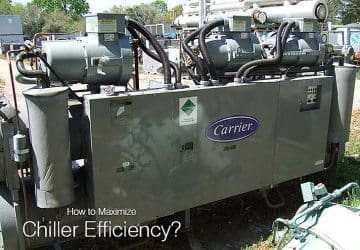
How to Maximize Chiller Efficiency?
Chillers are the single largest energy-using component in most facilities, and can typically consume over 50% of the electrical usage. Chillers use approximately 20% of the total electrical power generated in North America and the U.S. Department of Energy estimates… Read more
Sep 04, 2012 | By Edvard Csanyi
Transformers
Using Tap Changers to Match the System Voltage
A transformer’s rated voltage may not match the system voltage exactly, or it may be necessary to raise or lower the output voltage to supply a certain load. In these cases, a portion of a winding can be removed or… Read more
Aug 31, 2012 | By Edvard Csanyi

Energy and Power
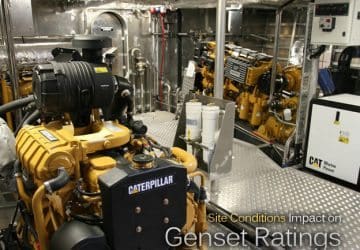
Site Conditions Impact on Caterpillar Genset Ratings
An engine rating is primarily limited by structural and thermal limits. These limits include maximum cylinder pressure during combustion, turbocharger speed, exhaust gas temperature and in natural gas engines, fuel type. Where an engine operates relative to these limits will determine the maximum altitude and ambient… Read more
Aug 17, 2012 | By Edvard Csanyi
Electric Motor
Thermal (Overload) Motor Relay Protection
The majority of winding failures in motor are either indirectly or directly caused by overloading (either prolonged or cyclic), operation on unbalanced supply voltage, or single phasing, which all lead through excessive heating to the deterioration of the winding insulation… Read more
Jul 14, 2012 | By Edvard Csanyi