

Electrical Lectures
Basic measuring of resistance, voltage and current using digital multimeter
Digital multimeter has generally replaced the analog-type multimeter as the test device of choice for maintainers because they are easier to read, are often more compact and have greater accuracy. Digital multimeter performs all standard analog-meter measurement functions of AC and DC…. Read more
Aug 15, 2016 | By Edvard Csanyi

Electrical Lectures
What Is The Energy, But For Real?
Energy is best defined as “the capacity for doing work”. Electricity is but one of many forms of energy. Other familiar forms of or descriptions of energy are thermal or heat, light, mechanical, and so on. Energy is also described… Read more
Apr 08, 2016 | By Edvard Csanyi

Electrical Lectures
The Node Voltage Method For Analysis Of Electric Circuits
Node voltage analysis is the most general method for the analysis of electric circuits. In this technical article, its application to linear resistive circuits is illustrated. The node voltage method is based on defining the voltage at each node as… Read more
Nov 02, 2015 | By Edvard Csanyi

Electrical Lectures
Kirchhoff’s Laws For Electrical Engineers – Beginners
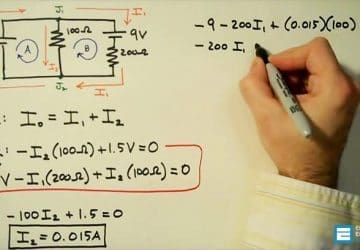
Two extremely important principles in electric circuits were codified by Gustav Robert Kirchhoff in the year 1847, known as Kirchhoff’s Laws. His two laws refer to Voltages and Currents in electric circuits, respectively. Kirchhoff’s Voltage Law states that the algebraic… Read more
Aug 19, 2015 | By Edvard Csanyi
Low Voltage
7 practical tips for installing a good measuring system
There are different product families on the market: instruments that measure a single electric parameter (voltage, current, frequency, phase angle cosϕ), generally used in single phase systems, as instrumentation on the machine, and instruments that enable all the electric parameters to… Read more
Nov 14, 2014 | By Edvard Csanyi

Electrical Lectures
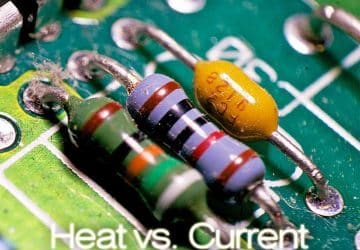
Heat vs. Current in a Resistor
It is converted from one form to another. One of the most familiar forms of energy is heat. When a current (I) is forced through a resistor (R) by applying a potential (V), the electrical energy is converted to heat… Read more
Oct 04, 2013 | By Edvard Csanyi
Electrical Lectures
Electrical Thumb Rules You MUST Follow (2)
Continued from first part: Electrical Thumb Rules You MUST Follow (Part 1) For Sinusoidal Current: Form Factor = RMS Value/Average Value = 1.11 For Sinusoidal Current: Peak Factor = Max Value/RMS Value = 1.414 Average Value of Sinusoidal Current (Iav)… Read more
Aug 28, 2013 | By Jignesh Parmar

Energy and Power
How to calculate voltage regulation of distribution line
Introduction to voltage regulation Voltage Regulation for 11KV, 22KV, 33KV Overhead Line Permissible Voltage Regulation (As per REC) Voltage Regulation Values Required Size of Capacitor Optimum location of capacitors Voltage Rise due to Capacitor installation Calculate % Voltage Regulation of… Read more
Jun 10, 2013 | By Jignesh Parmar

High Voltage
Electrical Safety Standards for LV/MV/HV (Part-1)
Standard: Western Power Company Water Safely Clearance on Electrical Fires Minimum Approach Distance for Authorized Person Minimum Approach Distance for Ordinary Person Minimum Approach Distance for Vehicle and Plant for Ordinary Person . Standard: New Zealand Electrical Code Min. Safe… Read more
Nov 07, 2012 | By Jignesh Parmar

Energy and Power
Application of Circuit Breakers in IT Networks
IT supplies are used to prevent that a ground fault leads to immediate disconnection of the affected circuit like in a grounded system. Although a first ground fault results in a displacement of the potential of the entire supply, continued… Read more
Nov 03, 2012 | By Edvard Csanyi

Energy and Power
Definitions of Abnormal Voltage Conditions
A sag is a temporary reduction in the normal AC voltage. A momentary sag is a variation, which lasts for a period of 0.5 cycle to about 2 s usually the result of a short circuit somewhere in the power system. Instances… Read more
Oct 02, 2012 | By Edvard Csanyi

Energy and Power
Surge Protection of Electronic Equipment
Generally, power circuits have components that have large thermal capacities, which make it impossible for them to attain very high temperatures quickly except during very large or long disturbances. This requires correspondingly large surge energies. Also, the materials that constitute… Read more
Sep 22, 2012 | By Edvard Csanyi
Electrical Lectures
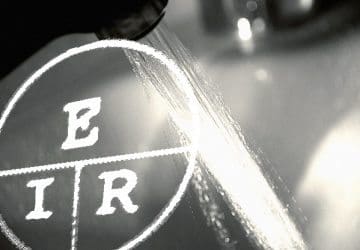
Water-and-Pipe Analogy for Ohm’s Law
Ohm’s Law also makes intuitive sense if you apply it to the water-and-pipe analogy. If we have a water pump that exerts pressure (voltage) to push water around a ”circuit” (current) through a restriction (resistance), we can model how the three… Read more
Aug 15, 2012 | By Edvard Csanyi
Electrical Lectures
Electric Shock Current, Where Does It Go?
As we’ve already know, electricity requires a complete path (circuit) to continuously flow. This is why the shock received from static electricity is only a momentary jolt: the flow of electrons is necessarily brief when static charges are equalized between… Read more
Aug 13, 2012 | By Edvard Csanyi

High Voltage
Primary Distribution Voltage Levels
Most distribution voltages are between 4 and 35 kV. In this article, unless otherwise specified, voltages are given as line-to-line voltages; this follows normal industry practice, but it is sometimes a source of confusion. The four major voltage classes are… Read more
Aug 10, 2012 | By Edvard Csanyi

