Edvard Csanyi
1765 awesome technical articles

Hi, I'm an electrical engineer, programmer and founder of EEP - Electrical Engineering Portal. I worked twelve years at Schneider Electric in the position of technical support for low- and medium-voltage projects and the design of busbar trunking systems.
I'm highly specialized in the design of LV/MV switchgear and low-voltage, high-power busbar trunking (<6300A) in substations, commercial buildings and industry facilities. I'm also a professional in AutoCAD programming.
Biography: https://electrical-engineering-portal.com/edvard-csanyi
Electrical Lectures
What can a PLC do? Why do we use them?
“PLC” means “Programmable Logic Controller”, that’s clear. The word “Programmable” differentiates it from the conventional hard-wired relay logic. It can be easily programmed or changed as per the application’s requirement. The PLC also surpassed the hazard of changing the wiring…. Read more
Jul 15, 2015 | By Edvard Csanyi
Cables
Differences in size and weight of equipment using copper and aluminium conductors
It is a common misconception that electrical equipment built using aluminum conductors will always be larger than the same equipment using copper conductors. While the actual conductor within the equipment will be larger with aluminum, many times the enclosure for… Read more
Jul 13, 2015 | By Edvard Csanyi

Energy and Power
MV Metal-Enclosed Switchgear and Loss of Service Continuity (LSC) Categories
Some parts of a switchgear may be made accessible for the user, for various reasons from operation to maintenance, and such an access could impair the overall operation of the switchgear then decreasing the availability. The IEC 62271-200 proposes user-oriented… Read more
Jul 10, 2015 | By Edvard Csanyi
Energy Efficiency
Maintenance of electrical equipment in buildings
Apart from safety, maintenance is needed to keep plant in an acceptable condition. Maintenance of this kind must be reviewed on an economic and energy efficiency basis. While it is appreciated that breakdown of plant may result in costly interruption… Read more
Jul 08, 2015 | By Edvard Csanyi
Industrial Automation
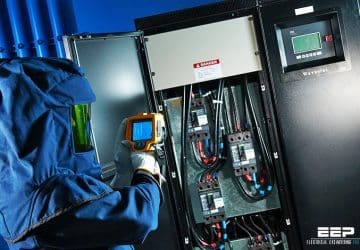
Let’s develop the simple PLC program for lighting control system
A lighting control system is to be developed. The system will be controlled by four switches, SWITCH1, SWITCH2, SWITCH3, and SWITCH4. These switches will control the lighting in a room based on the following criteria: Any of three of the… Read more
Jul 06, 2015 | By Edvard Csanyi
Medium Voltage
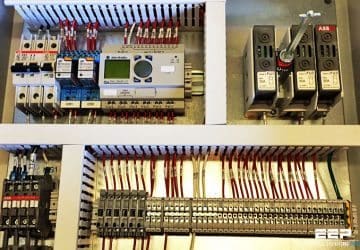
Medium Voltage Earthing Systems – Arrangements and Comparison
First, let’s define the different medium voltage earthing systems and then compare the advantages and disadvantages of each one. Earthing systems in medium voltage can be differentiated according to the neutral point connection method. The various earthing systems in medium… Read more
Jul 03, 2015 | By Edvard Csanyi
Electrical Lectures
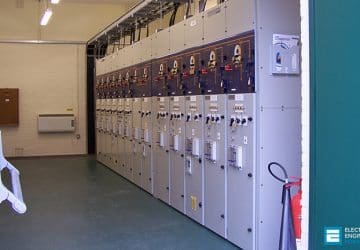
4 Main Means For The Generation Of Reactive Power
The four main means for the generation of reactive power are: synchronous alternators, synchronous compensators (SC), static var compensators (SVC) and banks of static capacitors. Contents Synchronous alternators Synchronous compensators (SC) Static var compensators (SVC) and Banks of static capacitors… Read more
Jun 29, 2015 | By Edvard Csanyi

Testing and Commissioning
12 Transformer Factory Tests Briefly Explained
The remainder of the twelve factory tests are briefly summarized below. The details of the test set connections and formulas of some of the listed tests are already described in separatly published articles, and for the rest you are directed… Read more
Jun 29, 2015 | By Edvard Csanyi

Energy and Power
Take into account these losses when purchasing power transformer
Losses and purchase price should be considered when deciding which transformer to purchase. The purpose of this technical article is to present a uniform approach that can be used to determine the dollar value of these losses over the life of the transformer…. Read more
Jun 26, 2015 | By Edvard Csanyi
Energy and Power
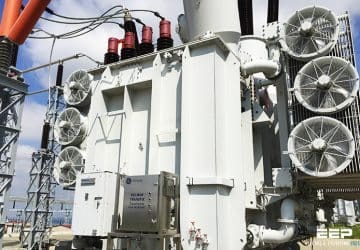
Example for Coordination of Cascaded Circuit Breakers
A 440 V 60 Hz switchboard feeds a 4-wire distribution board for small loads such as socket outlets. The switchboard has a fault making capacity of 100kA rms. After applying diversity factors to the loads the total load current is… Read more
Jun 24, 2015 | By Edvard Csanyi

Electric Motor
Calculation of motor starting time as first approximation
The problems connected to motor starting operations are fundamentally linked to the type of motor which a determined motor operational torque “CM” offers, to the starting modality and to the connected load which has a determined load torque “C ”. The… Read more
Jun 22, 2015 | By Edvard Csanyi

Testing and Commissioning
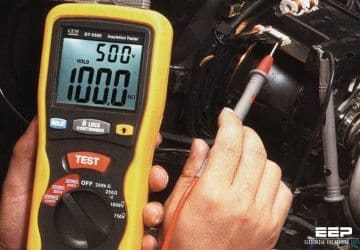
5 components of current drawn by the DC voltage testing of insulation
When DC voltage is applied to an insulation, the electric field stress gives rise to current conduction and electrical polarization. Consider an elementary circuit as shown in Figure 1 below, which shows a DC voltage source, a switch, and an… Read more
Jun 19, 2015 | By Edvard Csanyi
Energy and Power
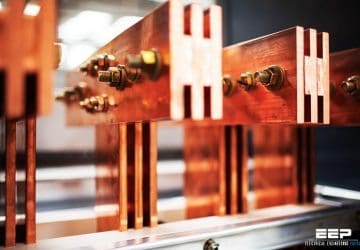
5 copper busbar jointing methods you should know
Efficient joints in copper busbar conductors can be made very simply by: Bolting Clamping Riveting Soldering Welding Bolting and clamping are used extensively on-site. Shaped busbars may be prefabricated by using friction stir welding. Bolted joints are formed by overlapping… Read more
Jun 17, 2015 | By Edvard Csanyi
Electric Motor
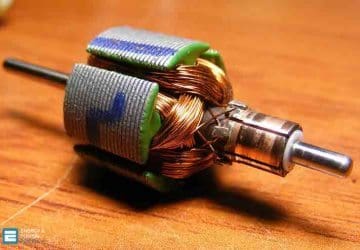
Basics of DC Motors For Electrical Engineers – Beginners
Separate field excitation DC motors are still sometimes used for driving machines at variable speed. These motors are very easy to miniaturize, and essential for very low powers and low voltages. They are also particularly suitable, up to high power… Read more
Jun 15, 2015 | By Edvard Csanyi
Testing and Commissioning
Procedure for transformer lightning impulse test
The purpose of the impulse voltage test is to secure that the transformer insultations withstand the lightning overvoltages which may occur in service. Where: C1 – Impulse capacitor Rc – Charging resistor Rs – Series resistor Ra – Low-ohmic discharging resistor for… Read more
Jun 12, 2015 | By Edvard Csanyi