Energy and Power
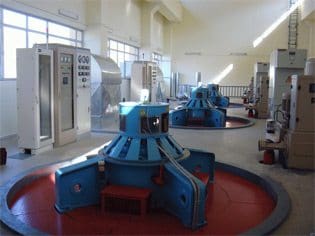
How reactive power is helpful to maintain a healthy system
We always tend to reduce reactive power to improve system efficiency. This is acceptable at some level. If the system is purely resistive or capacitance, it may cause problems in the Electrical system. AC systems supply or consume two kinds… Read more
Aug 29, 2011 | By Jignesh Parmar

Energy and Power
Difference between Power Transformer and Distribution Transformer
Power transformers are used in transmission network of higher voltages for step-up and step down application (400 kV, 200 kV, 110 kV, 66 kV, 33kV) and are generally rated above 200MVA. On the other hand, distribution transformers are used for… Read more
Aug 27, 2011 | By Jignesh Parmar

Energy and Power
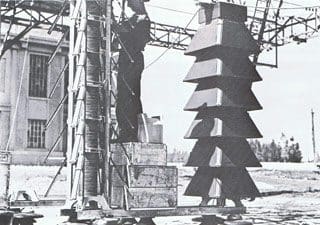
Surge arrester types and auxiliary equipment
Nearly 100 years ago, electrode gaps (rod, sphere, or pipe) were used to limit overvoltages on equipment (Sakshaug, 1991). Some of these systems, particularly pipe gaps, may still be in service today. However, the characteristic of gap sparkover voltage vs…. Read more
Aug 25, 2011 | By Edvard Csanyi
Energy and Power
How to save electrical energy at home
In our home we use lot of electrical equipment like TV, Freeze, Washing machine, Mp3 player, music system, computer laptop. But we have not adequate knowledge for how to use this electrical equipment in proper way. Due to this ignorance… Read more
Aug 23, 2011 | By Jignesh Parmar

Energy and Power
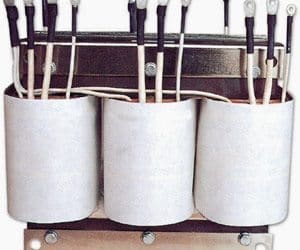
Autotransformers in few words
It is possible to obtain transformer action by means of a single coil, provided that there is a “tap connection” somewhere along the winding. Transformers having only one winding are called autotransformers, shown schematically in figure 1. An autotransformer has… Read more
Aug 19, 2011 | By Edvard Csanyi
Energy and Power
Applications and forms of differential relays
Differential relays take a variety of forms, depending on the equipment they protect. The definition of such a relay is “one that operates when the vector difference of two or more similar electrical quantities exceeds a predetermined amount. It will… Read more
Aug 15, 2011 | By Edvard Csanyi

Energy and Power
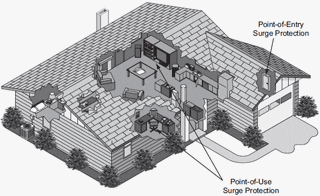
Whole-House Protection Strategy
No single SPD (Surge Protection Strategy) can protect all the equipment in a residence from all causes of electrical surges. Instead, a whole-house protection strategy, consisting of point-of-entry and point-of-use SPDs, is necessary to help guard against disturbances from inside… Read more
Aug 13, 2011 | By Edvard Csanyi
Energy and Power
Principles for Controlling Harmonics
Harmonic distortion is caused by nonlinear devices in the power system. A nonlinear device is one in which the current is not proportional to the applied voltage. Harmonic distortion is present to some degree on all power systems. Fundamentally, one… Read more
Aug 05, 2011 | By Edvard Csanyi

Energy and Power
DC to AC Transfer – Measurement
General transfer capability is essential to the measurement of voltage, current, power, and energy. The standard cell, the unit of voltage which it preserves, and the unit of current derived from it in combination with a standard of resistance are… Read more
Jul 30, 2011 | By Edvard Csanyi
Energy and Power
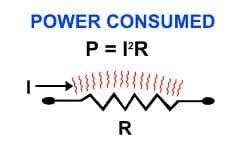
Resistive heating explained in details
Whenever an electric current flows through a material that has some resistance (i.e., anything but a superconductor), it creates heat. This resistive heating is the result of “friction,” as created by microscopic phenomena such as retarding forces and collisions involving… Read more
Jul 27, 2011 | By Edvard Csanyi
Energy and Power
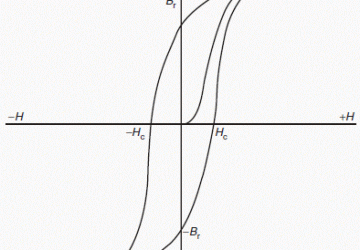
Materials with magnetic properties
All materials have magnetic properties. These characteristic properties may be divided into five groups as follows: Diamagnetic Paramagnetic Ferromagnetic Antiferromagnetic Ferrimagnetic Only ferromagnetic and ferrimagnetic materials have properties which are useful in practical applications. Ferromagnetic properties are confined almost entirely… Read more
Jul 26, 2011 | By Edvard Csanyi
Energy and Power
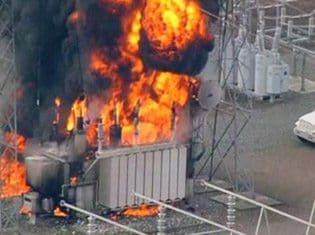
Fire Protection Measures
The measures to mitigate or lessen fire hazards are normally called “fire protection measures”. The National Fire Protection Association NFPA (U.S. organization charged with creating and maintaining minimum standards and requirements for fire prevention and suppression activities, training, and equipment,… Read more
Jul 13, 2011 | By Edvard Csanyi
Energy and Power
Fuses – Principles of design and operation
A fuse consists of a replaceable part (the fuselink) and a fuse holder. Examples of fuse holders are shown in Fig. 1. The simplest fuselink is a length of wire. It is mounted by screw connections in a holder which… Read more
Jul 09, 2011 | By Edvard Csanyi

Energy and Power
Area classification in potentially explosive atmospheres
Area classification defines hazardous areas on the basis of the probability of a flammable atmosphere being present. It is a legal requirement under DSEAR for any employer whose business involves flammable materials in any form, and it results in the… Read more
Jul 08, 2011 | By Edvard Csanyi
Energy and Power
Generator tripping as stability control
Generator tripping is an effective (cost-effective) control especially if hydro units are used. Tripping of fossil units, especially gas- or oil-fired units, may be attractive if tripping to house load is possible and reliable. Gas turbine and combined-cycle plants constitute… Read more
Jul 06, 2011 | By Edvard Csanyi