Power Substation
Basic Stand-Alone Application of Reclosers
Reclosers are self-contained fault interrupting and reclosing devices, specifically designed for overcurrent protection in secondary distribution systems. Reclosers are situated in selected locations within the overhead distribution network. With the correct protection setting and MV fuse selection coordination, concerning the… Read more
Apr 15, 2015 | By Edvard Csanyi

Power Substation
Configurations and characteristics of distribution substations
Distribution substations come in many sizes and configurations. A small rural substation may have a nominal rating of 5 MVA while an urban station may be over 200 MVA. Figures 1 through 3 show examples of small, medium, and large… Read more
Apr 13, 2015 | By Edvard Csanyi
Transformers
Network distribution transformers serving grid and spot networks
Network transformers, the distribution transformers that serve grid and spot networks, are large three-phase units. Network units are normally vault-types or subway types, which are defined as (ANSI C57.12.40-1982): Vault-type transformers // Suitable for occasional submerged operation Subway-type transformers // Suitable for… Read more
Apr 08, 2015 | By Edvard Csanyi
Power Substation
Important primary distribution (radial and loop) system considerations
The primary distribution system is that part of the electric distribution system between the distribution substation and distribution transformers. It is made up of circuits called primary feeders or distribution feeders. These feeders include the primary feeder main or main… Read more
Apr 06, 2015 | By Edvard Csanyi
Energy and Power
Eleven major causes of power system failures
To gain a broader understanding of power system reliability, it is necessary to understand the root causes of system faults and system failures. A description of major failure modes is provided below. Underground Cable Transformer Failures Lightning Tree Contact Birds… Read more
Mar 18, 2015 | By Edvard Csanyi

Energy and Power
Smart Load Management Strategies To Save Energy
As part of their drive towards synchronizing the consumption and production of electrical energy over the long term, energy distribution companies tailor their rates to encourage consumers to reduce their requirements during peak periods. A number of different strategies are… Read more
Feb 18, 2015 | By Edvard Csanyi

High Voltage
Selection of high voltage conductors and earth wires
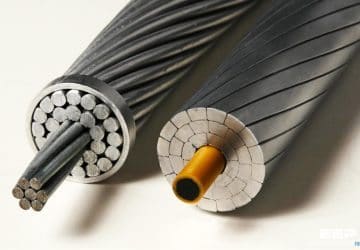
Conductors represent the most important component of an overhead power line because they have to ensure economical and reliable transmission and contribute considerably to the total line costs. For many years, aluminum and its alloys have been the prevailing conducting… Read more
Feb 16, 2015 | By Edvard Csanyi
Transmission and Distribution
HVDC VSC Technology For Offshore Wind Farm Applications
The demand for the power is increasing day by day. The only one solution for this is to use the renewable sources of energy like wind, solar, water etc. Among this wind can produce major amount of power. Since the… Read more
Jan 19, 2015 | By Midhun Krishnan
High Voltage
8 Major Advantages of Distribution Automation
More and more electric utilities are looking to distribution automation as an answer to the three main economic challenges facing the industry: The rising cost of adding generating capacity, Increased saturation of existing distribution networks and Greater sensitivity to customer… Read more
Jan 05, 2015 | By Edvard Csanyi
Energy and Power
8 most important definitions to quantify load diversity
The most vital, but often the last to be acquired, pieces of information for power system design are the load details. An important concept in load planning is that due to non-coincident timing, some equipment operating at less than rated load, and… Read more
Oct 31, 2014 | By Edvard Csanyi
Energy and Power
5 most common critical power distribution topologies
In many of today’s mission-critical applications, ever-increasing reliability requirements are the norm. A critical part of this reliability is the reliability of the electric power distribution system for a given facility. Among the most demanding applications is that of a… Read more
Aug 15, 2014 | By Edvard Csanyi

High Voltage
Analysing the costs of High Voltage Direct Current (HVDC) transmission
Introduction to HVDC Cost structure of HVDC Assumptions made in the price calculations Thyristor based HVDC system versus high voltage AC system VSC based HVDC system versus an AC system or a local generation source Comparative cost information It specifies… Read more
Aug 06, 2014 | By Edvard Csanyi

Power Substation
Site selection considerations for the future power substation
At this stage, a footprint of the future power substation should be developed, including the layout of the major equipment. A decision on the final location of the facility can now be made and various options can be evaluated. Final grades,… Read more
Jul 30, 2014 | By Edvard Csanyi
High Voltage
An Example of Choosing 138 kV Line Circuit Breaker
To better understand a process of high voltage equipment selection, let’s discuss an example of choosing 138 kV Line #3 Circuit Breaker, shown in Figure 1, assuming that the following information about the system is available: The following information about… Read more
Jul 23, 2014 | By Edvard Csanyi

Safety
How dangerous are induced currents in transmission towers and poles?
Landowners and developers should be aware of the potential for nuisance and startle shocks (caused by induced voltage) that can occur when someone comes in contact with a large conductive object (eg. a vehicle, building or even fencing) located on or off… Read more
Jun 27, 2014 | By Edvard Csanyi