


Estimated Study Time: 24 minutes
Beware of Energized Substations
For a young electrical engineer, stepping out of the office and into an energized high-voltage substation for the first time is a profound experience. The transition from the sterile environment of CAD software, single-line diagrams, and theoretical calculations to the physical reality of towering steel structures, massive transformers, and the visceral hum of immense power is jarring.
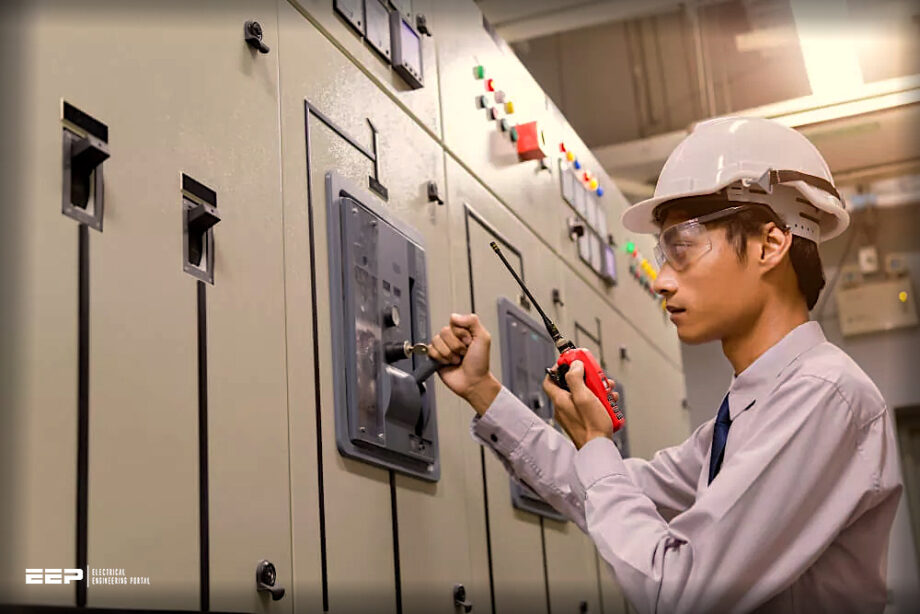 The Essential Guide for Young Engineers Entering Energized Power Substations
An energized substation is a highly unforgiving environment. When you are entering an unknown energized substation—one where you are not intimately familiar with the layout, the maintenance history, or the specific quirks of the local grid—the risks multiply exponentially.
In this environment, ignorance is not bliss; it is a critical safety hazard.
This comprehensive guide details the most crucial knowledge, mindsets, and protocols young engineers must possess before stepping through the gates of an unknown, energized substation.
- The Fundamental Shift in Mindset:
- Mastering the Hazards: What Can Harm You:
- The Bureaucracy of Survival: Documentation and Clearances:
- Minimum Approach Distances (MAD)
- Situational Awareness: The “Head on a Swivel” Mentality:
- Personal Protective Equipment (PPE): Your Last Line of Defense
- The Human Element: Navigating the Work Culture:
- Specific Areas of Danger in the Yard
- Conclusion
- BONUS (PDF) 🔗 Download ‘Electrical Substation Safety Manual’
- Video Course 🎥 (30% OFF coupon included!)
1. The Fundamental Shift in Mindset
Before discussing technical parameters, the most important thing to internalize is a psychological shift. In a classroom, an error results in a lower grade. In a substation, an error—even a momentary lapse in judgment or spatial awareness—can result in catastrophic injury or death.
1.1 Respect the Invisible Threat
Electricity is an invisible hazard. Unlike a spinning turbine, a moving vehicle, or a chemical spill, a live busbar looks exactly the same as a dead busbar. There is no visual cue to tell you that a piece of aluminum tubing is carrying 115,000 volts and is waiting for a path to ground.
You must adopt a mindset of absolute distrust.
Until a piece of equipment is visibly open, tested for the absence of voltage, and physically grounded with proper cables, you must treat it as fully energized and lethal.
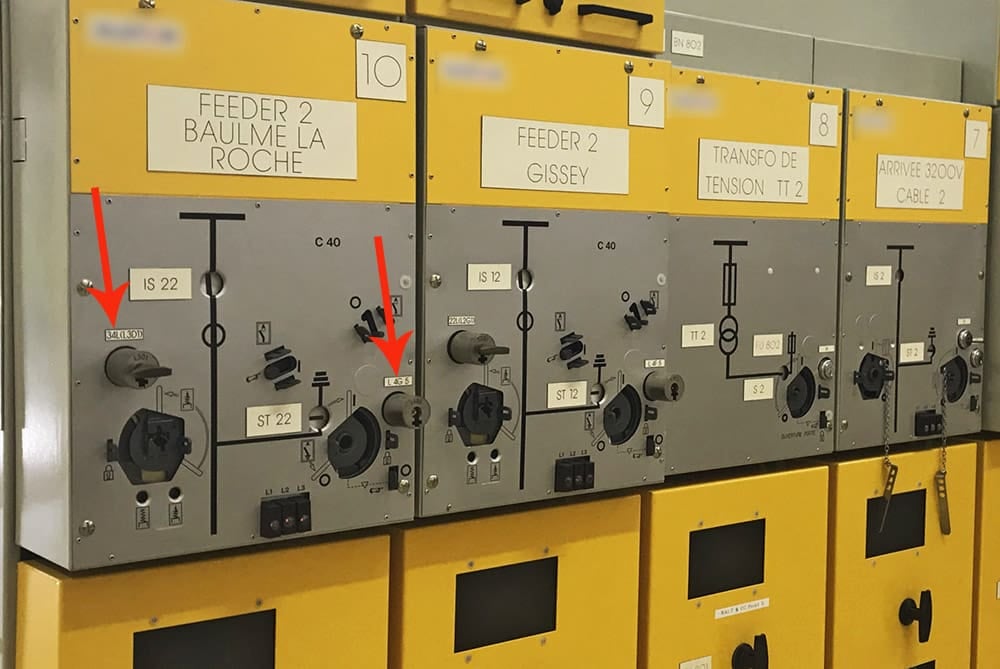
Figure 1 – Locking Mechanism for Feeder Disconnector and Earthing Switch in Open or Closed Positions
1.2 Stop Work Authority
Every person stepping into a substation, regardless of their age, rank, or experience level, possesses “Stop Work Authority”. If you see something that looks unsafe, if a procedure does not match the reality on the ground, or if you simply feel overwhelmed and confused about your surroundings, it is your professional duty to stop the job.
Never let the pressure of a deadline or the intimidation of senior technicians force you into a situation you do not understand.
Figure 2 – Working under pressure can be deadly
2. Mastering the Hazards: What Can Harm You
Understanding how electricity can harm you in a substation environment is critical. It is rarely as simple as touching a live wire.
2.1 Step Potential and Touch Potential
These are arguably the most insidious hazards in a substation, especially during a ground fault.
Step Potential
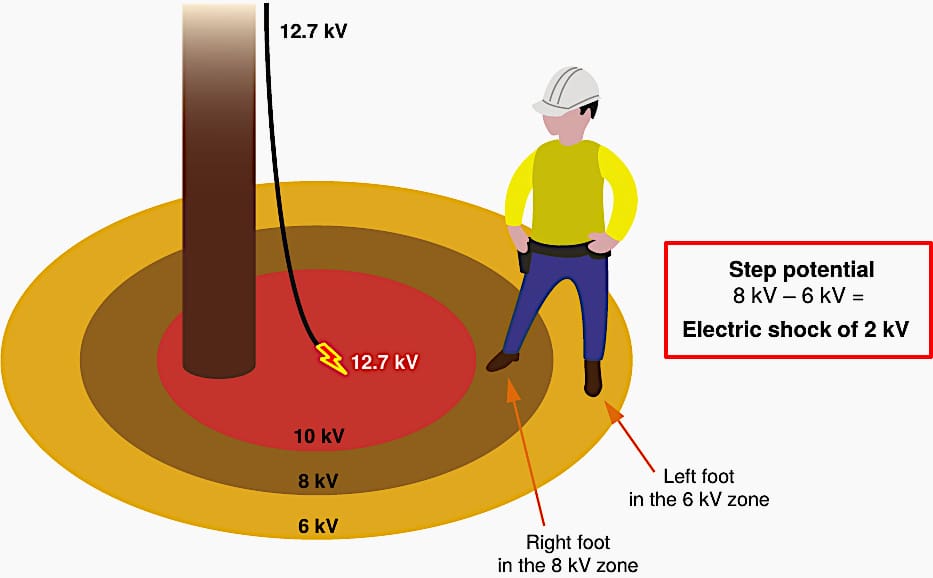
If a fault occurs (e.g., a lightning strike or a phase-to-ground short), massive amounts of current flow into the earth. The earth is a resistor, meaning this current creates a voltage gradient radiating outward from the point of entry.
If you take a step, your two feet are at different distances from the fault, meaning they are at different voltage potentials. Current will flow up one leg, through your pelvis, and down the other leg.
Figure 3 – Step potential zones
Touch Potential
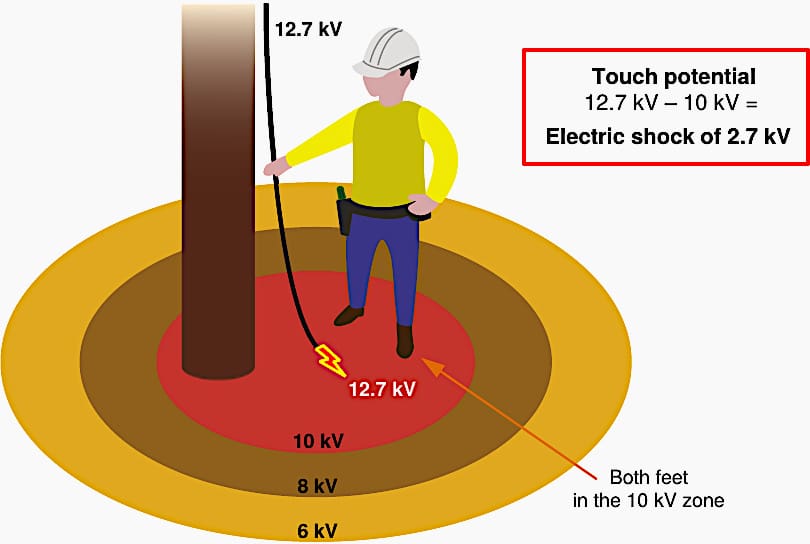
This occurs if you are standing on the ground and touching a conductive object (like a fence, a transformer casing, or a switch handle) that becomes energized during a fault. Your feet are at ground potential, but your hand is at fault potential.
The current will flow through your heart.
Figure 4 – Touch potential
How to Protect Yourself?
Substations are built with buried ground grids designed to equalize this potential, but in an unknown substation, you cannot guarantee the integrity of that grid. Never lean on equipment. Keep your hands in your pockets when walking around observing.
If you suspect a fault is occurring, shuffle your feet (keeping them constantly touching each other) to minimize step potential.
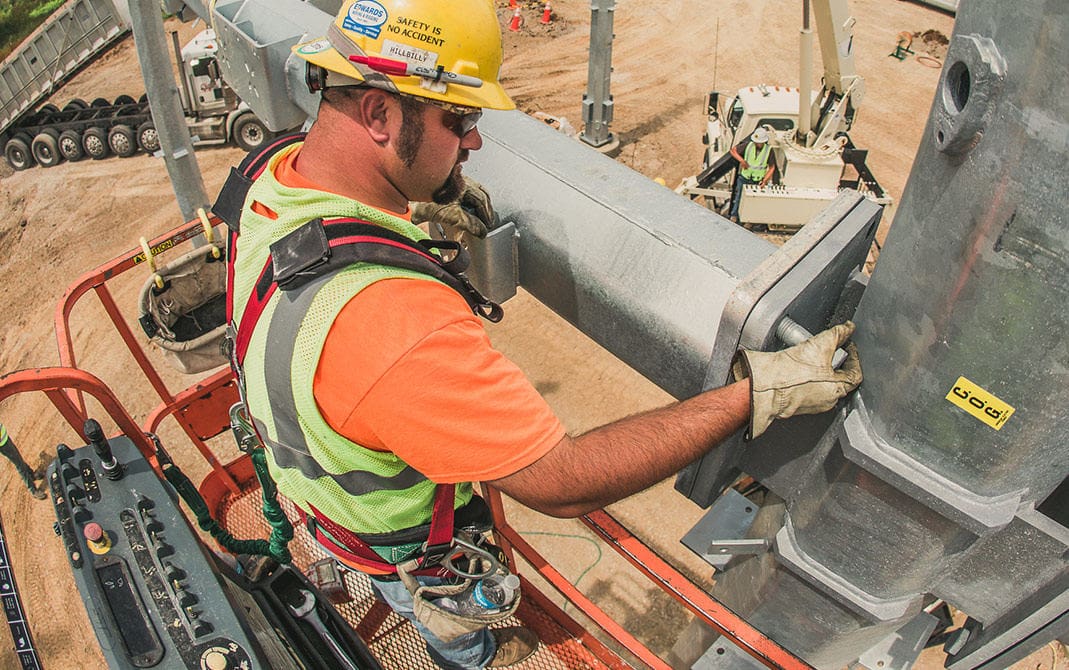
Figure 5 – Earthed and secured switchyard worker
2.2 Arc Flash and Arc Blast
An arc flash is an explosive release of energy caused by an electrical arc. This can happen due to a dropped tool, dust buildup, animal intrusion, or equipment failure.
Arc Flash
The radiant heat from a high-voltage arc can exceed 35,000 °F, or 19,426.67 °C (four times the surface temperature of the sun). This causes instant, severe, and fatal burns at a distance.
Further Study – Do you know what an arc flash is? If not, keep reading, it’s important.
Do you know what an arc flash is? If not, keep reading, it’s important.
Arc Blast
The rapid heating of the air and the vaporization of metal (copper expands by a factor of 67,000 when vaporized) creates a violent acoustic and pressure wave. This blast can rupture eardrums, collapse lungs, and throw you across the yard.
How to Protect Yourself
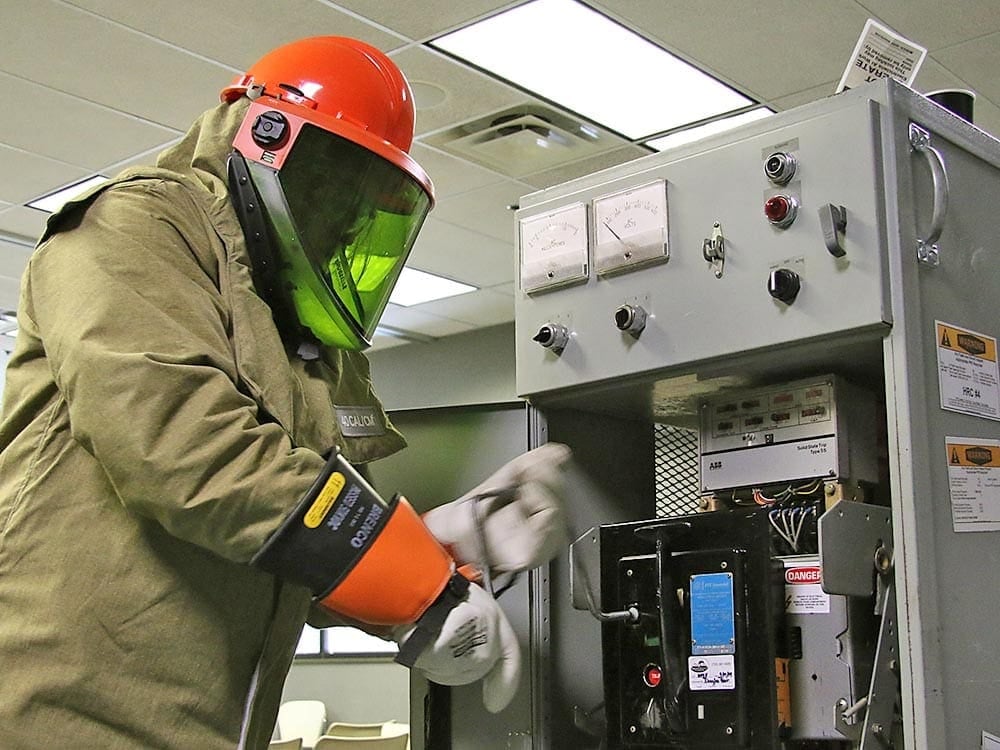
Maintain your distance from equipment operating under load, especially during switching operations. Wear the appropriate Personal Protective Equipment (PPE).
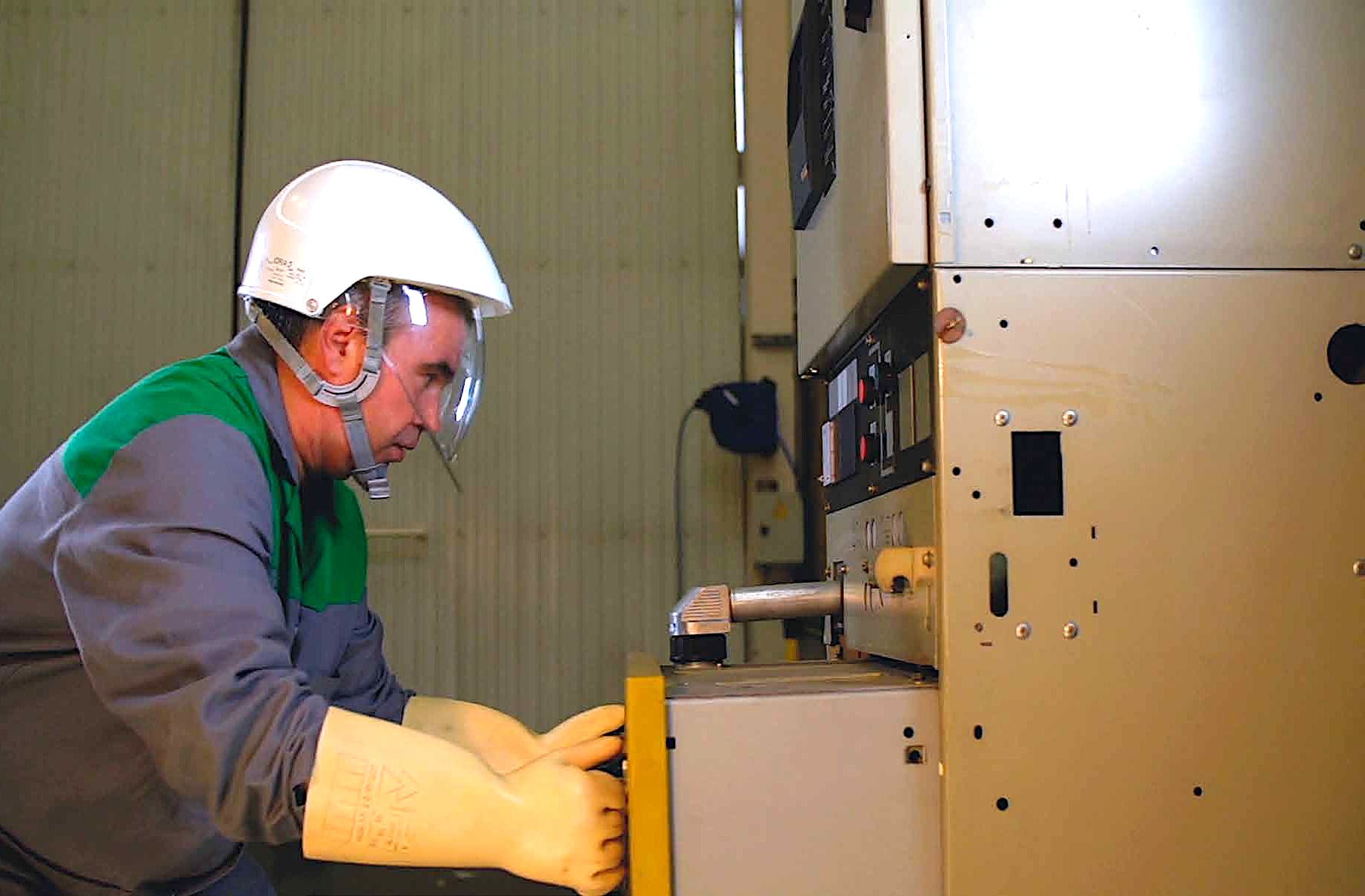
Figure 6 – Racking medium voltage circuit breaker by maintenance engineer wearing fire-resistant arc-rated PPE
2.3 Induction and Capacitive Coupling (The “Ghost” Voltages)
Just because a line is disconnected at both ends does not mean it is safe. High-voltage lines generate massive electromagnetic fields.
Induction
If a de-energized line runs parallel to an energized line, the magnetic field from the live line will induce a lethal current in the dead line.
Capacitive Coupling
Equipment can act like a giant capacitor, storing electrical charge even after being disconnected from the power source.
How to Protect Yourself?
The golden rule of the industry: “If it’s not grounded, it’s not dead.” Never touch “de-energized” equipment unless personal working grounds have been applied between the equipment and the earth.
Further Study – How to Design Effective Substation Grounding (Practical Tips)
How to Design Effective Substation Grounding (Practical Tips)
3. The Bureaucracy of Survival: Documentation and Clearances
In an unknown substation, your eyes can deceive you. You must rely on rigorous documentation and procedures.
3.1 The Single-Line Diagram (SLD)
The SLD is the map of the substation. It shows the electrical pathways, breakers, disconnect switches, and transformers. Before entering, you must review the SLD. However, you must also remember the primary rule of engineering field work: The map is not the territory.
In an older, unknown substation, modifications may have been made that are not reflected on the current revision of the SLD. Temporary jumpers might be installed. A normally open (N.O.) tie breaker might be closed.
3.2 Lock-out / Tag-out (LOTO) and Permits
If you are entering the substation to perform work (even just opening a cabinet to inspect wiring), you must understand the clearance procedures.
- Clearance: A state where equipment is isolated from all energy sources.
- LOTO: Physical locks placed on switches and breakers to prevent them from being closed, accompanied by tags identifying who placed the lock and why.
Never cross a red tape barrier. Never bypass a lock. Never operate a switch unless you are the authorized person holding the specific switching order. If you are a visitor or an observing engineer, you must be signed onto the work permit under the supervision of the person in charge.
Further Study – Substation Safety and Switching Rules You MUST Follow
4. Minimum Approach Distances (MAD)
You do not have to touch a high-voltage line to be electrocuted. High voltage can break down the dielectric strength of the air, causing electricity to jump, or “arc,” through the air to a grounded object—like you.
Minimum Approach Distance (MAD) is the calculated safe distance you must maintain from an exposed energized part. This distance includes the electrical sparking distance plus a human error factor (in case you trip or reach out).
- MAD increases as the voltage increases.
- MAD changes depending on your elevation (air is thinner at high altitudes and breaks down more easily).
- MAD changes if you are holding a conductive object (like a ladder or a tape measure).
Before entering an unknown substation, you must know the highest voltage present in that yard and the corresponding MAD. If the yard is 230kV, your absolute boundary of safety is significantly larger than in a 13kV distribution yard.
Rule of thumb: If you do not explicitly know the voltage of a conductor, assume it is the highest voltage in the yard and keep well away.
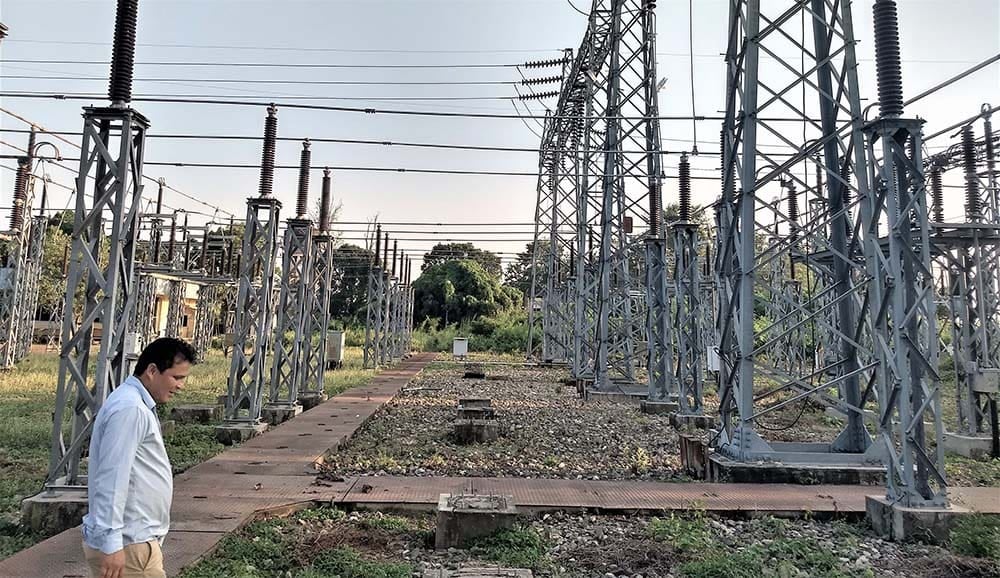
Figure 7 – Unsafe approach without protective gears in switchyard of 132 kV power substation
5. Situational Awareness: The “Head on a Swivel” Mentality
When you walk into a substation, you must actively engage all of your senses. Situational awareness is what saves you when documentation fails.
5.1 Look Up, Look Down, Look Around
Look Up
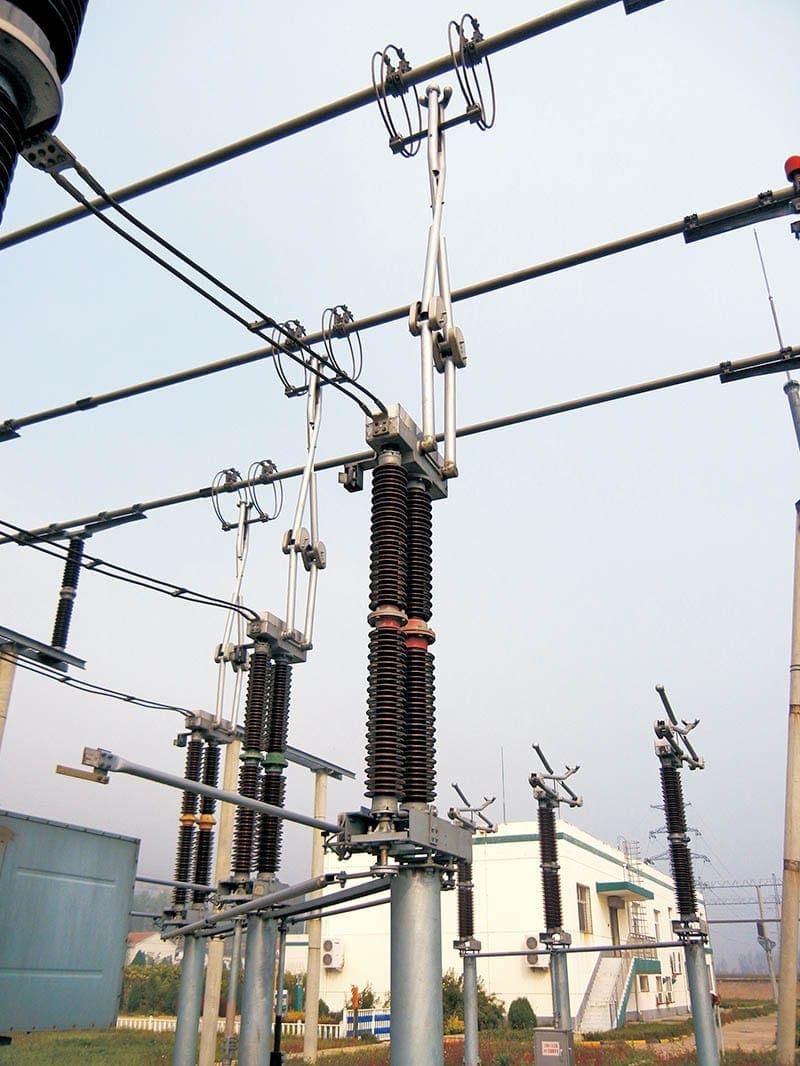
Overhead busbars, incoming transmission lines, and slack spans can sag on hot days or under heavy loads. A distance that looked safe on a drawing might be compromised in reality.
Be aware of your vertical clearances, especially if you are carrying equipment.
Figure 8 – Single-post vertically retractable UHV diconnector type
Look Down
Substation yards are notoriously difficult to walk in. They are covered in deep crushed rock (designed to increase resistance to ground for step potential, and to quench oil fires).
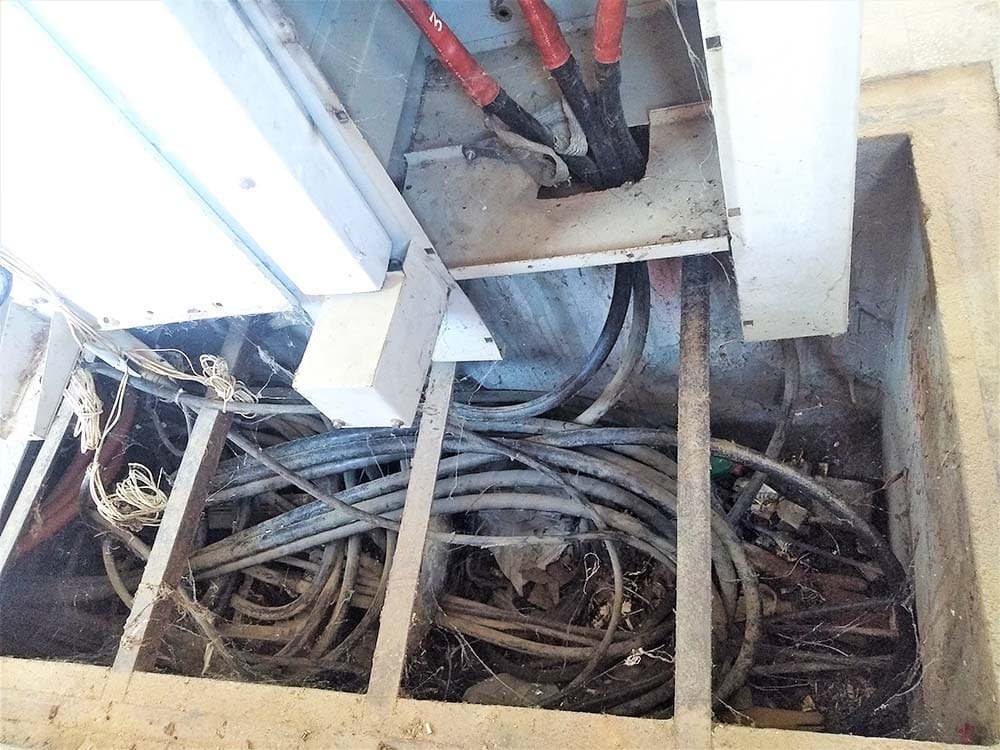
Cable trenches may have missing covers. Ground grids may have exposed tripping hazards.
Figure 9 – The danger of mismanaged cables in the trench without a cover
Look Around
Identify your escape routes. Note the locations of fire extinguishers and eye-wash stations. Be acutely aware of moving vehicles, cranes, or bucket trucks operating in the yard.
5.2 Listen Carefully
A healthy substation has a steady, deep 50Hz or 60Hz hum from the transformer cores. However, other sounds indicate danger:
- Buzzing/Crackle: A sharp, frying-bacon sound is “corona discharge“. It indicates the ionization of air around high-voltage components, often due to sharp edges, contamination, or failing insulators. It means you are near high-voltage stress.
- Loud Popping: This could indicate arcing inside a transformer or breaker, a sign of impending catastrophic failure.
Watch Video – Corona discharge
5.3 Smell the Air
- Ozone: Corona discharge produces ozone, which has a distinct, sharp, metallic smell (similar to the smell of a heavy thunderstorm). If you smell ozone strongly, you are near electrical stress.
- Burning: The smell of burning rubber, plastic, or oil is a red flag. Oil-filled transformers that are overheating will emit a distinct, acrid odor.
6. Personal Protective Equipment (PPE): Your Last Line of Defense
PPE does not prevent accidents; it only mitigates the damage when an accident occurs. In an unknown substation, strict adherence to PPE standards is non-negotiable.
Flame-Resistant (FR) Clothing: Synthetic materials like polyester or nylon will melt into your skin during an arc flash. You must wear rated FR clothing (cotton, Nomex, etc.) with long sleeves rolled down and buttoned. The specific Cal/cm² rating required depends on the arc flash study of the station.
Hard Hat: Must be a Class E (Electrical) hard hat, capable of withstanding high-voltage impacts.
Safety Glasses: Arc flashes emit intense ultraviolet light that can blind you instantly (arc eye). Always wear ANSI-rated safety glasses with UV protection.
Footwear: EH (Electrical Hazard) rated boots with safety toes. The soles are designed to provide a secondary source of protection against stepping on live circuits.
No Jewelry: Rings, watches, necklaces, and metal-rimmed glasses are conductive and can snag on equipment or become entry points for electric current. Leave them in your vehicle.
Watch Video – Substation safety
7. The Human Element: Navigating the Work Culture
As a young engineer, you will often be accompanied by veteran technicians or linemen who have worked in substations for decades. Managing these interactions is critical for your safety.
7.1 Beware of Complacency
Experience breeds competence, but it can also breed complacency. A veteran technician might take a shortcut, bypass a secondary safety check, or walk too closely to an energized bus because “they’ve done it a thousand times“.
Do not let their comfort level override your safety training. You do not have their muscle memory or instinctive spatial awareness. Stick to the written rules.
Interesting Reading – 21 Safety Rules for Working with Electrical Equipment
7.2 The Buddy System
Never enter an unknown substation alone. Always use the buddy system. Your buddy is there to:
- Watch your back while you are focused on taking notes or inspecting equipment.
- Ensure you maintain Minimum Approach Distances.
- Provide immediate assistance or call for emergency services if an accident occurs.
- Act as a spotter: If you are walking backwards or looking up, your buddy must be your eyes.
7.3 Communication
Establish clear communication protocols before entering. Because of the loud hum of transformers and ear protection, verbal communication can be difficult.
Agree on hand signals for “stop,” “look at this,” and “evacuate.”
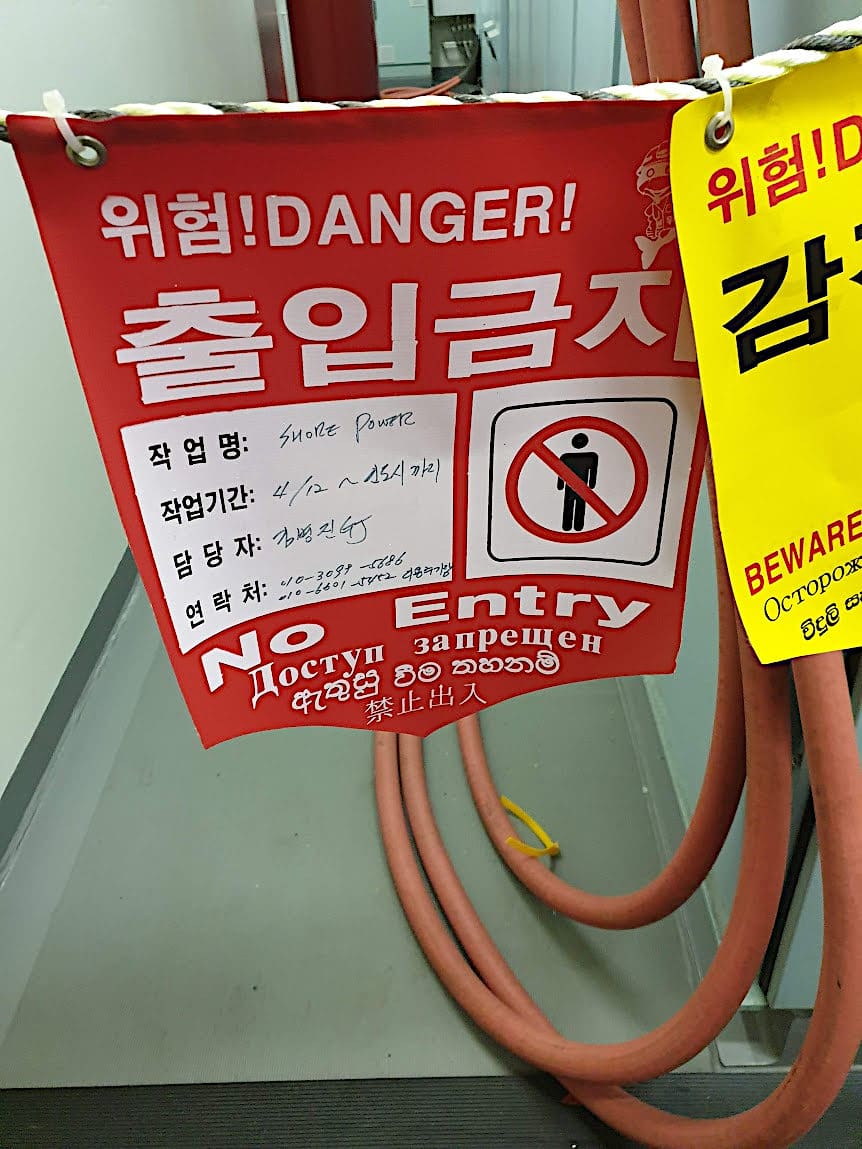
Figure 10 – Not everyone on site will appreciate the danger of HV cables
8. Specific Areas of Danger in the Yard
When navigating the substation, be particularly wary of the following components:
Transformers: These are massive tanks of combustible mineral oil. Do not stand directly next to them unless necessary. If a bushing fails, the resulting explosion can shower the area with flaming oil and porcelain shrapnel.
Circuit Breakers: These are the explosive points of the grid. When they operate (open a fault), they dissipate immense energy. Avoid standing directly in front of breaker control cabinets during switching operations.
Capacitor Banks: These store massive amounts of energy and are highly susceptible to trapping lethal charges. Give them a wide berth.
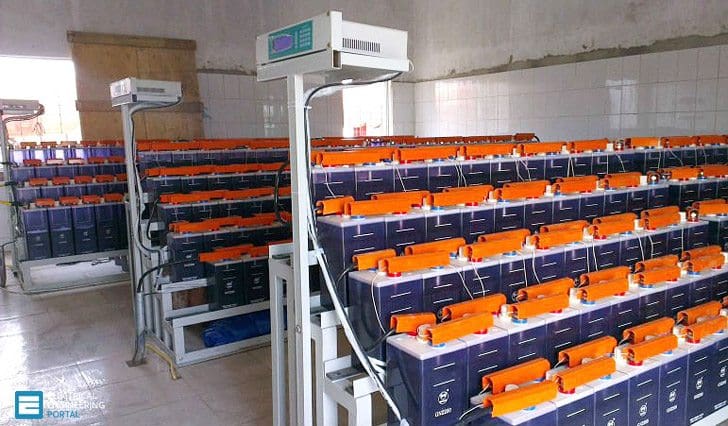
Battery Rooms: Inside the control house, the DC battery system is the lifeblood of the substation’s protection relays. Battery rooms contain concentrated acid and can generate explosive hydrogen gas. Ensure proper ventilation and no open flames.
Figure 11 – 110V substation NiCd battery room
9. Conclusion
Entering an unknown energized substation is a high-stakes endeavor that demands absolute respect, rigorous preparation, and constant vigilance. For a young engineer, the learning curve is steep, and the margin for error is non-existent.
Your engineering degree gives you the theoretical knowledge to understand why the grid works; your safety training gives you the practical knowledge to survive it. By maintaining a healthy paranoia, relying on verifiable documentation, strictly adhering to MAD boundaries, and trusting your instincts to stop work when things seem wrong, you can safely navigate these impressive and dangerous monuments to modern infrastructure.
Remember: at the end of the day, the most important metric of success is leaving the substation exactly as healthy as when you entered it.
10. BONUS (PDF): Electrical Substation Safety Manual
Download: Electrical Substation Safety Manual (for premium members only):
11. Mastering Power Substations: Electrical Equipment, Busbar Schemes and Relay Protection
This masterclass provides an in-depth understanding of power substations, equipping you with practical knowledge of essential equipment, layout configurations, and safety systems. You will learn the mechanics behind critical components, including switchgear, transformers, isolators, earth switches, instrument transformers (CTs & VTs), shunt reactors, and battery systems.
A significant focus of the course is dedicated to complex busbar schemes, transformer protection, and substation relay control.
Apply the 30% Discount Coupon: 30KVA
Visit the Course
Course Details at a Glance:
- Structure: 97 lessons across 22 modules
- Total Duration: 9 hours, 2 minutes
What You Will Learn:
1. Substation Fundamentals & Core Components
The course begins by breaking down the working principles and layout comparisons of the three primary substation types: Air-Insulated (AIS), Gas-Insulated (GIS), and Hybrid.
You will explore the main equipment installed in modern substations, from capacitor banks and fuses to transformers and switchgear.
2. Battery Systems & Single-Line Diagrams
Gain specialized knowledge on substation battery installations, modern charger techniques, and how to accurately depict these systems within a single-line diagram.
3. Busbar Configurations
Master the most common busbar layouts and schemes. We cover:
- Single-Bus Single-Breaker (with and without Bus Section CB)
- Double-Bus Single-Breaker
- One-and-a-Half Breaker
- Ring or Mesh Busbar Schemes
4. Relay Control & Protection Systems
Dive deep into the philosophy and characteristics of substation protection. This crucial chapter covers:
- Identifying faults within power systems.
- Reading and applying ANSI Codes for protection devices.
- Understanding the functions of all major relay types, including protection, tripping, lockout, and auxiliary relays, as well as tripping coils.
5. Switchgear & Substation Earthing
The course concludes with a detailed walkthrough of medium voltage switchgear and its individual compartments, followed by the essential principles and safety practices of substation earthing.
Related electrical guides & articles

Edvard Csanyi
Hi, I'm an electrical engineer, programmer and founder of EEP - Electrical Engineering Portal. I worked twelve years at Schneider Electric in the position of technical support for low- and medium-voltage projects and the design of busbar trunking systems.I'm highly specialized in the design of LV/MV switchgear and low-voltage, high-power busbar trunking (<6300A) in substations, commercial buildings and industry facilities. I'm also a professional in AutoCAD programming.
Profile: Edvard Csanyi
I have enjoyed the top with full practical reality as far as safety is concern in electrical field mainly substation where observation is a key despite having blue print which can be manipulated due to changes and failure to update on other hand temperature.
also enjoyed and understand of corona effect