

Transmission and Distribution
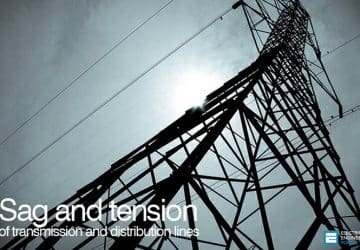
Sag and tension of transmission and distribution lines
The energized conductors of transmission and distribution lines must be placed to totally eliminate the possibility of injury to people. Overhead conductors, however, elongate with time, temperature, and tension, thereby changing their original positions after installation. Despite the effects of… Read more
Jun 17, 2012 | By Edvard Csanyi
Electrical Lectures
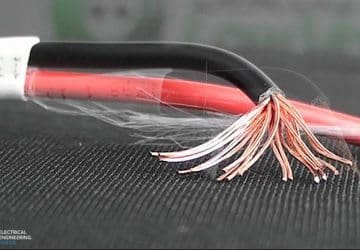
Inspection Of Voltage Drop In Conductors
It is part of the inspection process to ensure that installed conductors have been correctly selected for current carrying capacity and voltage drop. To check the suitability of the current carrying capacity it is simply a matter of looking at… Read more
Apr 15, 2012 | By Edvard Csanyi
High Voltage
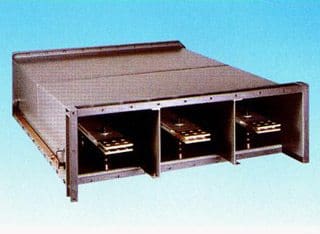
Segregated Phase Bus System
In this construction all the phases are housed in one metallic enclosure as earlier, but with a metallic barrier between each phase, as illustrated in Figure 1. The metallic barriers provide the required magnetic shielding and isolate the busbars magnetically from each other, like an… Read more
Jan 18, 2012 | By Edvard Csanyi
Medium Voltage
Standards and applications of medium voltage Bus Duct
Bus duct is used for the effective and efficient supply of electricity in mostly industrial locations. Copper or aluminum is used for the conductor of bus duct that be insulated and enclosed completely for protection against mechanical damage and dust… Read more
Aug 01, 2011 | By Edvard Csanyi

Cables
Offshore wind farms – transmission cables
The European wind power industry is increasingly turning to the offshore wind resource, and the United States will draw on the Europeans’ experience as we begin to plan offshore wind farms. Short of generating hydrogen, or otherwise using or storing… Read more
Mar 23, 2011 | By Edvard Csanyi

Cables
Electrical Wire – How It’s Made
Wikipedia: Electrical wiring in general refers to insulated conductors used to carry electricity, and associated devices. This article describes general aspects of electrical wiring as used to provide power in buildings and structures, commonly referred to as building wiring. Cant… Read more
Feb 03, 2011 | By Edvard Csanyi

Cables
Oxidation Of Conductors
High-resistance oxides form very quickly on aluminum and copper conductors expose to air. Once the oxides are stabilized, they prevent further oxidation of the parent metal; however, due to this high electrical resistance, these oxides must be broken or removed… Read more
Jan 16, 2011 | By Edvard Csanyi
Cables
Comparison Of Cable Insulating Materials
Electrical insulation materials are employed over the metallic conductors of underground cables at all voltage ratings. Polymeric materials are employed as the insulation, but the nature of the polymer may vary with the voltage class. Since paper insulation was used… Read more
Jan 03, 2011 | By Edvard Csanyi
Medium Voltage
Aluminum vs. Copper: Conductors in Low Voltage Dry Type Transformers
In North America, aluminum is the predominant choice of winding material for low-voltage, dry-type transformers larger than 15 kilovolt-amperes(kVA). In most other areas of the world, copper is the predominant winding material. The primary reason for choosing aluminum windings is… Read more
Oct 27, 2010 | By Edvard Csanyi

