

Electric Motor
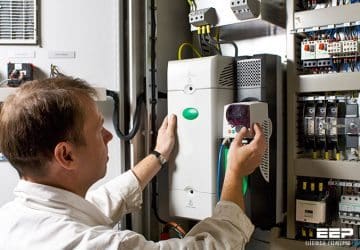
Comparison of motor speed control methods
It is often desirable to control the motor speed, usually for reasons process control for such variables as flow or pressure. Such applications as fans and pumps often have varying output requirements, and control of the motor speed is more… Read more
Mar 13, 2015 | By Edvard Csanyi
Low Voltage
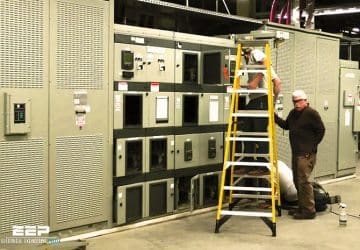
Inspection, Test and Measurement Procedures for LV and MV (up to 36kV) Switchgear
Installed in clean, well ventilated or air-conditioned locations, switchgear will require little routine maintenance. Major inspection should be scheduled for power plant shutdowns and concentrate for low voltage switchboards on identifying contact wear, correct operation of interlocks, correct overload settings and fuse… Read more
Jan 16, 2015 | By Edvard Csanyi
Electric Motor
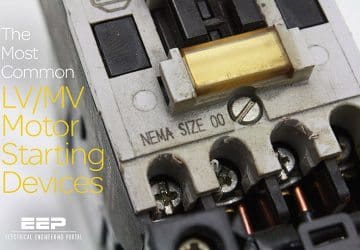
The most common LV/MV motor starting devices
The most common motor starting device is the low voltage motor-starting contactor. A contactor is defined as “a two-state ON-OFF device for repeatedly establishing and interrupting an electric power circuit.” Contactors are designed for optimum performance and lifetime when switching loads; they… Read more
Jan 14, 2015 | By Edvard Csanyi
Electric Motor
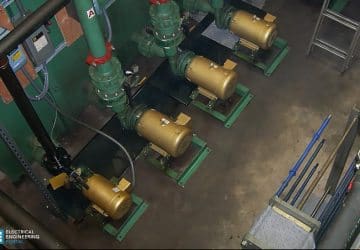
When to Buy Premium Efficiency Motors?
Using premium efficiency motors can reduce your operating costs in several ways. Not only does saving energy reduce your monthly electrical bill, it can postpone or eliminate the need to expand the electrical supply system capacity within your facility. On a larger scale, installing efficiency… Read more
Dec 31, 2014 | By Edvard Csanyi
Electric Motor
PLC Implementation Of Forward/Reverse Motor Circuit With Interlocking
Figure 1 illustrates a hardwired forward/reverse motor circuit with electrical and push button interlockings. Figure 2 shows the simplified wiring diagram for this motor. The PLC implementation of this circuit should include the use of the overload contacts to monitor… Read more
Dec 10, 2014 | By Edvard Csanyi

Electric Motor
Characteristics And Work Principles of Switched Reluctance (SR) Motor
The Switched Reluctance (SR) motor is very different from the other polyphase machines described because both the stator and the rotor have salient poles. The motor can only be used in conjunction with its specific power converter and control, and… Read more
Dec 08, 2014 | By Edvard Csanyi

Electric Motor
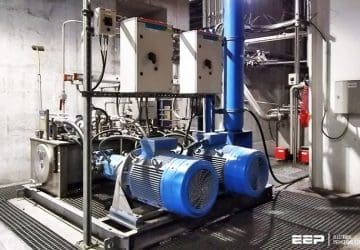
14 energy-efficiency improvement opportunities in pumping systems
Pump systems consist of pumps, driver, pipe installation and controls (such as ASDs or throttles) and are a part of the overall motor system. Below some of the energy efficiency opportunities for the pumping system are presented. Also, American Society… Read more
Oct 13, 2014 | By Edvard Csanyi
Electric Motor
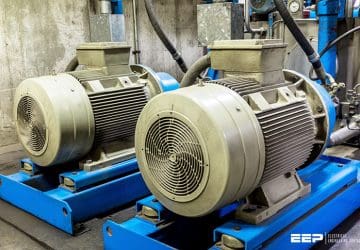
8 Energy-Efficiency Improvement Opportunities In Electric Motors
When considering energy-efficiency improvements to a facility’s motor systems, a systems approach incorporating pumps, compressors, and fans must be used in order to attain optimal savings and performance. In the following, considerations with respect to energy use and energy saving… Read more
Sep 29, 2014 | By Edvard Csanyi
Electric Motor
Selecting AC induction motors for cement plant applications
This technical article relies on the great paper written by Barton J. Sauer (Siemens Energy & Automation) which goes into essence of selecting the proper AC motor for cement plant applications. Although motors may appear to be the least complicated component… Read more
Jun 18, 2014 | By Edvard Csanyi

Electric Motor
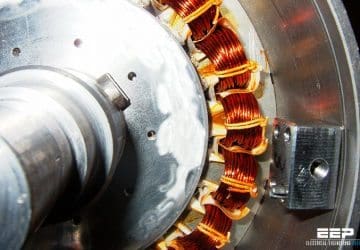
How to measure insulation resistance of a motor
If the motor is not put into operation immediately upon arrival, it is important to protect it against external factors like moisture, high temperature and impurities in order to avoid damage to the insulation. Before the motor is put into… Read more
Jun 09, 2014 | By Edvard Csanyi
Electric Motor
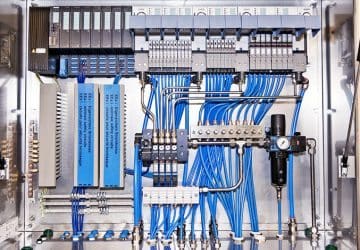
PLC application for reduced voltage-start motor control
Figure 1 shown below illustrates the control circuit and wiring diagram of a 65% tapped, autotransformer, reduced-voltage-start motor control circuit. This reduced voltage start minimizes the inrush current at the start of the motor (locked rotor current) to 42% of that… Read more
Jun 04, 2014 | By Edvard Csanyi
Maintenance
An example of calculating transformer size and voltage drop due to starting of large motor
Let’s calculate voltage drop in transformer 1000KVA, 11/0.480 kV, impedance 5.75% due to starting of 300 kW, 460V, 0.8 power factor, motor code D (kva/hp). Motor starts 2 times per hour and the allowable voltage drop at transformer secondary terminal is… Read more
May 12, 2014 | By Jignesh Parmar
Industrial Automation
PLC implementation of the bottle-filling application
In this example (see Figure 1), we will implement a control program that detects the position of a bottle via a limit switch, waits 0.5 seconds, and then fills the bottle until a photosensor detects a filled condition. After the… Read more
Mar 28, 2014 | By Edvard Csanyi

Electric Motor
Heat as one of the most common cause of motor failure
Heat is the most common cause of motor failure before reaching rated service life. Every increase of 10 degrees Centigrade of a motor’s windings above its design operating temperature cuts the life of the motor’s windings insulation by 50 percent,… Read more
Nov 22, 2013 | By Edvard Csanyi

Energy and Power
Electrical Thumb Rules You MUST Follow (5)
Continued from: Electrical Thumb Rules You MUST Follow (Part 4) Standard Size of Transformer (IEEE/ANSI 57.120) Standard Size of Motor (HP) Approximate RPM of Motor Motor Line Voltage Motor Starting Current Motor Starter Impedance of Transformer (As per IS 2026)… Read more
Nov 20, 2013 | By Jignesh Parmar

