

Electric Motor
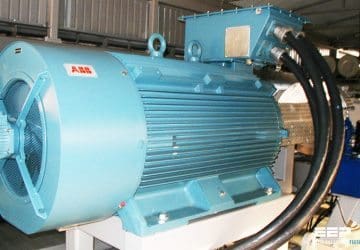
Identity Card of Every Asynchronous Motor
A motor is characterized by different electrical and constructional parameters which identify its correct application field. The whole of all these parameters constitutes the rating of the machine and is reported on a nameplate positioned on the motor itself. Hereunder… Read more
Nov 18, 2013 | By Edvard Csanyi
Electric Motor
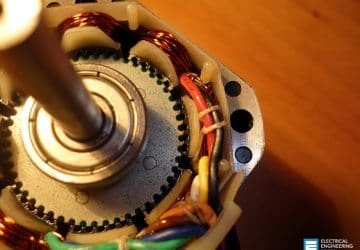
Few Words About Stepper Motor (Advantages, Disadvantages and Classification)
A stepper motor is an electromechanical device which converts electrical pulses into discrete mechanical movements. The shaft or spindle of a stepper motor rotates in discrete step increments when electrical command pulses are applied to it in the proper sequence…. Read more
Nov 06, 2013 | By Edvard Csanyi
Electric Motor
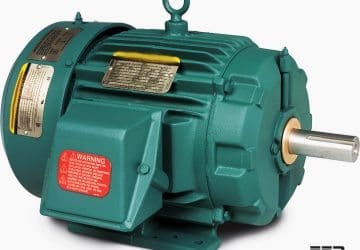
4 motor designs identified in NEMA MG1
Performance requirements for various types of induction motors for use on standard sinewave power supplies are identified in NEMA MG1. Some of these types of motors are suitable for use in variable speed applications, dependent on the type of application…. Read more
Nov 01, 2013 | By Edvard Csanyi
Electric Motor
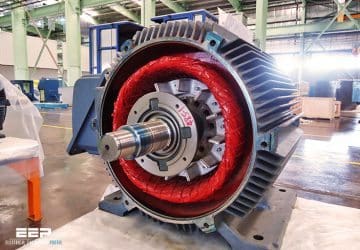
Testing and commissioning procedure for electric motors
It should be noted that the scope of motor testing depends upon the motor type and size, this being indicated on the inspection forms. Motor vibration shall be measured in a tri-axial direction, i.e.: Point x axis – side of… Read more
Sep 20, 2013 | By Edvard Csanyi
Electric Motor
Sizing The DOL Motor Starter Parts (Contactor, Fuse, Circuit Breaker and Thermal Overload Relay)
In this technical article we’ll calculate the size of each part of DOL motor starter for the system voltage 415V, 5HP three phase household application induction motor, code A, motor efficiency 80%, motor RPM 750, power factor 0.8 and overload… Read more
Sep 11, 2013 | By Jignesh Parmar

Electrical Lectures
Electrical Thumb Rules You MUST Follow (3)
Continued from second part: Electrical Thumb Rules You MUST Follow (Part 2) For Motor Size of Capacitor = 1/3 Hp of Motor ( 0.12x KW of Motor) For Transformer < 315 KVA 5% of KVA Rating 315 KVA to 1000… Read more
Sep 02, 2013 | By Jignesh Parmar

Electric Motor
7 Most Common Motor Enclosure Types Defined By NEMA Standards
The enclosure of the motor must protect the windings, bearings, and other mechanical parts from moisture, chemicals, mechanical damage and abrasion from grit. NEMA standards MG1-1.25 through 1.27 define more than 20 types of enclosures under the categories of open… Read more
Aug 09, 2013 | By Edvard Csanyi
Electric Motor
Motor Service Factor (SF) Defined By NEMA
Motor Service Factor (SF) is the percentage of overloading the motor can handle for short periods when operating normally within the correct voltage tolerances. This is practical as it gives you some ‘fudge’ in estimating horsepower needs and actual running… Read more
Aug 07, 2013 | By Edvard Csanyi
Electric Motor
NEMA Definition Of Motor Full Load Nominal Efficency (Standard MG1-12.54.2)
Efficiency is defined as the ratio of the power output divided by the power input. Machine losses are in the form of heat, and include: Stator winding loss, Rotor loss, Core loss (hysteresis and eddy current), Friction and windage, and… Read more
Aug 02, 2013 | By Edvard Csanyi

Electric Motor
Selection Of Crane Duty Motors (Part 3)
Continued from second part: Selection Of Crane Duty Motors (Part 2) N = Duration of motor operation under rated conditions R = Duration of motor at rest and de-energised ØMax = Maximum temperature attained during Duty cycle Unless otherwise specified,… Read more
Jul 27, 2013 | By Ashok Parikh

Electric Motor
Selection Of Crane Duty Motors (Part 1)
The operating conditions such as duty cycle, startup, temperature and operating environment are vital considerations in the motor efficiency and reliability. It is absolutely essential to match the motors to their specified operating conditions for minimizing stresses on the motors… Read more
Jul 22, 2013 | By Ashok Parikh
Electric Motor
What is the rewind scenario if a motor fails?
Unlike an initial motor purchase where your decision is limited to procuring a standard versus a premium efficiency motor, a motor failure or burnout produces three alternatives. Your options are to rewind the failed motor, purchase a new standard-efficiency motor,… Read more
Jul 10, 2013 | By Edvard Csanyi
Electric Motor
Keeping Motor At Correct Temperature When Connected To a Frequency Converter
When a motor is connected to a frequency converter it must be kept at the correct temperature, and this is subject to two types of influence: If the speed decreases, the cooling air volume goes down. If a non-sinusoidal motor… Read more
Jul 05, 2013 | By Edvard Csanyi

Electric Motor
Few Words About Capacitor-Start (CS) Motors
The capacitor-start (CS), or more precisely, capacitor-start, induction-run motor, is a modified split-phase induction motor used for hard-to-start loads. CS motors are efficient and require starting currents about 5 times their full-load currents. The schematic Figure 1 shows that the… Read more
Jun 14, 2013 | By Edvard Csanyi

Electric Motor
Split-phase motors for medium-duty applications
The split-phase (SP), or more accurately, the resistance-start, split-phase, induction run motor,is recommended for medium-duty applications. It can run at constant speed even under varying load conditions where moderate torque is acceptable. Split-phase motors have squirrel-cage rotors and both a main or… Read more
Jun 12, 2013 | By Edvard Csanyi

