Energy and Power
Arriving at the scene of a pole fire. What to do?
Utility pole fires are common and should be treated with great respect by firefighters. Pole fires are normally caused by the failure of insulators, switches, catastrophic failure of transformers or oil-filled switching equipment. Some poles used in the utility industry… Read more
May 21, 2014 | By Edvard Csanyi

High Voltage
Five special transformers for industrial applications you should know about
A number of industry applications require specific industrial transformers due to the usage of power (current) as a major resource for production. Electric arc furnaces (EAF), ladle furnaces (LF) and high-current rectifiers need a specific design to supply the necessary… Read more
Sep 23, 2013 | By Edvard Csanyi

Testing and Commissioning
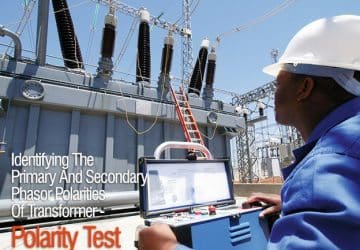
Identifying The Primary And Secondary Phasor Polarities Of Transformer – Polarity Test
This is needed for identifying the primary and secondary phasor polarities. It is a must for poly phase connections. Both a.c. and d.c methods can be used for detecting the polarities of the induced emfs. The transformer is connected to… Read more
Aug 26, 2013 | By Edvard Csanyi
Power Substation
Total Losses in Power Distribution and Transmission Lines
This technical article discusses two types of transmission and distribution losses, technical losses and non-technical losses (or commercial losses). Power generated in power stations pass through large and complex networks like transformers, overhead lines, cables and other equipment and reaches… Read more
Aug 19, 2013 | By Jignesh Parmar
Testing and Commissioning
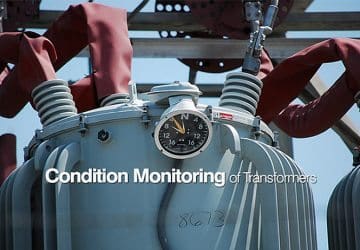
Condition Monitoring of Transformers
It is possible to provide transformers with measuring devices to detect early signs of degradation in various components and provide warning to the operator in order to avoid a lengthy and expensive outage due to failure. The technique, which can… Read more
May 24, 2013 | By Edvard Csanyi
High Voltage
High Voltage Substations Overview (part 2)
Continued from first part: High Voltage Substations Overview (part 1) Transformers are used for the transformation of high and medium voltage to low voltage, flanked by specific protective devices and control systems, which constitute the low voltage distribution substations. A… Read more
Jan 26, 2013 | By Emmanouil Angeladas

High Voltage
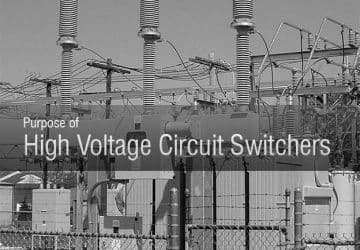
The Purpose of High Voltage Circuit Switchers
Circuit switchers have been developed to overcome some of the limitations of fusing for substation power transformers. Circuit switchers have SF6 gas interrupters and are designed to provide three-phase interruption (solving the unbalanced voltage considerations) and to provide protection for… Read more
Nov 16, 2012 | By Edvard Csanyi
Transformers
Right Choice of Dry Type or Liquid-Filled Transformer
1. Two Types of Transformers 2. Cooling and insulating system 3. Losses 4. Operating Life of Transformer 5. Maintainability 6. Repairability 7. Core/Coil Reclamation and Recycling 8. Operating Sound Level and Noise Pollution 9. Footprint 0. Conclusion Information on the… Read more
Sep 29, 2012 | By Edvard Csanyi

Power Substation
Transformers Connected Directly to Generators
Power transformers connected directly to generators can experience excitation and short-circuit conditions beyond the requirements defined by ANSI/IEEE standards. Special design considerations may be necessary to ensure that a power transformer is capable of withstanding the abnormal thermal and mechanical aspects that… Read more
Sep 01, 2012 | By Edvard Csanyi

Transformers
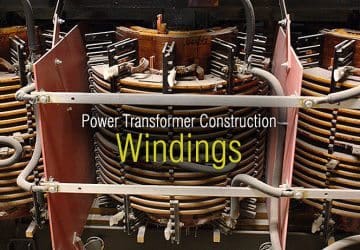
Power Transformer Construction – Windings
Continued from tech. article: Power Transformer Construction – Core The windings consist of the current-carrying conductors wound around the sections of the core, and these must be properly insulated, supported and cooled to withstand operational and test conditions. The terms winding… Read more
Aug 24, 2012 | By Edvard Csanyi
Energy and Power
Principles of Transformers in Parallel Connection (part 2)
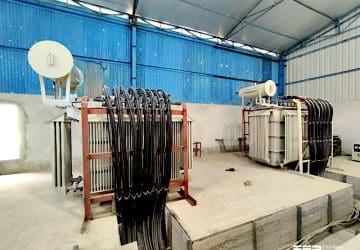
In ideal parallel operating of power transformers, the current in each transformer is directly proportional to its capacity, and the arithmetic sum equals one-half of the total current. This is rarely accomplished because to minor discrepancies in transformers. Nonetheless, some… Read more
Aug 08, 2012 | By Jignesh Parmar
Energy and Power
Principles of Transformers in Parallel Connection
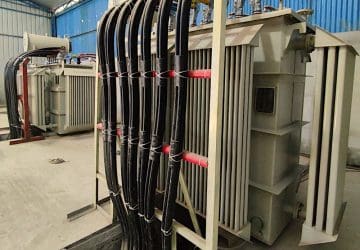
For supplying a load in excess of the rating of an existing transformer, two or more transformers may be connected in parallel with the existing transformer. The transformers are connected in parallel when load on one of the transformers is… Read more
Aug 06, 2012 | By Jignesh Parmar
Transformers
Star-Delta Transformer Connection Overview
In this type of transformer connection, then primary is connected in star fashion while the secondary is connected in delta fashion as shown in the Figure 1 below. The voltages on primary and secondary sides can be represented on the… Read more
Jun 10, 2012 | By Jignesh Parmar

Energy and Power
Understanding Vector Group of Transformer (Part 2)
Vector Groups are the IEC method of categorizing the primary and secondary winding configurations of 3-phase transformers. Windings can be connected as delta, star, or interconnected-star (zigzag). Winding polarity is also important, since reversing the connections across a set of… Read more
Jun 04, 2012 | By Jignesh Parmar
Electrical Lectures
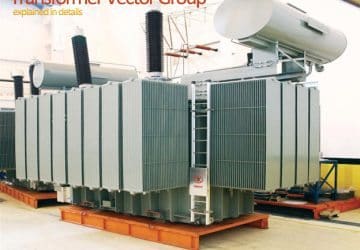
Understanding Vector Group of Transformer (Part 1)
Three phase transformer consists of three sets of primary windings, one for each phase, and three sets of secondary windings wound on the same iron core. The vector group of the transformer is determined by the connection between the windings… Read more
Jun 03, 2012 | By Jignesh Parmar