Electrical Lectures
What Is The Potential Difference?
Potential difference is the term used to describe how large the electrostatic force is between two charged objects. If a charged body is placed between two objects with a potential difference, the charged body will try to move in one direction, depending upon the polarity of the object. If… Read more
Jan 13, 2012 | By Edvard Csanyi

Energy and Power
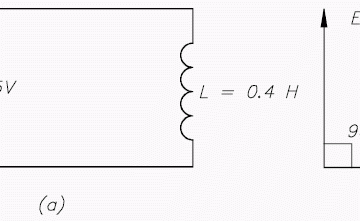
Voltage and Current Phase Relationships in an Inductive Circuit
Any change in current in a coil (either a rise or a fall) causes a corresponding change of the magnetic flux around the coil. Because the current changes at its maximum rate when it is going through its zero value… Read more
Jan 05, 2012 | By Edvard Csanyi
Electronics
A Look at the Power Rating of Resistors
You may be asked: “what is the power rating of the resistors you want to buy?” when buying a resistor to build a certain circuit. For the most standard class of resistors, you may simply be given ¼ Watt resistor…. Read more
Nov 24, 2011 | By elaina

Energy and Power
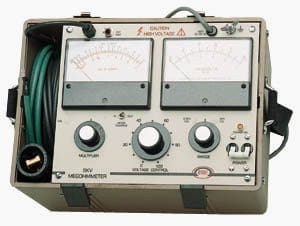
Moving Iron Instruments – Voltmeter and Ammeter
Moving-iron instruments are generally used to measure alternating voltages and currents. In moving-iron instruments the movable system consists of one or more pieces of specially-shaped soft iron, which are so pivoted as to be acted upon by the magnetic field… Read more
Nov 13, 2011 | By Bipul Raman

Energy and Power
Ohm’s Law – The Resistance
It is intuitive that voltage and current would be somehow related. For example, if the potential difference between two ends of a wire is increased, we would expect a greater current to flow, just like the flow rate of gas… Read more
Sep 02, 2011 | By Edvard Csanyi
Electronics
Resistors in detail
Resistors are one of the simplest varieties of electronic components. A resistor is a two-terminal device that has a fixed relationship between the current passing through the device and the voltage drop across the device. This relationship is described in… Read more
Aug 12, 2011 | By elaina

Energy and Power
DC to AC Transfer – Measurement
General transfer capability is essential to the measurement of voltage, current, power, and energy. The standard cell, the unit of voltage which it preserves, and the unit of current derived from it in combination with a standard of resistance are… Read more
Jul 30, 2011 | By Edvard Csanyi
Energy and Power
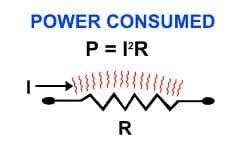
Resistive heating explained in details
Whenever an electric current flows through a material that has some resistance (i.e., anything but a superconductor), it creates heat. This resistive heating is the result of “friction,” as created by microscopic phenomena such as retarding forces and collisions involving… Read more
Jul 27, 2011 | By Edvard Csanyi
Energy and Power
Protection Relay – ANSI Standards
In the design of electrical power systems, the ANSI Standard Device Numbers denote what features a protective device supports (such as a relay or circuit breaker). These types of devices protect electrical systems and components from damage when an unwanted… Read more
Feb 22, 2011 | By Edvard Csanyi

Electronics
What Is Modulation?
Modulation is the use of one electrical signal to “control” a primary variable of another. For example, if an audio signal voltage is used to control the “amplitude” of a carrier signal, the result is amplitude modulation. It is important… Read more
Feb 20, 2011 | By Sa'ad Eddin