Energy and Power
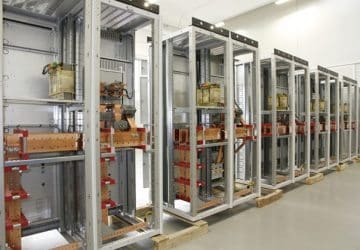
4 Low Voltage Switchboard Partitioning Forms Defined By IEC 61439-2
There are 4 main reasons for partitioning a switchboard. To protect persons against direct contact with dangerous parts. The minimum degree of protection must be IPXXB. To protect the switchboard against the penetration of solid foreign bodies. The minimum degree of protection must be… Read more
Mar 20, 2015 | By Edvard Csanyi
Energy and Power
Eleven major causes of power system failures
To gain a broader understanding of power system reliability, it is necessary to understand the root causes of system faults and system failures. A description of major failure modes is provided below. Underground Cable Transformer Failures Lightning Tree Contact Birds… Read more
Mar 18, 2015 | By Edvard Csanyi

Power Substation
6 Transformer Types You Can See In Commercial Installations
Transformers in commercial installations are normally used to change a voltage level from a utility distribution voltage to a voltage that is usable within the building, and are also used to reduce building distribution voltage to a level that can… Read more
Mar 16, 2015 | By Edvard Csanyi

Electric Motor
Comparison of motor speed control methods
It is often desirable to control the motor speed, usually for reasons process control for such variables as flow or pressure. Such applications as fans and pumps often have varying output requirements, and control of the motor speed is more… Read more
Mar 13, 2015 | By Edvard Csanyi

Electronics
Should We Blame Supplier For Voltage Dips and Transients?
Voltage dips and transients are usually blamed on the supplier, but this is often unfair. There are many potential on-site causes; for example, starting of heavy loads may cause voltage dips and switching of inductive loads will generate transients. Let’s… Read more
Mar 11, 2015 | By Edvard Csanyi

Energy and Power
Why it’s important to know which type of power factor correction to use
It’s important to understand where the capacitors are to be installed for a better exploitation of such advantages. There are no general rules applicable to every type of installation and, in theory, capacitors can be installed at any point, but it… Read more
Mar 09, 2015 | By Edvard Csanyi

Energy and Power
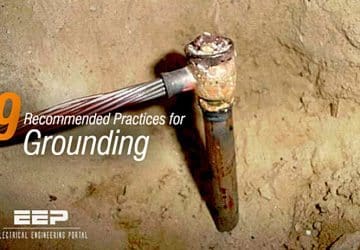
Nine Recommended Practices for Grounding
Grounding and bonding are the basis upon which safety and power quality are built. The grounding system provides a low-impedance path for fault current and limits the voltage rise on the normally non-current-carrying metallic components of the electrical distribution system…. Read more
Mar 06, 2015 | By Edvard Csanyi
Low Voltage
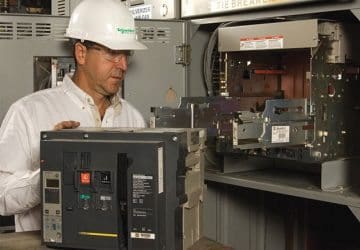
Degradation of Insulation in Switchgear (What’s Really Happening)
Electrical insulation is subjected to electrical and mechanical stress, elevated temperature and temperature variations, and environmental conditions especially for outdoor applications. In addition to normal operating conditions, there are a host of other factors that may trigger accelerated aging or… Read more
Mar 04, 2015 | By Edvard Csanyi
Energy and Power
Impulse withstand voltage test performed on assemblies
Only optional in the past, the impulse test which allow defining the rated impulse withstand voltage Uimp, is now a necessity thus demonstrating the strategy of the Standards directed to increasing the importance of such performance. In addition to the… Read more
Mar 02, 2015 | By Edvard Csanyi
Energy and Power
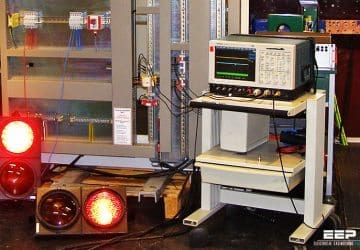
6 recommended practices for increasing the power quality
Power quality concerns have traditionally focused on harmonics, which are generated by nonlinear loads, although there are many other concerns regarding isolating sensitive loads from transient disturbances, uneven ground potentials, or phase imbalances. Poor power quality affects the reliable operation of computers and… Read more
Feb 27, 2015 | By Edvard Csanyi
Cables
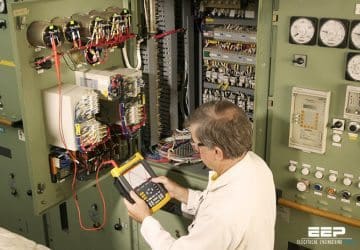
4 practical approaches to minimize voltage drop problems
The NEC states in an Informational Note that a maximum voltage drop of 3% for branch circuit conductors, and 5% for feeder and branch circuit conductors together, will provide reasonable efficiency of operation for general use circuits. For sensitive electronic… Read more
Feb 25, 2015 | By Edvard Csanyi

Testing and Commissioning
Do Not Energize Oil-Filled Transformer Without Performing These 15 Tests and Checks!
The following tests and checks should be performed at a minimum to ensure that the transformer is ready to be energized. Do not energize the transformer without performing these tests and checks. If any of below explained tests fail and… Read more
Feb 23, 2015 | By Edvard Csanyi
Testing and Commissioning
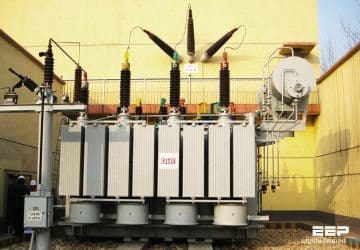
Basic Transformer Routine Test – Measurement of Winding Resistances
The resistance between all pairs of phase terminals of each transformer winding are measured using direct current. Furthermore the corresponding winding temperature is measured. The measured resistances are needed in connection with the load loss measurement when the load losses… Read more
Feb 20, 2015 | By Edvard Csanyi

Energy and Power
Smart Load Management Strategies To Save Energy
As part of their drive towards synchronizing the consumption and production of electrical energy over the long term, energy distribution companies tailor their rates to encourage consumers to reduce their requirements during peak periods. A number of different strategies are… Read more
Feb 18, 2015 | By Edvard Csanyi

High Voltage
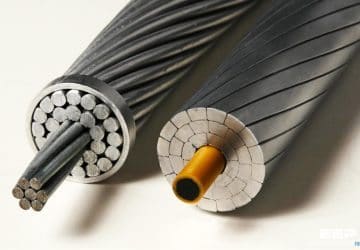
Selection of high voltage conductors and earth wires
Conductors represent the most important component of an overhead power line because they have to ensure economical and reliable transmission and contribute considerably to the total line costs. For many years, aluminum and its alloys have been the prevailing conducting… Read more
Feb 16, 2015 | By Edvard Csanyi