

Electric Motor
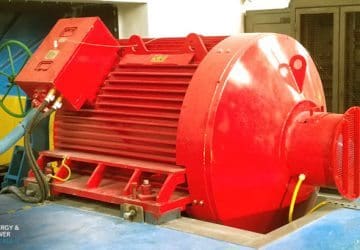
Calculating the short-circuit current across the terminals of a synchronous generator
Calculating the short-circuit current across the terminals of a synchronous generator is very complicated because the internal impedance of the latter varies according to time. When the power gradually increases, the current reduces passing through three characteristic periods: Subtransient (enabling determination… Read more
Jan 13, 2014 | By Edvard Csanyi
High Voltage
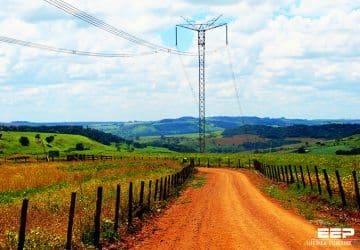
8 main disadvantages of HVDC transmission
Few weeks back I posted an article about advantages of HVDC over HVAC transmission systems. Advantages of HVDC are numerous and very well recognized, but like everything on this earth this system has other side too. The eight main disadvantages… Read more
Jan 10, 2014 | By Edvard Csanyi
Energy and Power
U.S. Renewable Energy – The Facts!
About 82% of the nation’s energy comes from fossil fuels, 8% from nuclear, and 9% from renewable sources. Wind is the fastest growing renewable source, but contributes only 1% of total energy used in the U.S. The examples below illustrate… Read more
Jan 08, 2014 | By Edvard Csanyi

Low Voltage
Example of MV/LV network structure with dual fed main MV switchboard
Connected to article: Example of standard MV/LV network structure MV consumer substation; The main MV switchboard can be backed up by a generator set and it feeds two MV/LV transformers; MV switchboard can be GIS or AIS and consist of… Read more
Jan 06, 2014 | By Edvard Csanyi

Energy and Power
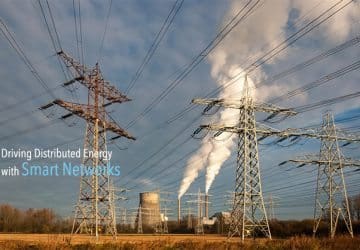
Driving Distributed Energy with Smart Networks
The smart network will set up a virtuous cycle for distributed generators and energy storage devices. It will grow the market by opening up more niches where distributed energy is economically competitive. This growth will lead to economies of scale… Read more
Jan 03, 2014 | By Edvard Csanyi
Transformers
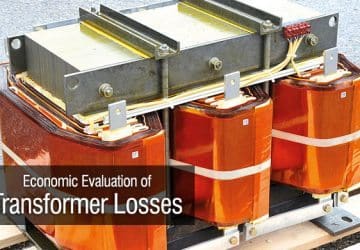
Economic Evaluation of Transformer Losses
Transformer losses represent power that cannot be delivered to customers and therefore have an associated economic cost to the transformer user/owner. A reduction in transformer losses generally results in an increase in the transformer’s cost. Depending on the application, there may be… Read more
Jan 01, 2014 | By Edvard Csanyi
Transformers
Large power transformer tailored to customers’ specifications
An LPT (Large Power Transformer) is a large, custom-built piece of equipment that is a critical component of the bulk transmission grid. Because LPTs are very expensive and tailored to customers’ specifications, they are usually neither interchangeable with each other… Read more
Dec 30, 2013 | By Edvard Csanyi

Smart Grid
Comparison of major power grid failures in US and around the world (2)
Continued from first part: Comparison of major grid failures in United States and around the world (part 1) On the International side, about 1/5 of the power outages (9 of 44) were not given a cause in the reports. A… Read more
Dec 27, 2013 | By Edvard Csanyi

Smart Grid
Comparison of major power grid failures in US and around the world (1)
The creation and delivery of power is one basic infrastructure expected by all modern industrial societies. Power distribution basics started in the US in the early 1900s when the first AC grid was established. Since 12 independent power grids were… Read more
Dec 25, 2013 | By Edvard Csanyi

Energy and Power
Electrical Thumb Rules You MUST Follow (7)
Continued from: Electrical Thumb Rules You MUST Follow (Part 6) Overhead conductor / cable size Transmission / distribution line (span, height of tower) Types of towers Tower swing angle clearance (metal part to live part) Cable coding, IS 1554 (A2XFY, FRLS,… Read more
Dec 23, 2013 | By Jignesh Parmar

Transmission and Distribution
An overview of South Africa’s energy sector with emphasis on increased demands
Electricity provision involves three phases: generation, transmission and distribution. Generation is the process by which electricity is produced; transmission is the transportation of electricity that has been generated in power stations via high voltage, long distance power lines to local… Read more
Dec 20, 2013 | By Edvard Csanyi

High Voltage
What are the main advantages of HVDC over HVAC transmission
Despite alternating current being the dominant mode for electric power transmission, in a number of applications, the advantages of HVDC makes it the preferred option over AC transmission. Examples include: Undersea cables where high capacitance causes additional AC losses (e.g.,… Read more
Dec 18, 2013 | By Edvard Csanyi

Transmission and Distribution
Germany’s electricity networks outlook – Today and tommorow
Germany’s electricity supply is currently based on a reliable and powerful network infrastructure. But to manage the energy transition, it is essential to keep distribution networks efficiently in balance by means of sensor, management and control systems depending on the… Read more
Dec 16, 2013 | By Edvard Csanyi

Transmission and Distribution
An overview of Australia’s electricity transmission networks
In Australia, there are transmission networks in each state and territory, with cross‐border interconnectors that link some networks. The National Electricity Market (NEM) in eastern and southern Australia provides a fully interconnected transmission network from Queensland through to New South… Read more
Dec 13, 2013 | By Edvard Csanyi

Power Substation
Example of standard MV/LV network structure
Example network above consists of: MV consumer substation; Two MV ratings: 20 kV and 6 kV; The main MV switchboard fed at 20 kV can be backed up by a set of four generators. It feeds: An MV 20 kV… Read more
Dec 11, 2013 | By Edvard Csanyi
