


Estimated Study Time: 48 minutes
Masterclasses for Engineers
Today’s power engineers are expected to seamlessly navigate 200-page protection schematics, simulate complex transients using software such as ETAP, analyze and troubleshoot relay protection schematics, design robust LV distribution networks, and even leverage Artificial Intelligence to troubleshoot power quality issues. But are all these expectations really possible for young engineers?
 Top Ten Electrical Engineering Courses for Career Growth
While university curricula excel at teaching the foundational physics and mathematics of power systems, modern industry demands a much more practical, battle-tested toolkit.
Bridging this gap requires continuous, highly targeted professional development. This is where the Electrical Engineering Portal (EEP) Academy stands out. Built by seasoned industry veterans with decades of hands-on experience in high-voltage substations and utility-scale projects, EEP Academy masterclasses are designed not just to explain theoretical concepts, but to solve real-world engineering challenges.
Whether you are a graduate engineer looking to secure field-ready skills, a substation designer auditing complex wiring diagrams, or a seasoned professional upgrading your expertise in simulation and AI, here are the top ten video courses worth enrolling in on EEP Academy.
It’s worth noting that all courses include lifetime access and are on-demand; you can take the lessons at any time, without any limitations. Just log in and start whenever you want!
While $28.45 might seem like an incredibly low price for such in-depth courses, we intentionally set it there so that high-quality engineering education is easily affordable for anyone, no matter where they live in the world. Energy & Power for All!
1. Mastering Power Substations: Electrical Equipment, Busbar Schemes and Relay Protection
Are you an electrical engineering professional seeking to solidify your expertise in the heart of modern power grids? Power substations are the critical nodes that ensure the safe, reliable, and efficient distribution of electricity. A deep understanding of their architecture, primary equipment, and protection mechanisms is absolutely essential for anyone working in high-voltage environments.
This masterclass is a highly comprehensive, step-by-step program designed to bridge the gap between foundational electrical theory and real-world substation engineering.
Spanning an impressive 9 hours and 2 minutes of premium video instruction across 97 meticulously structured lessons, this masterclass delivers the exact technical knowledge required to navigate, design, and troubleshoot complex substation networks confidently.
Lifetime access is included.
1.1 Core Course Curriculum and Learning Objectives
The curriculum is intelligently divided into critical operational pillars, ensuring learners grasp both the physical hardware and the complex logic that governs it:
1.1 1 Substation Architecture and Topologies
The journey begins with a broad overview of power substation classifications. You will explore the distinct differences, advantages, and applications of various substation types, including Air-Insulated Substations (AIS) and Gas-Insulated Substations (GIS).
The course breaks down how these facilities integrate into the wider transmission and distribution grids, stepping voltages up or down to manage massive power flows efficiently.
1.1.2 Primary Electrical Equipment
Moving beyond the layout, you will examine the heavy-duty physical components that make a substation function. The course provides an exhaustive breakdown of:
Power Transformers: Understanding their core role, cooling mechanisms, and operational constraints.
Switchgear and Circuit Breakers: Learning how these critical devices interrupt high fault currents and manage high-voltage arcs safely.
Isolators (Disconnectors) and Earth Switches: Discovering how to properly sequence these devices to safely isolate equipment for maintenance.
Instrument Transformers: Unpacking the function of Current Transformers (CTs) and Voltage Transformers (VTs) in stepping down massive grid signals for accurate metering and protection relay inputs.
1.1.3 Busbar Schemes and Switching Configurations
The busbar is the electrical backbone of any substation. You will master the critical busbar schematics used globally, ranging from simple Single Busbar setups to complex Double Busbar, Multi-Busbar, and Breaker-and-a-Half configurations.
You will learn exactly how these schemes dictate a substation’s reliability, cost, and operational flexibility during maintenance periods or unexpected faults.
1.1.4 Relay Protection Principles
Substation equipment represents millions of dollars in infrastructure investment; protecting it is non-negotiable. The final pillar of the course dives deeply into relay protection logic. You will learn how dedicated unit protection schemes protect busbars and transformers from internal and external faults.
The module explores complex real-world challenges such as CT saturation during high through-fault currents, high-impedance protection design, fault clearance times, and exactly how protection relays interface with circuit breaker trip matrices to instantly isolate catastrophic failures.
1.2 Who Should Enroll?
This in-depth masterclass is explicitly designed for Substation Design Engineers, Protection & Control (P&C) Engineers, Utility Technicians, and Commissioning Specialists who require a robust, practical understanding of power substations.
It is also an invaluable asset for electrical engineering graduates looking to accelerate their careers by acquiring field-ready, highly specialized knowledge that goes far beyond university textbooks.
Ultimately, this comprehensive course will transform you into a highly capable power systems professional, ready to tackle the physical and operational complexities of modern substation design and protection with absolute confidence.
Price: $28.45
Visit the Course
2. MV Switchgear Schematics Course: Tripping, Trip Circuit Supervision, Interlocking and Indication Circuits
The ability to read, analyze, and interpret engineering drawings is a paramount skill. For engineers working with medium voltage (MV) infrastructure, these schematics are not just diagrams—they are the vital language used for commissioning, troubleshooting, and safely maintaining critical utility systems.
This course is an exhaustive masterclass designed specifically to bridge the knowledge gap between foundational theory and advanced, real-world panel wiring.
With a total runtime of nearly 13 hours across 5 detailed chapters and 74 lessons, the course ensures that professionals can decode complex schematic packages with absolute confidence.
2.1 Course Curriculum and Key Learning Objectives
This course assumes no prior expertise in schematic reading. It starts with fundamental concepts and progressively builds into complex control logic, utilizing an 11kV medium voltage switchgear configuration (featuring three busbars, two bus sections, and dual 132/11kV power transformers) as its primary study model.
2.1.1 Fundamentals of Single-Line Diagrams (SLDs) and Components
The journey begins with mastering Single-Line Diagrams. You will learn the physical and schematic representations of primary MV switchgear components.
The module covers circuit breaker mechanisms (rack-in/rack-out positions), limit switches, auxiliary relays, and the precise operation of Normally Open (NO) and Normally Closed (NC) 52a/52b auxiliary contacts.
2.1.2 Core Operational Circuits and Logic
Transitioning to dynamic operations, you will explore motor charging circuits, spring charge indications, and Local/Remote control philosophies.
Crucially, the course demystifies built-in safety mechanisms, providing a rigorous breakdown of the Circuit Breaker Anti-Pumping Scheme, Anti-Slam configurations, and seal-in (latching) contacts designed to prevent catastrophic equipment failure during closing operations.
2.1.3 Tripping and Trip Circuit Supervision (TCS)
The heart of the switchgear’s protection relies on its tripping circuits. You will analyze trip command duration, coil save contacts, and multi-coil tripping configurations. A major focus is placed on Trip Circuit Supervision (TCS).
You will learn exactly how TCS relays (such as ABB and MVAX models) monitor the integrity of trip coils in both open and closed breaker states, alongside detecting anomalies like “fake DC” or return supply issues.
4. Feeder-Specific Schematics and Interlocking
Not all feeders are wired the same. The curriculum provides specialized deep dives into the distinct closing, tripping, and indication circuits for Incoming Feeders, Outgoing Feeders, Bus Sections, and Capacitor Banks.
You will master the critical electrical and mechanical interlocking schemes that govern safe operations—for instance, understanding how a busbar earth switch strictly interlocks with outgoing feeders to prevent fatal grounding faults.
2.2 Who Should Enroll and Course Benefits
This specialized masterclass is highly recommended for Substation Engineers, Power System Protection Engineers, Commissioning Teams, and Maintenance Staff who interact directly with MV switchgear. Electrical engineering students will also find it invaluable for translating university theory into immediate, career-ready practical skills.
Ultimately, this course will empower you not just to read schematics, but to actively audit them, identifying design defects and implementing robust improvements in live utility environments.
Price: $28.45
Visit the Course
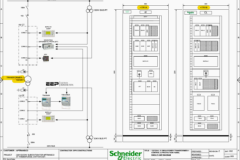
3. Comprehensive Masterclass: Learn Line Protection Panel Schematics (UK, US, EU, Middle East, and Asian Standards)
This course offers a highly intensive, practical journey into the intricate world of power system engineering. Designed specifically to decode the profound complexities of 33kV line protection panels, this masterclass provides an exhaustive deep dive into the diverse engineering standards utilized across the UK, US, Europe, the Middle East, and Asia.
Led by esteemed industry veteran Muhammad Kashif—an expert bringing over 20 years of advanced high-voltage substation experience (up to 500 kV HVAC and ±660kV HVDC)—this concise yet exceptionally powerful program spans 17 comprehensive lessons and delivers over 2 hours and 17 minutes of targeted, high-yield video instruction.
3.1 Core Course Curriculum
The curriculum is systematically structured to guide you from a broad, macro-level comprehension of overall panel layouts all the way down to the micro-level tracing of individual wire signals. The instruction focuses heavily on seven critical pillars:
3.1.1 Panel Architecture and Terminal Philosophy
Master the foundational arrangement of modern Protection and Control (P&C) panels. Learn exactly how terminal blocks are numbered and logically grouped to safely isolate varying voltage levels, AC currents, and DC control signals.
You will also learn to visualize General Arrangement (GA) drawings before ever opening a wiring diagram.
3.1.2 Internal vs. External Wiring Paradigms
Eradicate common industry confusion by clearly distinguishing between internal panel wiring (connecting local switches and relays) and external connections routing out to remote switchyards, high-voltage circuit breakers, instrument transformers, and complex SCADA networks.
3.1.3 Navigating Global Schematic Standards
Evolve into a highly versatile global engineer. You will learn to navigate the stark variations in schematic drafting conventions between the UK, US, and EU (which rely heavily on specific IEC or ANSI/IEEE symbols), compared directly to the distinct practices routinely utilized in the Middle East and Asian markets.
3.1.4 Critical Panel Hardware Integration
Look beyond the digital drawings to understand the crucial physical hardware they represent. You will explore the schematic representation and physical utility of mini links, fuse links, MCBs, and test blocks (like MMLG/MMLB), ensuring you can safely isolate trip circuits during live site commissioning.
3.1.5 Relay Inputs and Outputs (Signal Flow)
Trace hardwired physical input and output signal wiring with absolute precision. Learn to map breaker statuses, block signals, trip commands, and SCADA alarms directly to and from highly programmable numerical relays.
3.1.6 Switchgear Integration and Control Logic
Dissect the embedded control logic, paying close attention to Local/Remote selector switches. Understand how control authority transfers between physical panels, substation HMIs, and remote dispatch centers, alongside the vital role of Circuit Breaker auxiliary contacts (52a, 52b).
3.1.7 Core Tripping Circuits and Diagrams
Tie all previous modules together by reading overarching Key Line Diagrams. You will trace AC schematics from switchyards to relay measurement inputs and map critical DC tripping circuits from the battery directly to the breaker trip coil.
3.2 Who Should Enroll?
This masterclass is tailor-made for professionals operating in high-stakes environments. It is invaluable for Substation Design Engineers producing globally compliant drawings, P&C Engineers executing hardwired algorithms, and Commissioning Engineers troubleshooting during Site Acceptance Testing (SAT).
3.3 Included Resources
Students gain lifetime access, a certificate, and robust downloadable PDF materials covering differential line protection, protection calculations for 765kV to 220kV transmission systems, and ground fault protection strategies. Ultimately, this course will transform your anxiety over complex, 200-page schematic packages into the rock-solid confidence required to succeed in modern global substation projects.
Price: $28.45
Visit the Course
4. MATLAB/Simulink Comprehensive Electrical Engineering Simulation Suite for Professionals
Are you ready to transform your theoretical electrical engineering knowledge into practical, software-based expertise? The MATLAB/Simulink Comprehensive Electrical Engineering Simulation Suite is an ultimate, highly detailed masterclass designed to bridge the gap between academic concepts and real-world system modeling.
Whether you are an engineering student seeking a practical edge, an academic researcher validating complex models, or a practicing industry professional upgrading your simulation skill set, this meticulously crafted program will teach you how to design, test, and validate complex electrical systems using industry-standard software.
4.1 Course Curriculum and Key Learning Objectives
The curriculum is divided into focused modules targeting the core pillars of electrical engineering:
4.1.1 Advanced Power Electronics Simulations
Master the building blocks of power conversion. You will construct and simulate 1-phase and 3-phase rectifiers (controlled, uncontrolled, half-wave, and full-wave) and AC voltage controllers with closed-loop dynamic regulation.
Transitioning to DC systems, you will build DC-DC converters (Buck, Boost, Sepic, Cuk, Flyback) and implement advanced stability control strategies using PID and Hysteresis controllers.
Finally, the module covers 1-phase and 3-phase DC-AC inverters controlled via industry-standard Pulse Width Modulation (PWM) techniques.
4.1.2 Dynamics of Electrical Circuits
Delve into the transient behavior of electrical circuits. You will simulate R-L, R-C, and R-L-C configurations, applying both free and forced responses to visualize how circuits react to switching events and initial conditions.
4.1.3 Comprehensive Electrical Machines Simulations
Explore the complete simulation lifecycle for a wide array of electrical machines.
DC Machines: Build shunt, series, and separately excited motors, implementing speed control and motor starters to mitigate inrush currents.
AC Induction & Synchronous Machines: Master induction motor/generator simulations, integrating Variable Frequency Drives (VFDs). You will also model synchronous machines, apply voltage and frequency controls, and execute the complex synchronization of generators with the power grid.
Transformers: Conduct complete 1-phase and 3-phase transformer simulations to calculate efficiency, evaluate voltage regulation, and simulate open and short-circuit tests.
4.1.4 Power Systems Analysis and Protection
Gain the tools necessary to analyze large-scale grids. You will model transmission lines, perform crucial load flow analyses, and investigate symmetrical and unsymmetrical faults. You will then design the logic for overcurrent relays directly within Simulink to implement robust protection schemes against these faults.
4.1.5 Renewable Energy Simulations (Solar & Wind)
In the solar segment of this course, you will model photovoltaic (PV) panels step-by-step, extracting vital I-V and P-V characteristics and analyzing the effects of irradiation and temperature, while utilizing the MATLAB Simscape library.
The wind energy section guides you through designing a complete 5KW wind turbine, analyzing how varying turbine parameters directly impact mechanical and electrical power output.
4.2 Enrollment Benefits
By enrolling, you gain lifetime access to all course materials, including comprehensive PDF slides covering each module and dozens of ready-to-use MATLAB/Simulink files for transformers, choppers, machines, and renewable energy models.
By the end of this journey, you will evolve into a highly proficient simulation engineer, capable of safely validating intricate electrical systems long before physical deployment.
Price: $28.45
Visit the Course
5. Learn How to Detect and Identify Power Quality Problems Using Artificial Intelligence (AI)
In modern electrical systems, power quality is paramount. Disturbances such as voltage sags, swells, interruptions, surges, flicker, and harmonic distortions can severely compromise equipment integrity, leading to operational inefficiencies and costly downtimes.
This course offers a comprehensive, highly practical approach to mitigating these issues using cutting-edge machine learning techniques.
Spanning 5 hours of intensive video instruction across 6 major sections and 82 targeted lectures, the program provides a step-by-step roadmap for utilizing Long Short-Term Memory (LSTM) deep learning networks to classify and predict power anomalies with remarkable accuracy.
5.1 Course Curriculum and Learning Objectives
The curriculum is structured to take learners from foundational concepts to advanced, practical AI implementation.
5.1.1 Power Quality Fundamentals & Literature Review
The course begins by establishing a firm understanding of power quality indices (RMS voltage, frequency, THD) and the causes of poor power quality.
It thoroughly reviews traditional automatic classifiers and signal processing transforms—such as Fourier Transforms (FT, FFT, STFT), Wavelet Transforms (CWT, DWT), and Hilbert-Huang Transforms—before introducing AI-based classification techniques like Artificial Neural Networks (ANN), Support Vector Machines (SVM), and Expert Systems.
5.1.2 Proposed AI Detection Technique (LSTM)
The core focus of the program is the application of Recurrent Neural Networks (RNN), specifically the Long Short-Term Memory (LSTM) architecture. Learners will explore the concept, structure, layers, and sequence learning gates of LSTM networks.
You will discover exactly why LSTM excels in time-series signal analysis compared to traditional methods, enabling the detection of both simple issues (e.g., a standalone voltage swell) and complex, combined disturbances (e.g., a voltage sag paired with harmonic distortion).
5.1.3 Data Preparation, Simulation, and Model Training
Participants will engage in hands-on data generation and simulation. Using MATLAB, you will model normal and distorted voltage waveforms across varying Signal-to-Noise Ratios (SNR 40dB to 20dB).
The course covers the entire AI pipeline: dataset splitting (training, validation, testing), tuning model parameters (epochs, learning rates, activation functions), and evaluating loss functions. You will achieve high detection accuracy (over 99%) by comparing predicted results against actual data.
5.1.4 Real-World Practical Results
Moving beyond simulation, the course integrates real-world current and voltage data. Learners will analyze practical case studies involving UL1, UL2, UL3, I1, I2, and I3 measurements.
This ensures you know how to apply these predictive AI models directly to real power systems, smart grids, and condition-monitoring applications.
5.2 Target Audience and Resources
This program is specifically designed for:
- Electrical Engineers and Power System Professionals looking to integrate AI into predictive maintenance and condition monitoring.
- Academic Researchers focusing on smart grids, signal analysis, and power quality.
- Postgraduate Students eager to apply advanced deep learning to electrical distribution systems.
By the end of this masterclass, you will be fully equipped to seamlessly detect, identify, and troubleshoot complex electrical disturbances using industry-leading AI models.
Price: $28.45
Visit the Course
6. Practical Course for Designing LV Distribution Systems in Houses and Commercial Buildings
For electrical power engineers seeking a definitive, step-by-step roadmap to designing complete low-voltage (LV) electrical distribution networks, this course serves as the ultimate masterclass.
Structured to guide participants from novice to expert, this exhaustive course distills the entire electrical design lifecycle into an incredibly detailed 44-hour curriculum, encompassing 20 distinct lessons and 181 targeted lectures.
It teaches you how to accurately calculate, map, and document electrical infrastructures for residential properties, apartments, and diverse commercial buildings using industry-standard tools like AutoCAD, DIALux (Evo and Red), and ETAP.
6.1 Core Curriculum and Key Learning Objectives
The comprehensive syllabus walks learners sequentially through every necessary phase of designing a safe, compliant, and highly functional distribution system.
6.1.1 Lighting and Layout Design
Begin by establishing a firm foundation in both manual and software-assisted lighting design. Using DIALux Evo, you will learn to model building outlines, insert furniture, and calculate precise lux requirements based on electrical codes.
Simultaneously, you will master the basics of AutoCAD, learning how to plot lighting legends, lay out single-line diagrams, draft multi-story building risers, and wire luminaries, mechanical loads, and normal/UPS sockets.
6.1.2 Load Estimation and Sizing Standards
Load calculation is a cornerstone of safe distribution design. The course details various manual methodologies and Excel-based workflows for estimating load demands accurately by applying demand and diversity factors.
This leads directly into calculating the necessary spatial dimensions for safely housing critical utility infrastructure, specifically transformer and generator rooms.
6.1.3 Circuit Breakers, Fuses, and Cables
Gain deep insights into equipment selection parameters. You will investigate low-voltage and medium-voltage circuit breakers (including AF, AT, FTU, and FMU metrics) and Residual Current Circuit Breakers (RCCBs).
It also decodes cable classifications by voltage, insulation, core count, and complex derating factors based on formation.
6.1.4 Power Quality and Safety Analysis
Learn to manually calculate—and automatically simulate via ETAP—crucial system parameters like voltage drops and short-circuit faults to ensure long-term stability.
The course also details how to enhance system efficiency using power factor correction via capacitor banks.
6.1.5 Backup Systems and Protective Grounding
To ensure operational continuity and safety, you will explore the correct sizing and application of backup generators, Uninterruptible Power Supply (UPS) systems (conventional and modular), and Automatic Transfer Switches (ATS).
The final modules transition to the vital design of Lightning Protection Systems and the comprehensive mapping of Earthing Systems (including grounding electrode resistance calculations and grid modeling using ETAP).
6.2 Target Audience and Included Resources
This program is explicitly designed for electrical engineers, electrical engineering students, and power systems designers who wish to secure practical, highly applicable skills for modern construction projects.
Enrollment unlocks a rich repository of supplemental materials designed to cement the learning experience. Students receive lifetime access, a certificate of completion, and over 480 pages of downloadable PDF slides covering everything from generator sizing to NEC specifications.
Furthermore, you will be provided with fully functional AutoCAD design files (DWG), MCCB datasheets, DIALux photometric files (LDT), and ready-to-use Excel panel schedule templates, giving you a powerful toolkit to begin executing your own real-world LV distribution designs immediately.
Price: $28.45
Visit the Course
7. Learn How to Perform Calculations of Electrical Loads and Design the Protection System
In the highly demanding field of power engineering, the safety, reliability, and efficiency of an electrical network hinge entirely on the accuracy of its foundational math. A single miscalculation in load estimation or cable sizing can result in catastrophic equipment failure, severe safety hazards, and immense financial losses.
This course is an intensive, step-by-step masterclass designed to demystify the critical mathematics and sizing principles that govern modern electrical distribution networks.
Spanning an in-depth 7 hours and 41 minutes of video instruction across 19 highly focused lessons, the course provides engineers with a structured, foolproof roadmap for performing the vital calculations required to design robust low- and medium-voltage systems from the ground up.
7.1 Core Curriculum and Key Learning Objectives
The curriculum is meticulously organized to mirror the sequential workflow of a professional electrical design project:
7.1.1 Comprehensive Load and Thermal Current Calculations
The design of any electrical system begins with a profound understanding of its power demand. You will learn to accurately estimate connected loads, calculate maximum demand, apply diversity factors, and determine the precise continuous thermal current requirements for varied industrial and commercial facilities.
7.1.2 Cable Sizing and Derating Factors
Moving beyond simple lookup tables, this module dives deep into the science of conductor selection.
You will master the intricate process of sizing cables according to their required current-carrying capacity while meticulously applying complex derating factors for ambient temperature, soil thermal resistivity, and intricate cable grouping configurations.
7.1.3 Voltage Drop Analysis
Ensure that end-user equipment operates efficiently by delivering the correct voltage. You will learn to perform rigorous voltage drop calculations for different cable types, materials, and lengths, ensuring your designs strictly adhere to the maximum allowable limits dictated by international electrical codes.
7.1.4 Short Circuit Fault Calculations
To design an effective protection system, you must first understand the system’s worst-case scenarios. The course simplifies complex short-circuit analysis, teaching you how to manually calculate prospective fault currents at various nodes within the electrical distribution network.
7.1.5 Sizing Protective Devices and Transformers
Armed with accurate load and fault data, you will transition into the strategic selection of critical infrastructure. You will learn exactly how to size appropriately rated circuit breakers to interrupt fault currents safely and reliably.
Additionally, the course provides a clear methodology for sizing distribution transformers, guaranteeing they can seamlessly handle both continuous daily loads and temporary inrush currents without sacrificing long-term longevity.
7.2 Who Should Enroll?
This highly practical program is explicitly tailored for Electrical Power Engineers, Substation Designers, Consulting Engineers, and Technical Specialists who are directly responsible for designing, upgrading, or maintaining electrical distribution networks.
It is also an invaluable resource for electrical engineering students and junior technicians eager to bypass the steep on-the-job learning curve by acquiring rigorous calculation skills before entering the professional workforce.
Ultimately, this comprehensive masterclass will transform you from a designer reliant on software guesswork into a highly confident professional equipped to mathematically validate every single component within a complex electrical distribution system.
Price: $28.45
Visit the Course
8. Practical Course to Medium Voltage Infrastructure and Power Distribution
In the vast ecosystem of electrical power systems, medium voltage (MV) infrastructure serves as the critical bridge between high-voltage transmission networks and the low-voltage endpoints that power our homes, commercial buildings, and industrial facilities. Misunderstanding the intricate design, operation, and safety standards of these MV networks can lead to catastrophic system failures, inefficient power delivery, and severe safety hazards.
This video course is a definitive, highly detailed masterclass meticulously engineered to demystify this crucial segment of the power grid.
Spanning an extensive 7 hours and 9 minutes of high-yield video instruction across 10 sections and 42 focused lessons, the course provides a robust, step-by-step roadmap for designing and managing MV distribution systems in strict accordance with the National Electrical Code (NEC).
8.1 Core Curriculum and Key Learning Objectives
The curriculum is intelligently structured to follow the natural flow of power, guiding learners systematically through every vital component of a medium voltage network:
8.1.1 Fundamentals of MV Structures and Topologies
Begin your journey by unpacking the core architecture of distribution systems. You will explore various network configurations—such as radial, ring (loop), and interconnected topologies—learning precisely when and why to deploy each based on specific load requirements, reliability constraints, and geographic factors.
8.1.2 MV Distributors and Cable Networks
This module covers the intricate details of medium voltage distributors, including the application of both overhead lines and underground cables.
You will learn the critical criteria for selecting, sizing, and routing MV cables, paying close attention to conductor materials, insulation types, stress control mechanisms, and the environmental factors that dictate long-term durability.
8.1.3 Comprehensive MV Switchgear Design
Switchgear represents the nervous system of any electrical network. The course offers an exhaustive breakdown of MV switchgear, detailing its primary functions in controlling, metering, and protecting the power flow.
You will master the inner workings of critical switchgear components, including medium voltage circuit breakers, disconnectors, load break switches, and instrument transformers (CTs and VTs), ensuring you understand how to safely isolate electrical faults.
8.1.4 MV/LV Substation Architecture
Learn how to design the vital hubs where medium voltage is stepped down for consumer use. You will explore the complete layout and spatial requirements for MV/LV substations, encompassing indoor, outdoor, and compact/prefabricated unitized substations.
This includes selecting distribution transformers, configuring grounding/earthing systems, and ensuring the physical layout strictly complies with rigorous NEC safety clearances and equipment ventilation standards.
8.1.5 Protection and NEC Compliance
System safety and reliability are non-negotiable. Throughout the course, a heavy emphasis is placed on adhering strictly to the National Electrical Code (NEC).
You will learn how to integrate foundational protection principles and utilize surge arresters to safeguard expensive infrastructure against both internal short-circuit faults and external transient overvoltages.
8.2 Who Should Enroll?
This masterclass is tailor-made for Electrical Power Engineers, Distribution Network Designers, Utility Technicians, and Consulting Professionals who require a grounded, highly practical understanding of medium voltage systems. It is also an exceptional resource for electrical engineering students and junior engineers looking to significantly accelerate their careers by acquiring highly sought-after, field-ready industry skills.
By enrolling in this course, you gain lifetime access to all 42 video lectures, a verifiable certificate of completion, and a wealth of practical knowledge that bypasses years of trial and error in the field.
Ultimately, you will emerge with the absolute confidence required to design, analyze, and troubleshoot complex medium voltage distribution systems safely, efficiently, and accurately.
Price: $28.45
Visit the Course
9. ETAP Power System Design and Analysis Course: Learn To Resolve Power System Issues
In modern electrical engineering, proficiency with analytical software is no longer optional—it is an absolute industry prerequisite. ETAP (Electrical Transient Analyzer Program) stands out as the gold standard for simulating, designing, and operating power systems across generation, transmission, and industrial sectors.
However, many engineers fall into the dangerous trap of simply inputting data and accepting the software’s output without understanding the underlying physics.
Structured across 13 intensive lessons and 30 targeted topics, this comprehensive 8-hour and 56-minute masterclass takes a uniquely rigorous approach: every major software simulation is paired directly with manual hand calculations.
By comparing your mathematical results with ETAP’s automated outputs, you will develop a profound, error-proof understanding of steady-state and dynamic power system behaviors.
9.1 Core Curriculum and Key Learning Objectives
The program is systematically designed to scale your expertise from basic interface navigation to highly complex transient simulations:
9.1.1 One-Line Diagrams and Load Flow Analysis
Begin by mastering the ETAP workspace. You will learn to correctly build Single Line Diagrams (SLDs) and input critical equipment data.
From there, the course dives deeply into Load Flow Analysis. You will learn how to manually calculate transformer X/R ratios, run extensive load flow simulations, and utilize ETAP’s scenario manager to automatically execute multiple “what-if” operational states without needing to redraw your network.
9.1.2 Short Circuit Analysis and Equipment Sizing
System safety depends on accurately predicting fault currents. You will perform foundational manual short-circuit calculations and mirror them within ETAP to analyze system behavior under catastrophic fault conditions.
Utilizing this fault data, you will then master the software modules dedicated to precise equipment sizing, ensuring cables, breakers, and transformers are specified to handle worst-case thermal and dynamic stresses.
9.1.3 Motor Starting Analysis
Large industrial motors can severely disrupt a power grid upon startup. This crucial module explores the dynamic impact of motor starting on system voltage.
Through multiple practical examples, you will learn how to simulate and mitigate severe voltage dips, ensuring that the starting of heavy rotational loads does not trip sensitive protective relays or stall adjacent equipment.
9.1.4 Transient Stability Analysis
Moving beyond steady-state conditions, you will analyze the grid’s ability to maintain synchronism during severe disturbances. The course provides step-by-step walkthroughs of highly dynamic events, teaching you how to simulate and analyze the impacts of sudden load additions, load shedding protocols, and faulted transients across the network.
9.1.5 Advanced System Studies
Rounding out the curriculum, the course introduces specialized ETAP modules for Harmonic Analysis—allowing you to identify and mitigate power quality distortions—and Ground Grid Analysis, ensuring your substation earthing designs strictly comply with global safety tolerances.
9.2 Who Should Enroll?
This course is an essential toolkit for Project Engineers, System Operators, Electrical Technicians, and Consulting Professionals who need to execute flawless electrical designs and troubleshoot live systems. It is equally invaluable for graduate engineers seeking a massive competitive advantage in job interviews by demonstrating practical software mastery.
By enrolling, you gain lifetime access to all video modules, downloadable PDF reference materials, and a verifiable certificate of completion.
Ultimately, this course will transform you from a passive software user into a highly analytical power systems expert, giving you the absolute confidence to design, simulate, and defend complex electrical infrastructures.
Price: $28.45
Visit the Course
10. Basic Course In Reading, Understanding and Using Electrical Wiring Diagrams
In the vast and complex world of power engineering and industrial automation, electrical wiring diagrams serve as the universal language. However, for many junior engineers, technicians, and even seasoned professionals transitioning into new roles, opening a comprehensive, multi-page schematic package can feel like deciphering an overwhelming maze of lines, symbols, and cross-references.
The inability to fluently read these drawings directly results in prolonged equipment downtimes during troubleshooting, costly commissioning errors, and severe on-site safety risks.
10.1 Core Curriculum and Key Learning Objectives
This expert-led course is systematically structured to take learners from absolute basics to navigating complex, real-world industrial drawing packages. The curriculum is built upon several critical pillars:
10.1.1 The Visual Vocabulary of Schematics
Just like any language, you must first learn the alphabet. The course begins by establishing a rock-solid understanding of standard electrical symbols.
You will explore the distinct drafting conventions utilized globally, focusing heavily on comparing International Electrotechnical Commission (IEC) standards with North American (NEMA/ANSI) representations for switches, relays, breakers, and loads.
10.1.2 Deciphering Drawing Classifications
Not all electrical drawings serve the same purpose. You will learn to clearly distinguish between and utilize different types of documentation.
The course breaks down Block Diagrams (for high-level system overview), Single-Line Diagrams (for power distribution mapping), Three-Line Diagrams (for detailed phase mapping), Control/Schematic Diagrams (for logical operation), and physical Connection/Wiring diagrams (for actual panel termination).
10.1.3 Control Logic and Relay Operation
The heart of any automated electrical system is its control logic. You will dive deeply into the mechanics of industrial control, mastering the behavior of contactors, pushbuttons, and timer relays.
10.1.4 Circuit Tracing and Cross-Referencing
Real-world schematics are rarely confined to a single page. This module teaches the critical skill of navigating complex, multi-page document packages.
You will learn how to accurately trace wire paths across different sheets using grid referencing systems, understand terminal block numbering conventions, and follow wire tagging philosophies used by major panel builders.
10.1.5 Practical Industrial Applications
Theory is immediately grounded in practical application. You will apply your newly acquired skills to analyze standard industrial circuits.
This includes walking step-by-step through standard motor control schematics—such as Direct-On-Line (DOL) starters, Forward/Reverse circuits, and Star-Delta configurations—allowing you to see exactly how power and control circuits interact in the real world.
10.2 Who Should Enroll?
This course is an absolute necessity for Maintenance Technicians, Field Service Engineers, Commissioning Specialists, and Plant Operators tasked with troubleshooting complex control panels.
It is equally invaluable for Graduate Electrical Engineers who need to bridge the massive gap between academic circuit theory and the practical reality of industrial and protection panel wiring.
You will emerge equipped with the analytical skills and absolute confidence required to trace faults rapidly, verify panel wiring safely, and understand the exact operational logic of any electrical system you encounter in the field.
Price: $28.45
Visit the Course
Related electrical guides & articles





Edvard Csanyi
Hi, I'm an electrical engineer, programmer and founder of EEP - Electrical Engineering Portal. I worked twelve years at Schneider Electric in the position of technical support for low- and medium-voltage projects and the design of busbar trunking systems.I'm highly specialized in the design of LV/MV switchgear and low-voltage, high-power busbar trunking (<6300A) in substations, commercial buildings and industry facilities. I'm also a professional in AutoCAD programming.
Profile: Edvard Csanyi