


Estimated Study Time: 35 minutes
Switchgear Operational Annoyances
This comprehensive technical analysis breaks down the twenty most annoying imperfections in MV and LV switchgear, detailing the design flaws, their root causes, and the real-world operational impacts that consistently frustrate substation operators and maintenance crews.
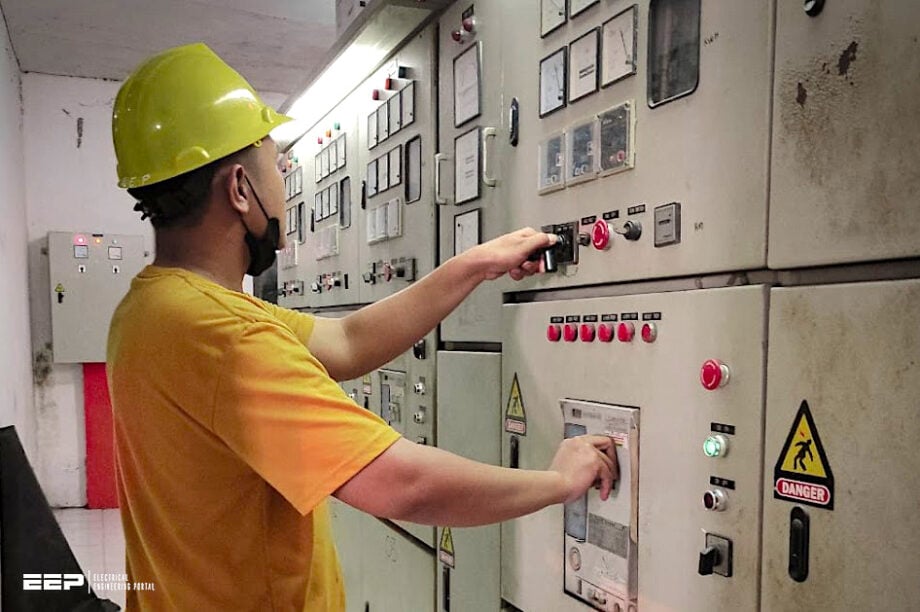 Twenty Switchgear Design Flaws That Drive Operators Crazy
As we all know, medium and low-voltage switchgear represent the critical nodes of any electrical distribution network. While modern computer-aided design and strict adherence to IEC standard type-testing have significantly improved the reliability of these systems, a persistent gap remains between the pristine, controlled conditions of a Factory Acceptance Test (FAT) and the harsh, unpredictable reality of site operation.
For the protection engineers, substation operators, and maintenance crews who interact with these panels daily, minor design oversights do not remain minor for long.
The article opens with an introduction that establishes the central theme by contrasting pristine factory testing conditions with the harsh realities of field operations.
Its core body is divided into four sections, mechanical, environmental, control, and operational issues, that detail twenty specific imperfections using a Design Flaw, Technical Root Cause, and Operational Impact framework.
The article concludes with a forward-looking summary that advocates for a shift away from cost-driven manufacturing toward lifecycle-engineering driven by substation operator feedback.
So, fasten your seatbelt, grab yourself a large coffee and let’s take off :)
Part I – Mechanical and Ergonomic Frustrations
- Stiff and Misaligned Breaker Racking Mechanisms
- Obscured Viewports for Isolator Status
- Inadequate Cable Compartment Space
- Flimsy Door Latches and Hinge Sag
- The “Lost Handle” Syndrome (Non-Standardized Tools)
Part II – Thermal and Environmental Oversights
- Unpredictable Thermal Runaway in LV Motor Control Centers (MCCs)
- Subpar Silver-Plating on Busbar Joints
- Ineffective Anti-Condensation Heaters
- Vulnerability to Micro-Dust and Particulate Ingress
- GIS SF6 Leakage and Refilling Difficulties
Part III – Protection, Control, and IED Headaches
- Cluttered and Undersized Low-Voltage (LV) Compartments
- Phantom Alarms from Micro-Switches
- Inaccessible CT and VT Secondary Terminals
- Arc Flash Relay Optical Sensor Blind Spots
- Complicated and Non-Intuitive Relay HMIs
Part IV – Operational and Maintenance Roadblocks
- Ambiguous and Fading Mimic Diagrams
- Spring Charging Motor Burnouts
- Poor Control Power Ride-Through
- Lack of Standardized Interlocking Logic
- The Disconnect Between Hardware and Documentation
Part V – The Path Forward: Designing for the Real World
Attachment – Electrical Inspection, Testing and Certification Book (PDF)
Part I: Mechanical and Ergonomic Frustrations
1. Stiff and Misaligned Breaker Racking Mechanisms
What’s the design flaw? The draw-out mechanism is intended to provide safe, physical isolation of the circuit breaker from the main busbars. However, operators frequently encounter racking mechanisms that require excessive, asymmetrical force to move the breaker between the “Test” and “Service” positions.
What’s the technical root cause? This issue stems from inadequate manufacturing tolerances in the guide rails, poor selection of lubrication that degrades or hardens over time, and the use of inferior worm-gear materials that warp under stress.
Finally, what’s the operational impact? Operators are forced to apply extreme torque to the racking handle, risking severe damage to the internal mechanical linkage or the protective shutter mechanism.
If a breaker jams halfway, failing to fully engage the primary contacts but incapable of being withdrawn, it creates a highly dangerous, stressed operational deadlock that requires a complete busbar outage to safely rectify.
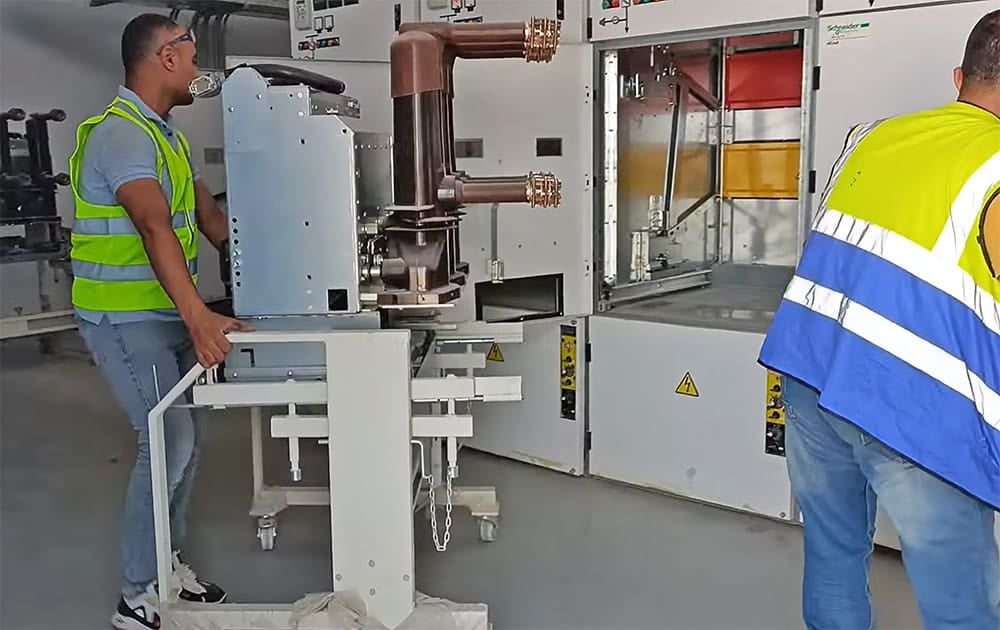
Figure 1 – Racking in/out MV circuit breaker using dedicated trolley is often a problem
2. Obscured Viewports for Isolator Status
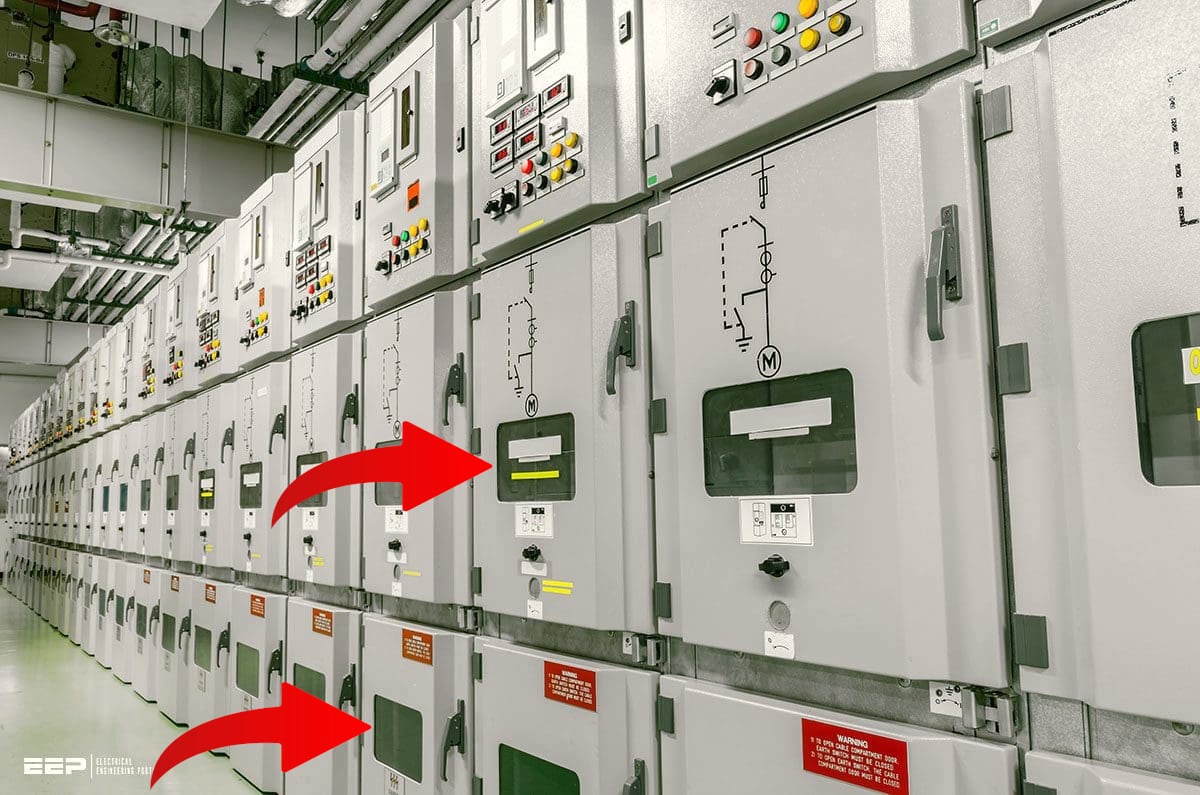
What is the primary engineering oversight here? Visual verification of isolating distances and earthing switch blade positions is an absolute, non-negotiable safety rule in high-voltage switching. Despite this, switchgear manufacturers frequently design viewing windows that are fundamentally unfit for purpose: they are too small, positioned at ergonomically hostile heights, or constructed from materials that degrade.
Where does this technical problem originate? In the pursuit of higher Internal Arc Classification (IAC) ratings, manufacturers minimize the size of cutouts in the heavy steel doors.
Finally, what does this mean for the operators on the ground? When an operator requires a high-powered flashlight and severe neck contortion just to confirm an earth blade has fully traversed its path and made contact, the design has failed its primary safety objective. Ambiguity in visual isolation directly leads to operator hesitation and drastically increases the risk of switching errors.
Figure 2 – This switchgear has good (big) viewports for visual CB/disconnector statuses
3. Inadequate Cable Compartment Space
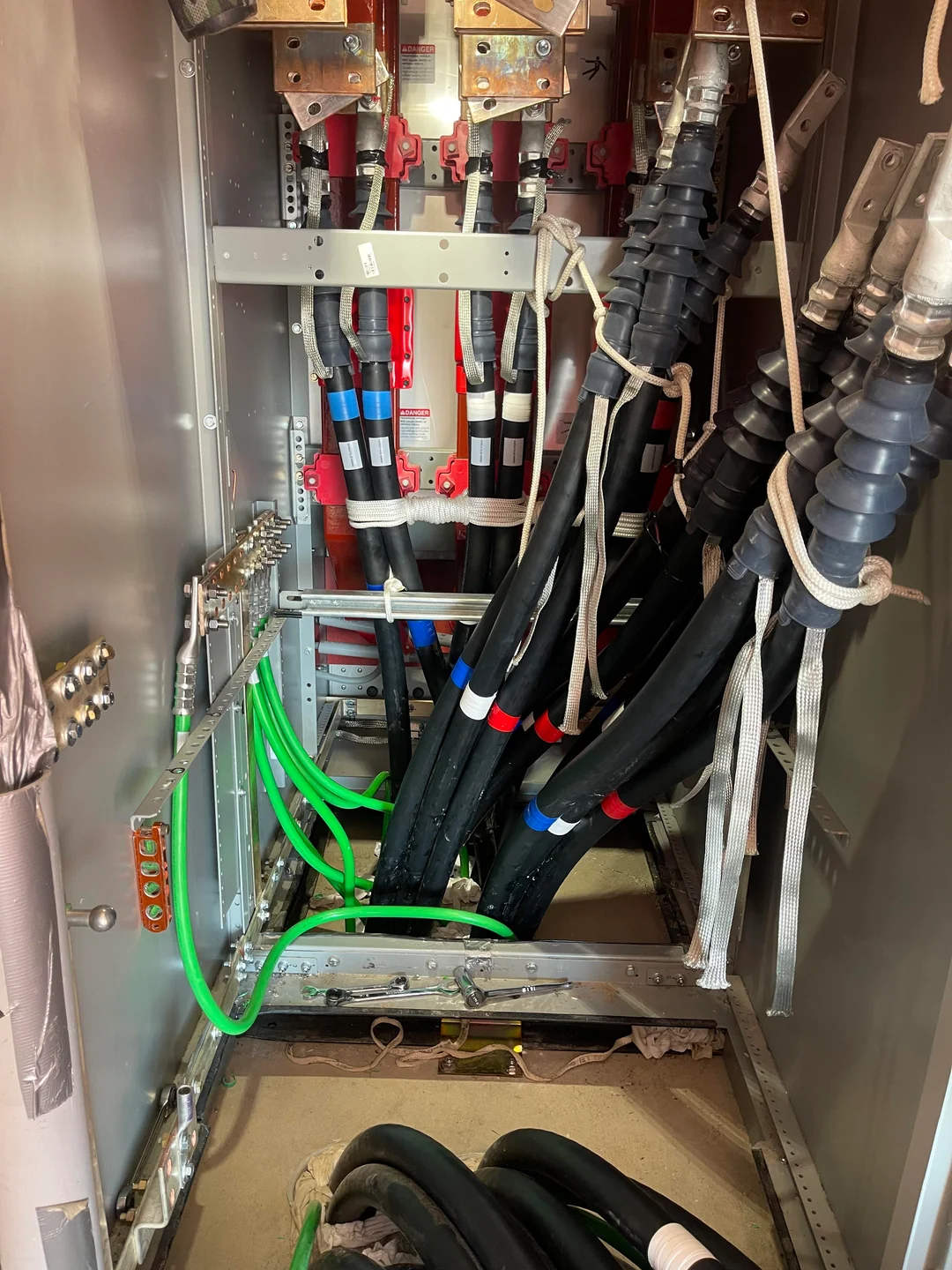
Where does the design inherently fall short? Cable termination is arguably the most physically demanding and labor-intensive phase of switchgear installation. Imperfections in spatial design ,such as impossibly tight bending radii for large cross-section XLPE cables—turn routine terminations into a nightmare for jointers.
What’s the technical root cause? As switchgear footprints are miniaturized to save expensive substation real estate, the cable compartment is often the first casualty. Designers fail to account for the physical stiffness of heavily armored, high-voltage cables.
What is the direct consequence for the maintenance crew? Jointers are forced to strip cables shorter than recommended or apply excessive lateral force to bend cables onto the termination pads. This compromises the dielectric integrity of the termination kit, significantly increasing the likelihood of partial discharge, tracking, and eventual phase-to-earth faults within the cable box.
Figure 3 – Tight space for cables in Cable compartment of a MV switchgear
4. Flimsy Door Latches and Hinge Sag
Where manufacturers make a mistake? Switchgear doors are heavy, especially those engineered with thick gauge steel to withstand the immense dynamic pressure of internal arc faults. Over time, inadequate hardware fails to support this weight.
What is the base technical explanation for why this happens? Cost-reduction strategies often lead to the specification of undersized hinges and low-grade locking mechanisms.
Ultimately, how does this compromise operational efficiency and safety? Operators end up having to physically lift, shoulder, and force the heavy steel doors upward just to engage the rotary handle.
This is not only a severe ergonomic hazard but a persistent annoyance that eventually compromises the panel’s IP rating, allowing moisture and dust ingress, and completely invalidating the arc-fault containment integrity of the enclosure.
Figure 4 – LV compartment can be quite heavy and loose their strength through time
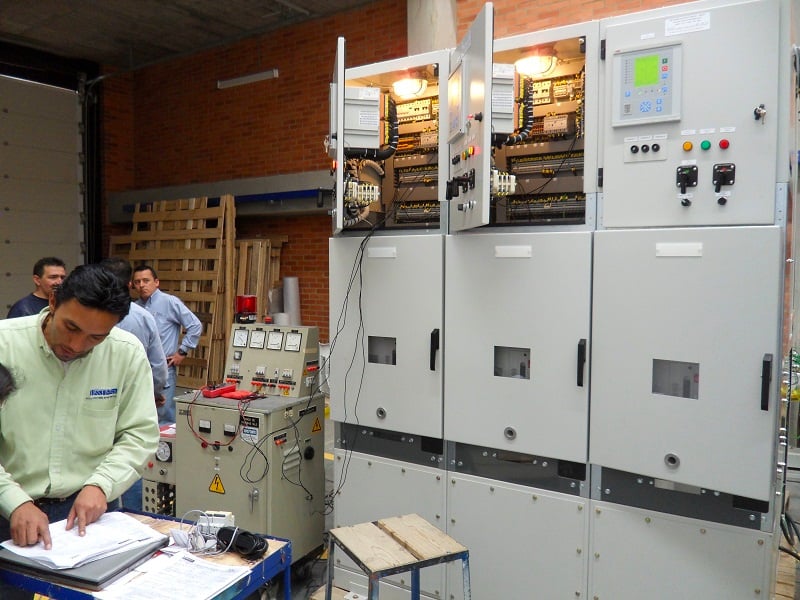
5. The “Lost Handle” Syndrome (Non-Standardized Tools)
What’s the main problem here? A surprisingly universal frustration is the necessity for proprietary, easily misplaced mechanical operating tools. Manufacturers often require different, highly specific handles for spring charging, racking the breaker, operating the earth switch, and opening the door.
Why does “Loosing Handle” happens afterall? Lack of industry standardization and fragmented supply chains mean that even within a single substation, different panel lineups from the same manufacturer might require entirely different spline sizes or socket depths for their operating accessories.
Ultimately, what is the toll on routine maintenance and operation? During a critical, time-sensitive switching operation or an emergency lockout-tagout (LOTO) procedure, operators find themselves frantically searching for the correct racking lever.
Related electrical guides & articles



Edvard Csanyi
Hi, I'm an electrical engineer, programmer and founder of EEP - Electrical Engineering Portal. I worked twelve years at Schneider Electric in the position of technical support for low- and medium-voltage projects and the design of busbar trunking systems.I'm highly specialized in the design of LV/MV switchgear and low-voltage, high-power busbar trunking (<6300A) in substations, commercial buildings and industry facilities. I'm also a professional in AutoCAD programming.
Profile: Edvard Csanyi