


Estimated Study Time: 37 minutes
Upgrading Modern Substations
A substation constructed or heavily retrofitted just four to five years ago represents a marvel of modern engineering, boasting fiber-optic communications, Intelligent Electronic Devices (IEDs), and advanced control algorithms. However, this rapid technological acceleration has birthed a new, unprecedented engineering paradox: a digital substation built half a decade ago is already entering a mid-life crisis.
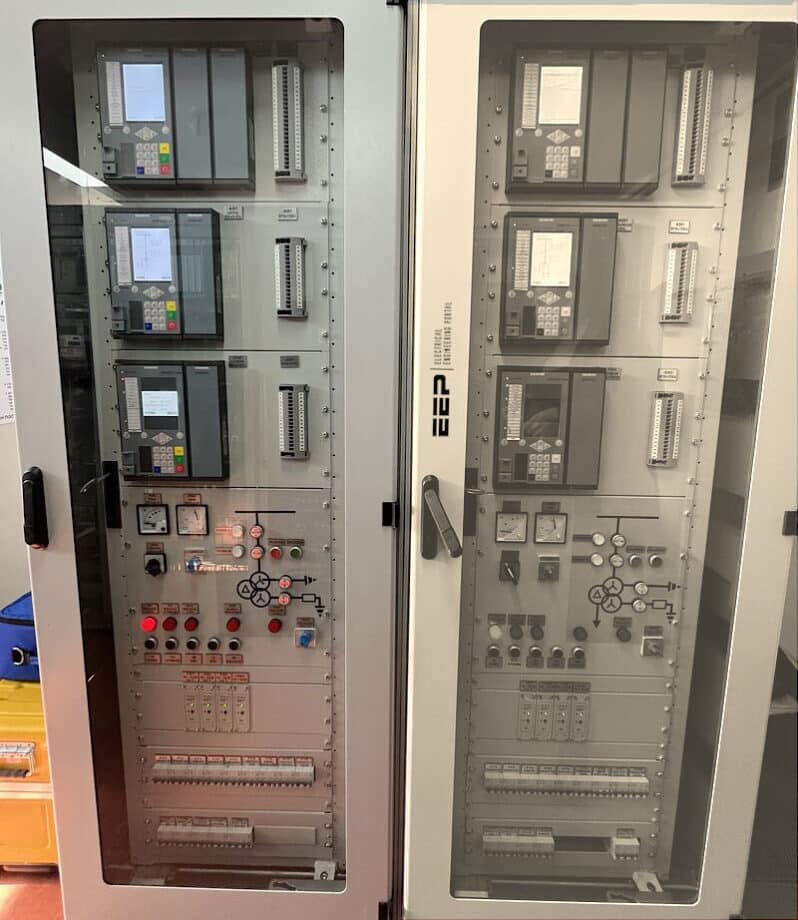 Upcoming Headache in Upgrading Today's Digital Substations
While the physical heavy assets like transformers and circuit breakers are designed to operate for up to fifty years, the critical digital infrastructure, servers, ethernet switches, communication nodes, and cybersecurity protocols, operates on a consumer IT lifecycle of just five to seven years.
Consequently, utilities are now facing the daunting task of upgrading and retrofitting “modern” substations.
This comprehensive analysis explores the multifaceted difficulties and problems inherent in upgrading modern and relatively new year-old digital substations, dissecting the engineering hurdles from the physical switchgear to the logical network architecture.
- The Core of the Modern Substation: A 5-Year Retrospective
- The Hardware Lifecycle Mismatch: IT vs. OT
- The Curse of the Digital Substation: Complexity and Fragility
- Interoperability and the Myth of “Plug-and-Play” in IEC 61850
- The Expanding Cyber-Attack Surface and IT/OT Convergence
- Virtualization of Protection, Automation, and Control (PAC)
- Environmental Regulations and the SF6 Phase-Out
- Physical and Structural Constraints in Brownfield Upgrades
- Advanced Sensor Integration and Digital Twin Synchronization
- Regulatory Compliance and the Cost of Downtime
- The Human Element: Skill Gaps and Workforce Dependency
- Future-Proofing: Strategies for the Next Upgrade Cycle
- Conclusion
- Attachment (PDF) 🔗 220kV Line Protection Relay Setting Calculations
1. The Core of the Modern Substation: A 5-Year Retrospective
To understand the difficulties of upgrading a modern substation, one must first understand what was installed four to five years ago. Around the turn of the decade, the industry saw mass adoption of the IEC 61850 standard—the international standard for communication networks and systems for power utility automation.
The defining characteristic of these modern installations was the systematic replacement of kilometers of heavy, and expensive copper wiring with lightweight, high-bandwidth fiber-optic cables.
In a modern 4-5 year-old digital substation, this paradigm was entirely flipped.
Figure 1 – IEC 61850 architecture for digital substation control and communication
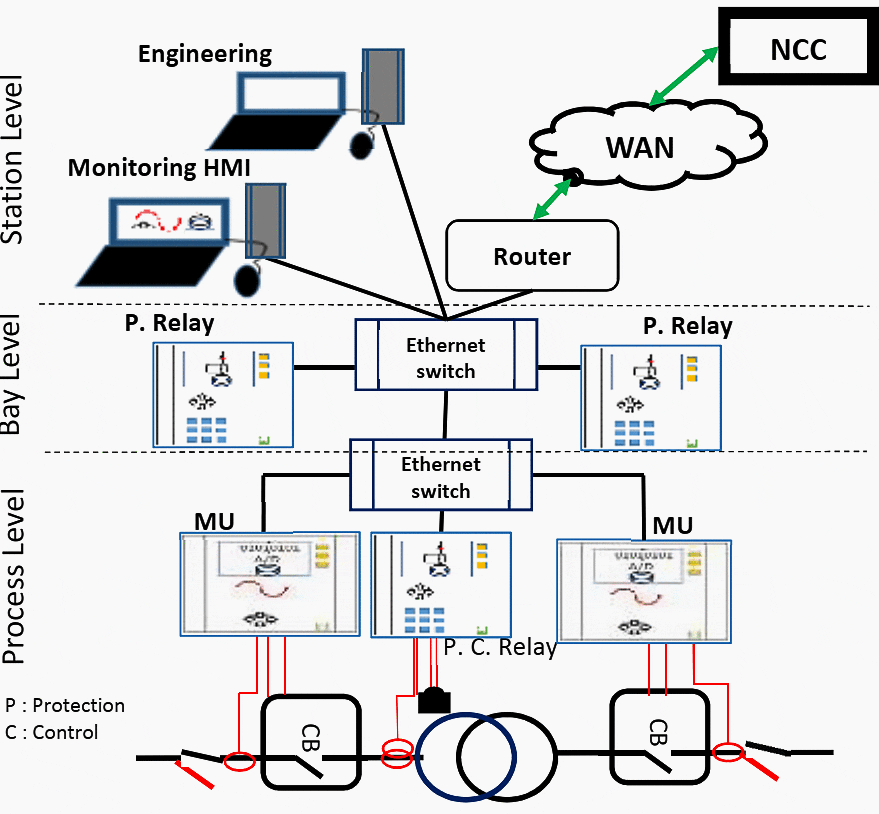
This architecture diagram visualizes the three-tier network (Process, Bay, Station) critical to understanding the digital concepts discussed in this section.
The architecture installed during this period is strictly divided into three hierarchical levels:
1. The Process Level: Located in the physical switchyard. Here, Merging Units (MUs) take analog signals from conventional or non-conventional instrument transformers, digitize them, and broadcast them onto the network as Sampled Values (SV).
2. The Bay Level: Located in the control house. Here, Intelligent Electronic Devices (IEDs), which act as digital protection relays, subscribe to the SV streams. If a fault is detected, the IED publishes a high-speed GOOSE (Generic Object Oriented Substation Event) message back to the Process Level to trip a circuit breaker.
3. The Station Level: The overarching Human-Machine Interfaces (HMIs), SCADA gateways, and station computers that monitor the entire facility and communicate with the utility’s central control center using the Manufacturing Message Specification (MMS) protocol.
Today, attempting to add new DERs, battery storage systems, or advanced analytics to this existing 5-year-old network architecture introduces immediate bottlenecks.
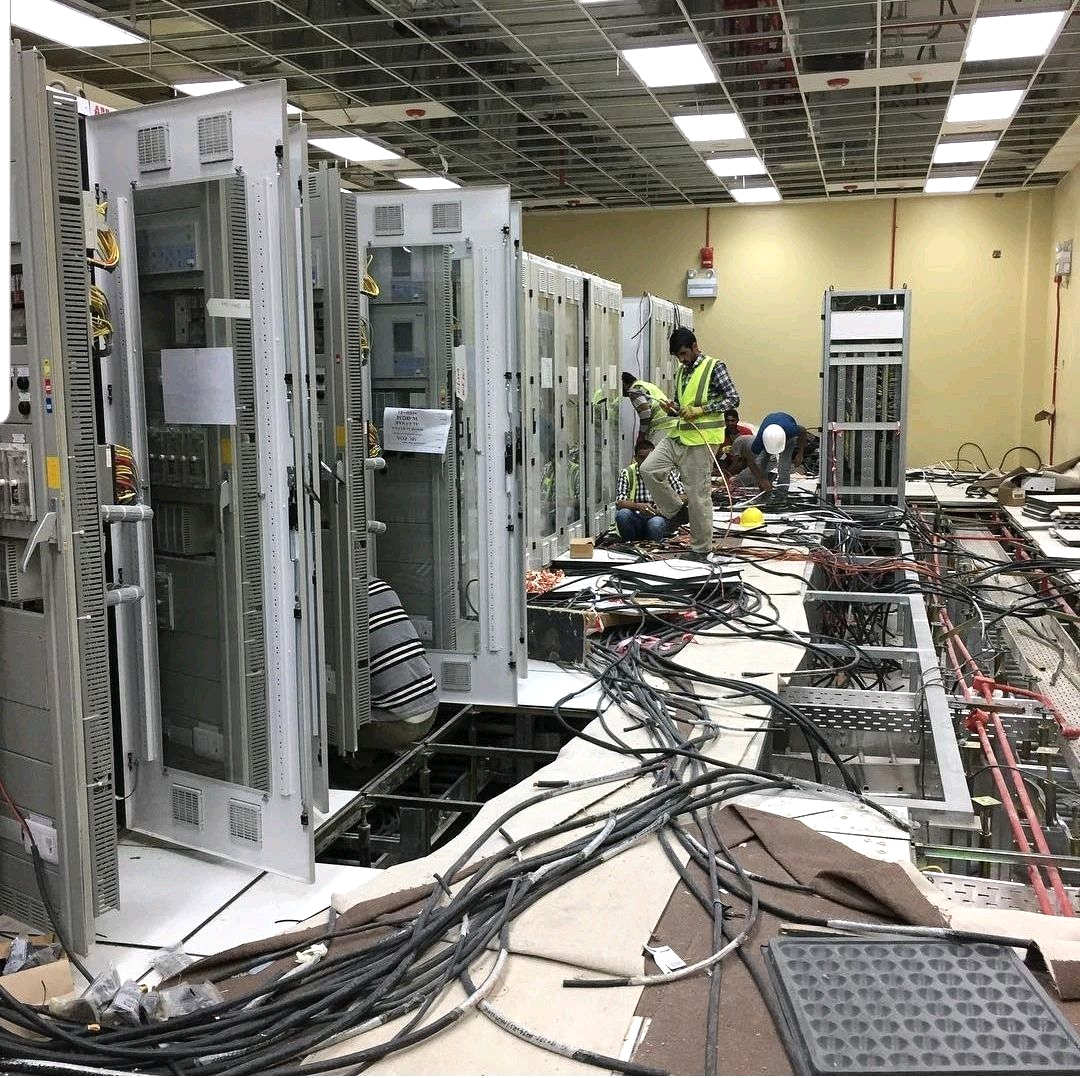
Figure 2 – Installation of digital relay protection and control panels
2. The Hardware Lifecycle Mismatch: IT vs. OT
The most fundamental difficulty in upgrading a relatively new smart substation is the irreconcilable mismatch between the lifecycles of Information Technology (IT) and Operational Technology (OT). For decades, substation design was governed purely by OT principles.
A power transformer, a gas-insulated switchgear unit, or a high-voltage disconnect switch represents a massive capital expenditure. These assets are built of steel, copper, and specialized insulators designed to withstand decades of extreme weather, electrical faults, and thermal stress.
Their expected operational lifespan is 40 to 50 years.
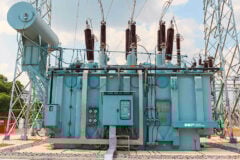
Figure 3 – Power transformer in a modern electrical substation
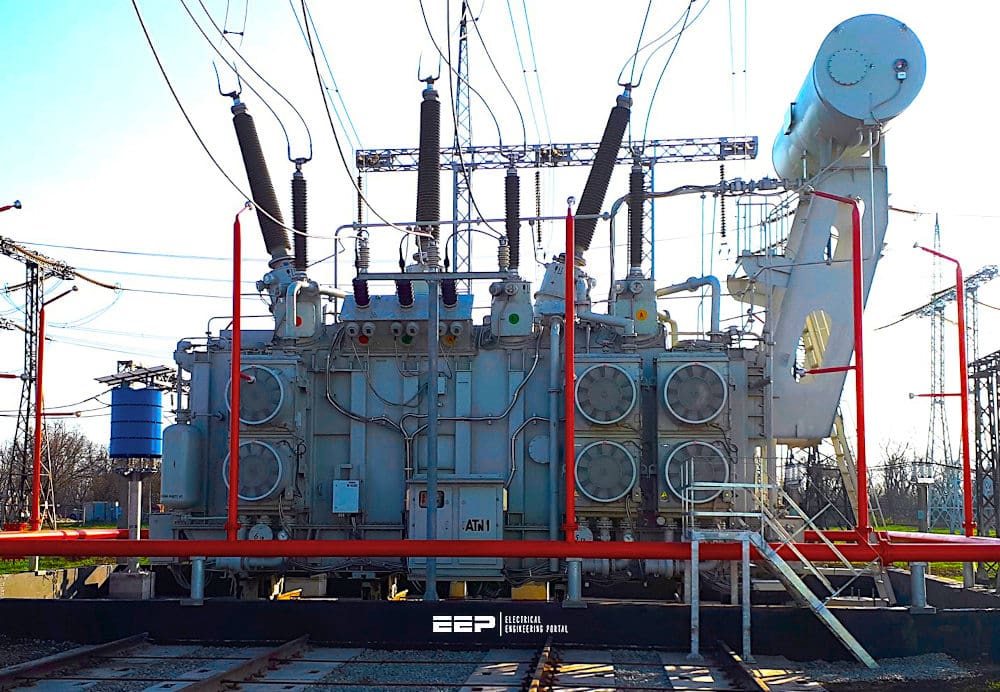
Figure 3 shows the massive physical Operational Technology (OT) infrastructure that outlasts the fragile IT components discussed in this section.
Conversely, the IEDs, Ethernet switches, Merging Units, and synchronization clocks that control these massive OT assets follow an IT lifecycle. After four to five years, this hardware begins to face severe operational realities:
1. Firmware Deprecation: Manufacturers cease issuing security patches or firmware updates for older IED models as they release newer generations.
2. Component Degradation: Electrolytic capacitors in power supplies of 5-year-old network switches operating in the harsh, thermally fluctuating environment of a substation control house begin to fail.
3. Processing Limitations: As utilities attempt to implement more complex, data-heavy protection algorithms (such as traveling wave fault location), the CPUs inside the 5-year-old relays simply lack the processing power and RAM to execute the logic within the required microsecond timeframes.
Table 1 – Assets lifecycle and upgrade trigger
| Component Category | Typical Asset Types | Expected Lifespan | Upgrade Trigger at 5-Year Mark |
| Operational Technology (OT) | Power Transformers, Circuit Breakers, GIS, Busbars | 40 – 50+ Years | Minor mechanical maintenance; bushing replacements; oil filtration. |
| Information Technology (IT) | IEDs, Network Switches, SCADA Servers, Merging Units | 5 – 10 Years | Cybersecurity non-compliance; processing bottlenecks; end-of-support firmware. |
| Ancillary Systems | HVAC, Backup Battery Banks, Fire Suppression | 10 – 20 Years | Increased thermal load from new IT servers requiring immediate cooling upgrades. |
The problem arises when utilities need to replace a deprecated network switch or an IED. In a digital substation, IT and OT are inextricably linked. You cannot simply unplug a 5-year-old IED and plug in a new one without taking a portion of the 40-year-old high-voltage switchgear offline.
The integration testing required to ensure the new IT component correctly interfaces with the legacy OT component often costs more in labor and downtime than the price of the hardware itself.
3. The Curse of the Digital Substation: Complexity and Fragility
When a power substation transitions from hardwired copper analog signals to a fully digital architecture utilizing IEC 61850, the fundamental nature of its operations becomes HIGHLY FRAGILE. A copper wire is deterministic; if voltage is applied at one end, it appears at the other almost instantaneously, bound only by the speed of light and resistance.
A packet-based Local Area Network (LAN), however, is probabilistic. Data is chopped into ethernet packets, buffered in network switches, and queued for delivery.
3.1 Precision Time Synchronization Dependencies
One of the most severe difficulties in upgrading a 5-year-old digital substation involves time synchronization. In a Process Bus architecture, analog values are sampled thousands of times per second. For the IEDs to accurately calculate phase angles and detect faults, every single piece of data must be timestamped with microsecond precision.
This is achieved using the IEEE 1588 Precision Time Protocol (PTP).
Integrating a modern 2026-era ethernet switch running the latest PTP profiles with a 2021-era switch often results in clock synchronization jitter. A timing error of just a few microseconds can cause a digital relay to miscalculate a current phasor, leading to a false trip that plunges an entire city grid into darkness.
More Details – Protocols applied for time synchronization in a digital substation automation
Protocols applied for time synchronization in a digital substation automation
3.2 Network Traffic and Broadcast Storms
IEC 61850 relies heavily on multicast traffic. GOOSE and SV packets do not have specific IP address destinations; they are broadcast onto the network at the MAC address level, and any device that needs the data subscribes to it.
Five years ago, a substation might have been engineered with network switches capable of handling a specific baseline of multicast traffic. Today, as utilities try to upgrade these substations to stream high-resolution oscillography data to centralized cloud servers for predictive maintenance, the original switches become overwhelmed.
To mitigate this, engineers must implement highly complex Virtual LANs (VLANs) and multicast filtering protocols. Retrofitting these logical architectures into an operational, live 5-year-old system without causing accidental downtime is a monumental engineering challenge.
Further Details – The Curse of a Digital Substation: So Advanced and Fragile
4. Interoperability and the Myth of “Plug-and-Play” in IEC 61850
The core promise of the IEC 61850 standard was interoperability—the idea that a utility could buy an IED from Vendor A, a Merging Unit from Vendor B, and a network switch from Vendor C, and they would all seamlessly communicate.
The reality, especially when dealing with brownfield upgrades of 5-year-old systems, is vastly different.
4.1 The Substation Configuration Language (SCL) Dilemma
IEC 61850 utilizes an XML-based language called SCL to define the configuration of the substation. The entire logical structure, data models, and network links are stored in a master file known as the Substation Configuration Description (SCD) file.
When a modern substation was built five years ago, the system integrator generated a pristine, perfectly balanced SCD file. However, standard versions evolve. A substation built five years ago likely utilizes IEC 61850 Edition 2.
Today, the industry is transitioning to Edition 2.1 (and exploring Edition 3).
4.2 Vendor Lock-In and Custom Extensions
Despite being an international standard, manufacturers often rely on proprietary extensions to provide advanced features. When a substation is upgraded, utilities discover that their 5-year-old “standardized” system is actually heavily reliant on Vendor A’s specific interpretation of the standard.
Replacing a component requires reverse-engineering the proprietary logic of the legacy device and attempting to map it to the standardized logic of the new device. This process is incredibly labor-intensive.
Related electrical guides & articles



Edvard Csanyi
Hi, I'm an electrical engineer, programmer and founder of EEP - Electrical Engineering Portal. I worked twelve years at Schneider Electric in the position of technical support for low- and medium-voltage projects and the design of busbar trunking systems.I'm highly specialized in the design of LV/MV switchgear and low-voltage, high-power busbar trunking (<6300A) in substations, commercial buildings and industry facilities. I'm also a professional in AutoCAD programming.
Profile: Edvard Csanyi