


Estimated Study Time: 32 minutes
Modern Substation Technologies
Let’s be honest, substation control and protection technology is advancing so fast that it’s amazing how quickly some of us become nostalgic for the past. That period used to be 20-30 years, but nowadays it’s about just 5-10 years. I’m not saying that’s bad, but it takes time for utilities to adapt to the “new kids on the block”. Regarding emerging substation technologies, it’s incredible how quickly they’ve been developed and implemented. However, the time test will have its final word.
 Why do existing substations need to be automated (photo credit: Tamil Vendhan V. via Linkedin)
Modern substations are designed with cutting-edge secondary equipment. Understanding the overarching goal during the whole lifespan of the substation is crucial. This may affect the selected concept, substation design, and equipment.
Luckily, extensive experience is available on an international level and its associated topics.
As a result, the secondary equipment must be refurbished at least once over the substation’s lifespan. Numerous methods are available to accomplish this. Various methodologies exist for the refurbishment of a substation.
The next two methods outline the boundaries: Refurbishment of specific components (e.g., protection relays) conducted one-by-one and perhaps over an extended duration, and a comprehensive refurbishment of all secondary equipment simultaneously.
- It is necessary to automate existing substations, but why?
- What Functions Can Be Integrated into Automated Substations?
- Typical Structure of an Automated System
- Equipment Protection
- Control Units
- Metering Data
- Monitoring Functions
- Analysis and Diagnostics of Substation Equipment
- Intelligent (Automated) Substation Operation & Restoration
- Automatic Documentation Generation:
- Safe and Secure Substation Operation
- Multiple Use of Substation Data
- Typical Structure of Modern Automated System
- Download Attachment (PDF) 🔗 ‘Implementation of IEC 61850 based Substation Automation System in Existing 132kV Substation’
1. It is necessary to automate existing substations, but why?
The power system industry is rapidly competing to achieve optimal management of the power system network across all levels. The privatization of the power system industry facilitates the emergence of new electrical markets that differ fundamentally from the existing market.
A scenario in which consumers transition into customers, resulting in the emergence of new energy suppliers and traders in the market. In the imminent future, the global power system business will witness an increasing number of power producers, retailers, and network companies.
Consequently, each utility should assess the necessity of automating current substations to address anticipated future market difficulties and ensure the reliability of existing equipment.
Each utility, in its endeavor to automate current substations, should concentrate on two factors that affect the optimal management of its power system operations. The two aspects are economic and technical.
Figure 1 – Digital control and communication systems in modern substations

1.1 First, Automate Substations Due to Economical Reasons
Economics significantly underpins the justification for current substation automation systems (SAS). Knowledge of the power system empowers the utility to enhance its success and competitiveness in a deregulated market characterized by competition among utilities.
In this context, information transforms into a strategic necessity when swift choices are essential. In the absence of this information, which cannot be acquired from traditional substations, the utility is unable to respond effectively.
Actual and future modifications are studied.
1.1.1 Transformations in the Power System Market
Significant transformations are occurring in the power system sector, with further alterations anticipated in the future. In a conventional market, when power control centers manage and distribute energy by nation or region, there were no alternative electricity suppliers for consumers. In a deregulated market, this phenomenon is progressively diminishing, and the tendency will accelerate in the near future.
Energy service providers have replaced power system corporations, and new energy retailers are emerging in the market.
The privatization and deregulation of the nation’s electrical networks have permitted the entry of non-national corporations, introducing new power producers and retailers into the market.
Suppliers provide daily data on power transmission capacities, while retailers obtain consumption data. This necessitates the swift communication of precise power supply and pricing data. Furthermore, clients must ascertain their daily operational expenses to effectively strategize manufacturing, hence reducing costs and enhancing profitability.
Transmission and distribution utilities have to separate regulated (transmission and distribution) from non-regulated (energy market) operations to engage in an open market.
New functions are necessary for operating in the energy market sector. In the regulated sector, no significant alterations are essential; only the provision of information to facilitate energy market decisions is required.
To facilitate the energy market decision-making process, existing substations require modernizations to deliver essential information promptly.
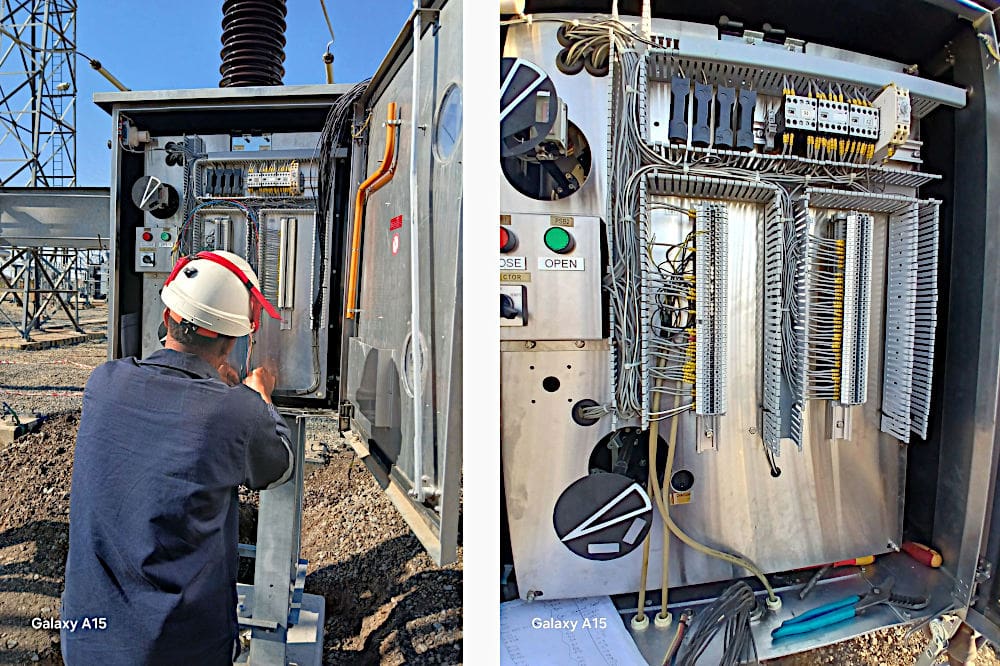
Figure 2 – Marshalling box of the 220kV circuit breaker with communications and control wiring
1.1.2 Reduction in Operation Expenses
Operational expenses significantly impact the overall economic performance of the utility. Precise information is crucial for minimizing operating expenses. Following savings can be realized:
Saving #1: Implementing digital communications as defined by the IEC 61850 standard, as that is the current industry standard for IEDs, available across a range of OEM providers, and of most relevance to the modern substation design engineer.
Saving #2: Reduction of personnel with the use of remote control capabilities for substations. This involves deploying personnel, as well as field and maintenance teams, which may be more effectively coordinated and directed with real-time situational data obtained remotely from the substations and the network.
Saving #3: Faster fault identification and fault clearance, leading to shorter supply disruption duration.
Saving #4: Sequential switching and expert systems which execute complex processes with greater speed and accuracy than human operators.
Saving #5: Enhanced and more coordinated network control functions such as voltage/VAR regulation, network reconfiguration, and supply restoration after faults.
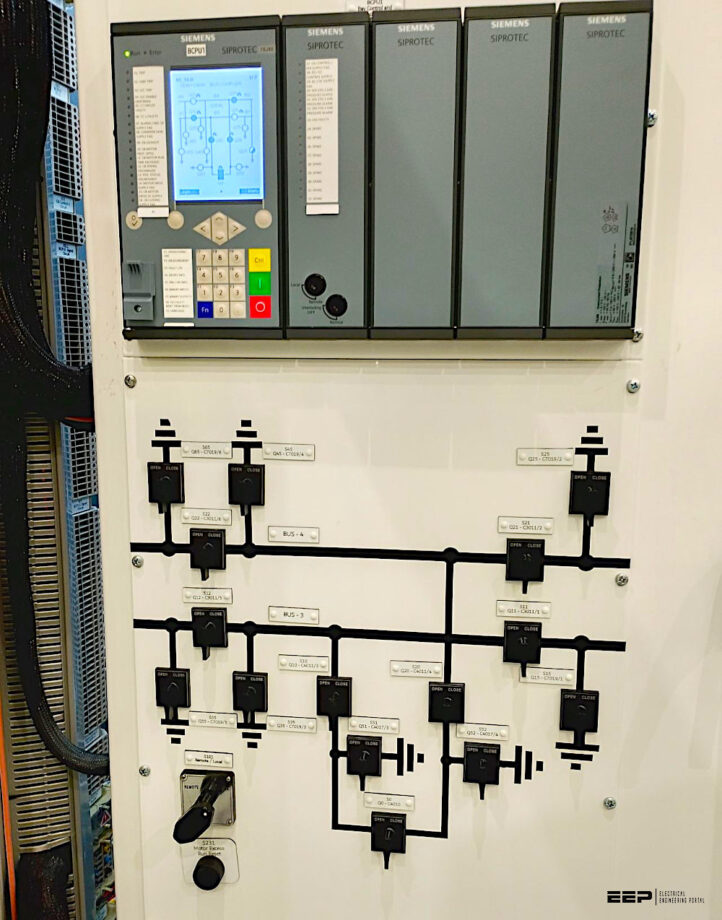
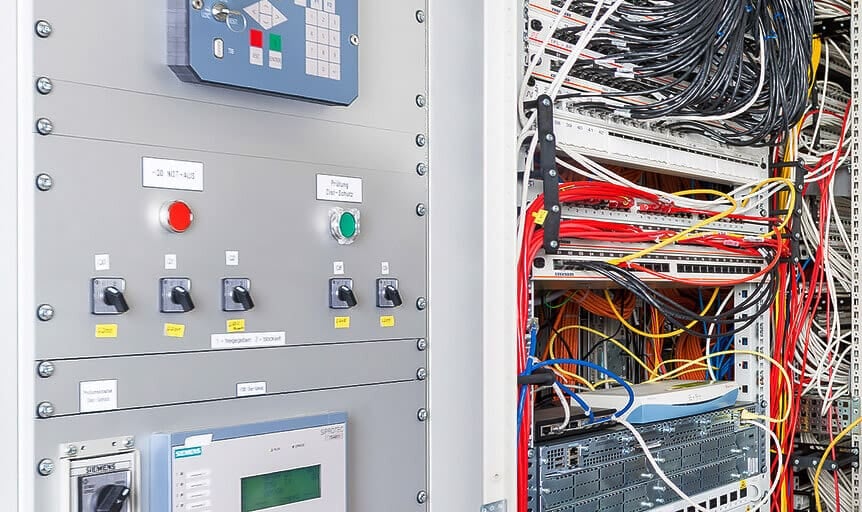
Figure 3 – Digital protection panel utilising IEC 61850 communications
1.1.3 Reduction in Maintenance Expenses
Utilities functioning in a competitive market must categorize maintenance costs into three distinct groups.
1.1.3.1 Substation Troubleshooting and Repairing
Troubleshooting in existing power substations is difficult and time-intensive due to the complicated wiring that interconnect several switchgear panels for control and protection equipment. Troubleshooting in automated substations can be minimized due to the reduced complexity of wiring and its limitation to short distances.
The majority of troubleshooting will now occur within the software, as people and equipment testing are constrained.
Related Study – Practical troubleshooting of power interruption in fully operational 33/11 kV substation
Practical troubleshooting of power interruption in fully operational 33/11 kV substation
1.1.3.2 Maintenance Cost of Primary Equipment
The reduction of materials, spare parts, and labor hours dedicated to maintaining regular schedules for primary equipment is achieved through the acquisition of precise and prompt data regarding the equipment’s operation.
The rate of the feeder breaker’s operation under fault conditions will inform the timing of its maintenance, depending on real fault occurrences. This data cannot be acquired from a standard sort of substation.
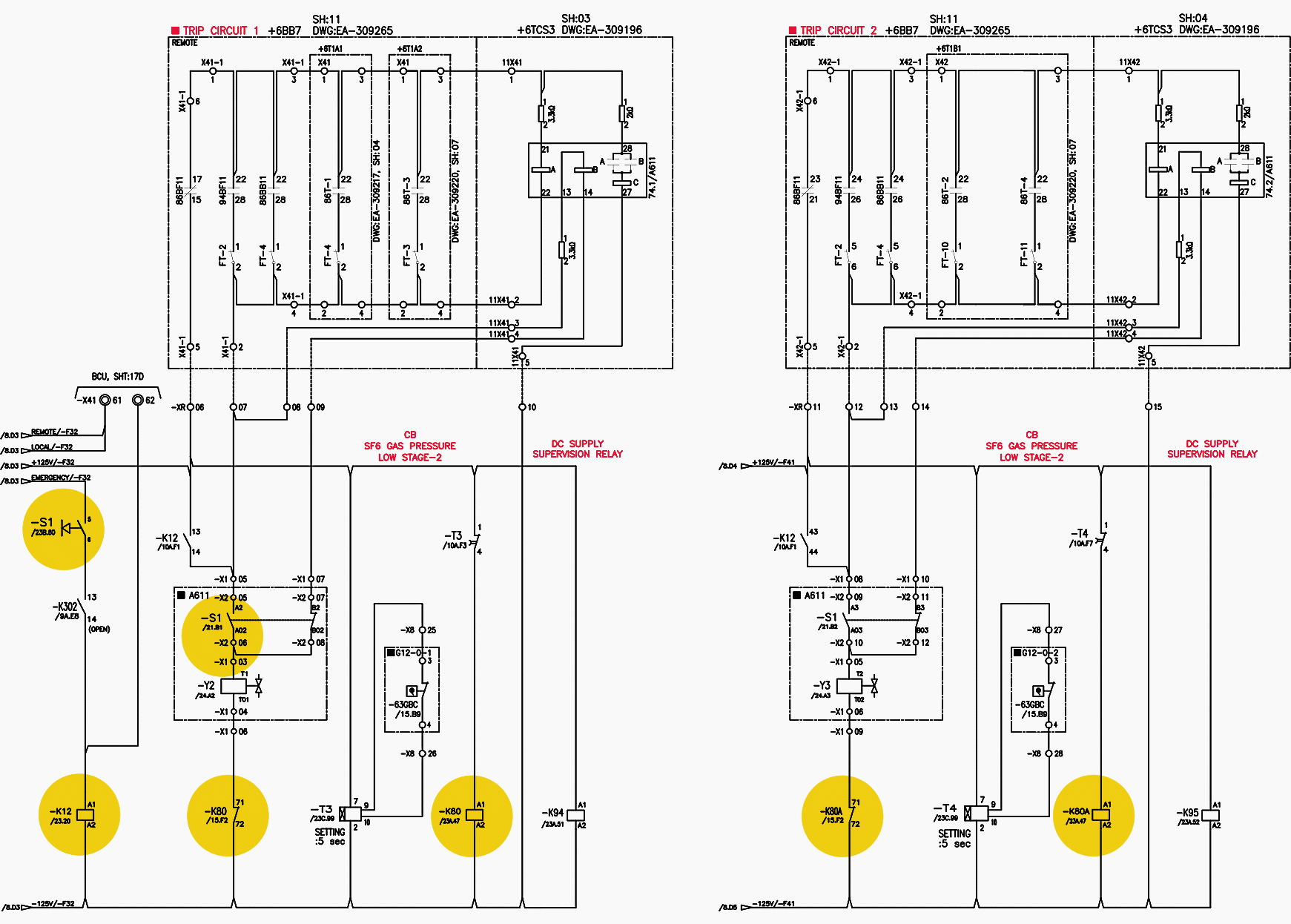
Figure 4 – An example of a breaker trip circuit control schematics
1.1.3.3 Maintenance and Operation of Control & Protection Equipment
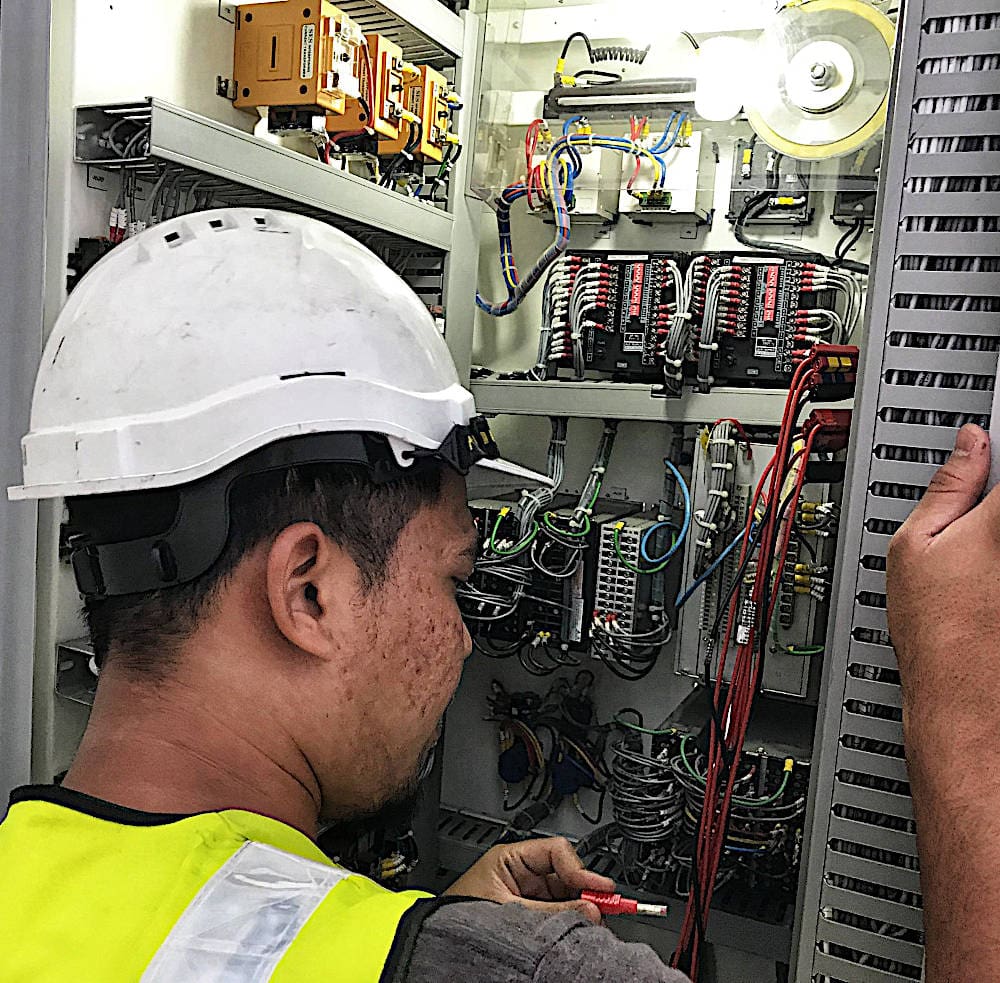
The advancement of digital communication, innovative software technology, numerical relays, and digital control equipment already considerably decrease the labor hours required for operation, routine testing, and maintenance of traditional solid-state relays and control devices.
A substation automation system enables the continuous monitoring of diverse signals and components. Continuous monitoring and diagnostics of the entire power system during operation facilitate maintenance planning based on necessity rather than a fixed schedule.
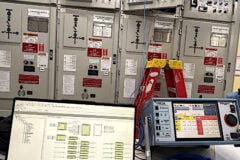
Figure 4 – Maintenance engineer testing secondary control and protection equipment
1.1.4 Substation Installation Cost Reduction
The new sophisticated equipment is supposed to facilitate cost reduction. Cost reduction will be achieved by merging individual equipment into a single unit. This is dependant upon the dimensions and functional requirements of the substation.
Utilities and industrial clients require a transparent cost reduction analysis between traditional and modern solutions. This comparison will promote the retrofitting of outdated substations with modern technology. To yet, the authentic data necessary for this investigation remains challenging to get.
Following equipment configurations are regarded as the primary means of cost reduction.
Related electrical guides & articles



Edvard Csanyi
Hi, I'm an electrical engineer, programmer and founder of EEP - Electrical Engineering Portal. I worked twelve years at Schneider Electric in the position of technical support for low- and medium-voltage projects and the design of busbar trunking systems.I'm highly specialized in the design of LV/MV switchgear and low-voltage, high-power busbar trunking (<6300A) in substations, commercial buildings and industry facilities. I'm also a professional in AutoCAD programming.
Profile: Edvard Csanyi