


Estimated Study Time: 4 minutes
Load profile (speed range, torque and power)
Certain load types are characteristic in the industrial world. Knowing the load profile (speed range, torque and power) is essential when selecting a suitable motor and frequency converter for the application.
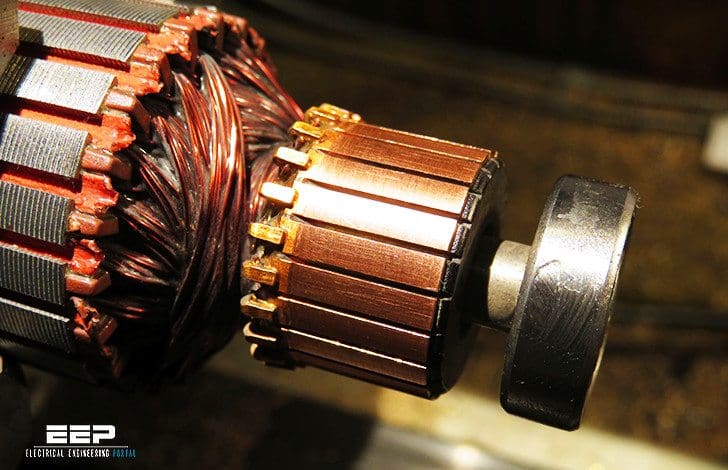
Some common load types are shown. There may also be combinations of these types.
- Constant Torque
- Quadratic torque
- Constant power
- Constant power/torque
- Starting/breakaway torque demand
1. Constant torque
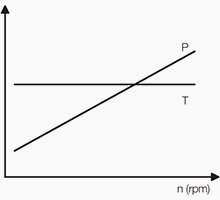
A constant torque load type is typical when fixed volumes are being handled. For example screw compressors, feeders and conveyors are typical constant torque applications.
Torque is constant and the power is linearly proportional to the speed.
2. Quadratic torque
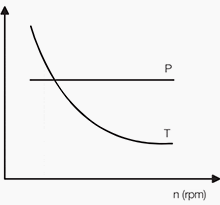
Quadratic torque is the most common load type. Typical applications are centrifugal pumps and fans. The torque is quadratically, and the power is cubically proportional to the speed.

3. Constant power
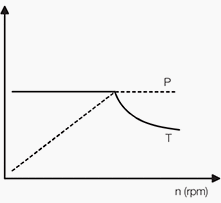
A constant power load is normal when material is being rolled and the diameter changes during rolling. The power is constant and the torque is inversely proportional to the speed.
4. Constant power/torque
This load type is common in the paper industry. It is a combination of constant power and constant torque load types. This load type is often a consequence of dimensioning the system according to the need for certain power at high speed.
5. Starting/breakaway torque demand
In some applications high torque at low frequencies is needed. This has to be considered in dimensioning. Typical applications for this load type are for example extruders and screw pumps.

Few More Words…
There are also several other load types. They are however hard to describe in a general presentation.
Just to mention a few, there are different symmetrical (rollers, cranes, etc.) and unsymmetrical loads. Symmetry/non-symmetry in torque can be for example as a function of angle or time. These kinds of load types must be dimensioned carefully taking into account the overloadability margins of the motor and the frequency converter, as well as the average torque of the motor.
Reference // Dimensioning of a drive system – ABB’s Technical guide
Related electrical guides & articles





Edvard Csanyi
Hi, I'm an electrical engineer, programmer and founder of EEP - Electrical Engineering Portal. I worked twelve years at Schneider Electric in the position of technical support for low- and medium-voltage projects and the design of busbar trunking systems.I'm highly specialized in the design of LV/MV switchgear and low-voltage, high-power busbar trunking (<6300A) in substations, commercial buildings and industry facilities. I'm also a professional in AutoCAD programming.
Profile: Edvard Csanyi

Hi Edvard, thank you for a very informative article.
You may also refer to our article about load types and their characteristics:
https://mb-drive-services.com/load-types-and-characteristics/
We would be happy to cross-collaborate! Our focus is on variable frequency drives (VFD) and drive systems so we do not compete but rather complement each other.
Best regards,
Martin
MB Drive Services
Thank you very much for this informative article. Shall be delighted to get similar articles on different topics.
Very useful information for electrical technitions
Thanks alot.
Many thanks for the precious informations we always have?
Thank you
The main gragh for me is dependence the efficiency of motor from torque with a constant power. What abput 3 phase motor ?
which is the best ac drive motors of 4 quadrant operations, such that, when loaded should be able to drive material such as coal blocks, to upside and down… and thanku for the information..
Very Useful Website for Electrical Engineers…It Refresh my knowledge everyday…and it covers every new topics also.
I find the site very interesting and informative. Thank you