
IEC 61850 Introductory Course

Course Description
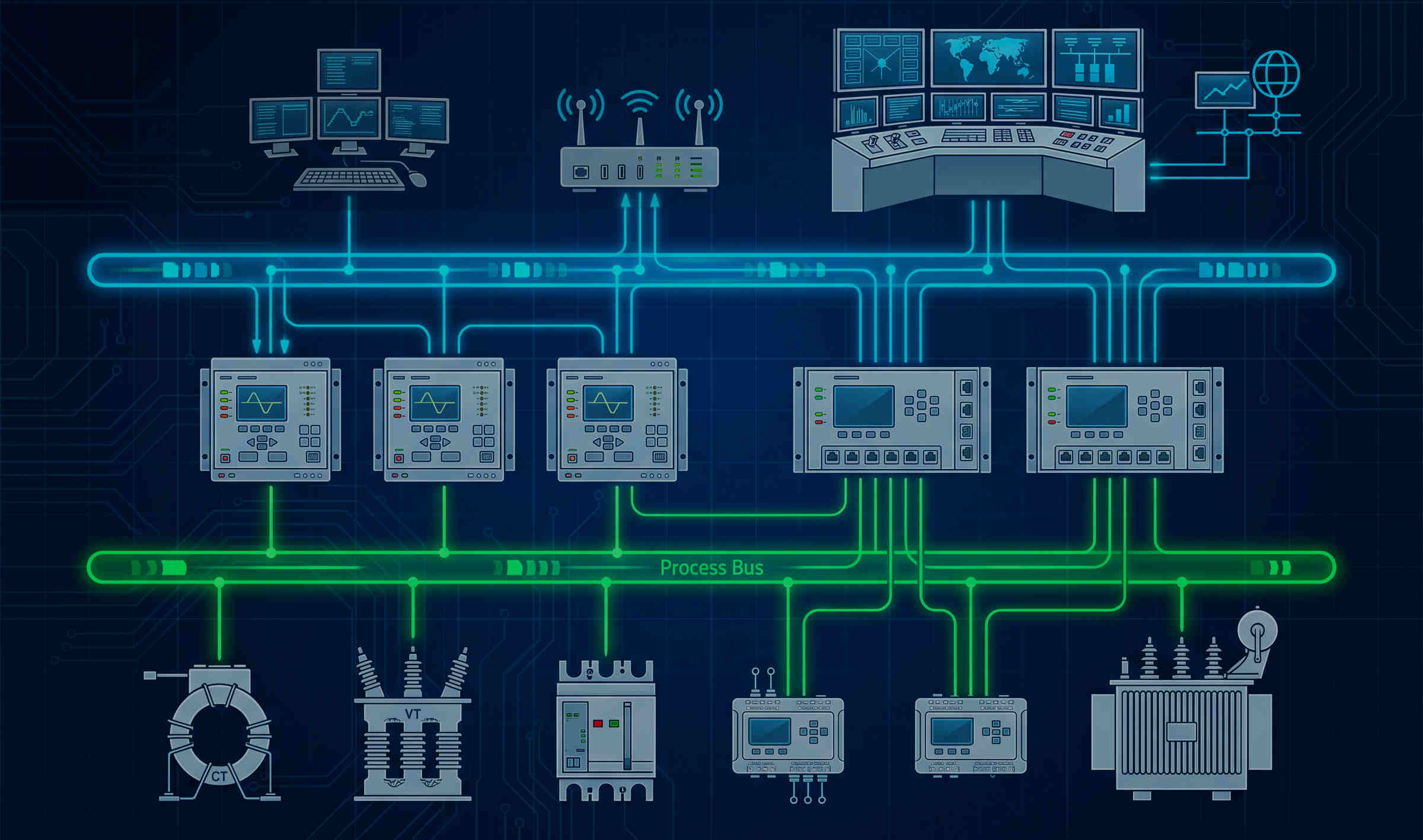
This course introduces the IEC 61850 series of standards as the modern communication and data‑modelling framework for substation protection, control, and monitoring systems. Starting from the limitations of traditional hard‑wired and vendor‑specific solutions, the course explains the objectives and architecture of IEC 61850, including station‑bus and process‑bus concepts, logical devices and logical nodes, and the standardised naming of data objects and attributes.
The course consists of 11 lessons with a total duration of 2 hours and 54 minutes.
Practical examples show how these concepts translate into IED configurations, SCL files, and multi‑vendor interoperability, with emphasis on how IEC 61850 changes protection and control design, testing, and maintenance practices for working engineers and technicians.
This course introduces IEC 61850 in simple terms for entry-level students who are new to digital substations, protection and control systems, and utility communication networks.
The course uses one guiding idea: IEC 61850 is not just “a protocol.” It is a shared language for power-system devices, a way to name data, a way to exchange messages, and a way to describe the system configuration.
It explains that IEC 61850 uses a virtualized model with logical devices, logical nodes, common data classes, and communication services, allowing device behavior and data to be defined separately from the specific communication method.
Why there is a need for this course?
Modern substations increasingly rely on IEC 61850 for protection, control, and automation, yet many practising electricians, technologists, and junior engineers have only been exposed to legacy hard‑wired schemes and proprietary protocols.
Utilities and OEMs are deploying IEC 61850‑based systems faster than entry‑level staff can be trained, creating a skills gap at the interface between traditional power‑system knowledge and digital communications.
Learning Outcomes:
After completing this course, learners will be able to:
- Explain the overall purpose and scope of IEC 61850 and why it was introduced to replace or complement legacy hard‑wired and protocol‑specific schemes in substations.
- Describe the typical IEC 61850 substation architecture, including station level, bay level, and process level, and distinguish between station‑bus and process‑bus applications.
- Interpret the basic data‑modelling concepts of logical devices, logical nodes, data objects, and data attributes, and recognise common logical node names used in protection and control (for example, PTOC, PDIS, XCBR).
- Describe the role and characteristics of GOOSE, Sampled Values, and MMS communication services, and identify where each is applied in protection, control, and SCADA functionality.
- Explain the purpose of Substation Configuration Language (SCL) files such as ICD, CID, and SCD, and summarise how they support engineering, documentation, and multi‑vendor interoperability.
- Discuss the practical implications of IEC 61850 for scheme design, testing, and maintenance, including the impact on wiring, redundancy, time synchronisation, and troubleshooting in digital substations.
Course Summary
- Introduction and Download Course Materials
- What IEC 61850 Is Why It Exists
- The Simple Substation Story: Equipment Connections
- From Hardwired Signals to Digital Messages
- The IEC 61850 Common Language
- The MMS, GOOSE, and Sampled Values
- Station Bus and Process Bus
- Substation Configuration Language (SCL)
- Interoperability In Multi-Vendor Systems
- Practical Design Testing and Troubleshooting
- Reading a Simple IEC 68150 System
Who Is This Course For
- Electrical Engineering Undergraduates
- Electrical Engineering Graduates
- Technicians
- Power/Utility Engineers
- Anyone interested in electrical engineering
Requirements
Having basic knowledge about power engineering
Downloadable course materials
After purchasing the course, students can download the following files:
- Design, testing, and commissioning of an IEC 61850-based substation automation system
- Application of Modbus RTU, DNP3 and IEC 61850 in substation protection and automation
- IEC 61850 based GOOSE messaging in arc protection of LV/MV switchgear
- Testing protection IEDs in IEC 61850 based substation automation systems
- Testing the multi-vendor substation automation system implemented with IEC 61850
- Testing the performance of IEC 61850 substation automation designs
- IEC 61850 in mine electrical distribution, automation and control systems
- Case study of distribution substation adapting IEC 61850 protection system
- IEC 61850 for digital substation automation systems
- Experience in implementation of IEC 61850 standard in high voltage substation in Ghana
Course Content
About Instructor
 +21
enrolled
+21
enrolled
Course Includes
- 11 Lessons
- Course Certificate
- Lifetime Access
